Tag: music production

  • Everything You Need To Know About Playback Singer

    Everything You Need To Know About Playback Singer

    There is a moment in almost every Indian film that every audience member knows — the hero walks through rain, the heroine turns to face the camera, and a voice fills the theatre with emotion so raw and so precise that the entire hall falls silent. That voice does not belong to the actor on screen. It belongs to a playback singer — one of the most celebrated, most demanding, and most misunderstood professions in the entire Indian music industry.

    Playback singing is the art of recording vocal performances for film and entertainment productions — performances that are later lip-synced by actors during filming. It is the invisible craft behind the most iconic moments in Indian cinema. From Lata Mangeshkar’s timeless soprano defining generations of Hindi film music to Arijit Singh’s emotionally devastating vocals dominating Bollywood charts for over a decade, from Shreya Ghoshal’s crystalline versatility to S. P. Balasubrahmanyam’s incomparable range across five languages — playback singers are the true voice of Indian cinema.

    In 2026, playback singing has evolved dramatically. The traditional Bollywood studio model that once exclusively defined the profession has been joined by regional cinema booms in Tamil, Telugu, Kannada, Malayalam, Marathi, Punjabi, and Bengali industries — each with its own thriving ecosystem of playback opportunities. Digital streaming platforms have given independent artists alternate paths to build careers that feed directly into film music. AI tools have changed how vocal recordings are produced and processed. And social media has given aspiring playback singers the ability to reach music directors and industry professionals directly — a pathway that simply did not exist a generation ago.

    This complete guide covers everything you need to know about playback singing in 2026 — its history, how it works, the skills required, how to build a career from scratch, the legends who defined the craft, the training required, the digital tools that give modern singers a competitive edge, and how A3 Tunes helps today’s vocalists release their own original music to the world while building the career that earns them playback opportunities. Whether you are an aspiring singer taking your first steps or an established vocalist looking to break into film music, this guide is your complete playback singing roadmap.


    What Is Playback Singing? The Complete Definition

    The Origin and History of Playback Singing in India

    Playback singing is a recording technique in which a professional singer records a song in a studio before filming begins. The actor on screen then mouths the lyrics while the pre-recorded song plays back during shooting — hence the name. This technique transformed Indian cinema when it was first introduced.

    Playback singing in India emerged in 1935 when composer Rai Chand Boral pioneered the technique in the Hindi film Dhoop Chhaon — replacing the cumbersome practice of live on-set singing with pre-recorded performances. The innovation was revolutionary. It freed directors from the acoustic limitations of live recording, allowed actors to focus entirely on their performance without worrying about vocal quality, and created an entirely new professional category — the playback singer — whose career was built on voice alone.

    Through the 1940s and 1950s, the golden age of Indian playback singing emerged. Names like K. L. Saigal, Geeta Dutt, Talat Mahmood, Hemant Kumar, and above all Mohammed Rafi and Lata Mangeshkar established a tradition of playback excellence that set the technical and artistic standard for everything that followed. The playback singer became — uniquely in global cinema — a celebrity in their own right, as famous as the actors whose voices they provided.

    How Playback Singing Works in the Modern Film Production Process

    The modern playback singing workflow begins with the music director or composer receiving a brief from the film’s director — the emotional context of the scene, the character’s personality and vocal register, the musical style required, and the language and lyrical content. The composer then creates the melody, works with a lyricist on the final lyrics, and identifies the right playback singer for the specific song.

    The singer is called to a professional recording studio, often after receiving the song ahead of time to prepare. Recording typically takes anywhere from two hours to multiple sessions depending on the complexity of the song, the number of vocal takes required, and the level of post-recording processing. After recording, the vocal track goes through mixing and mastering, and the final playback track is delivered to the film’s sound team, who sync it to the actor’s performance during the filming process.

    In regional cinema, the process is similar but often faster-paced and more direct — music directors frequently work with a smaller, trusted circle of playback singers who can adapt quickly to different vocal requirements within tight production schedules.

    The Difference Between a Playback Singer and an Independent Artist

    A playback singer records vocals for someone else’s creative work — a film, a music video, an advertisement, or a series. The song, its composition, and its visual presentation are driven by another creative team. The playback singer’s job is to deliver the emotion, range, and character that the song requires, often with precision and consistency across many takes in a single session.

    An independent artist, by contrast, creates, produces, and owns their own music. They write or co-write their songs, develop their own artistic identity, and release music under their own name to build a direct relationship with fans.

    In 2026, the most successful vocal careers increasingly combine both models. Artists who build a following as independent musicians — demonstrating vocal ability, emotional range, and artistic identity across their own releases — attract the attention of music directors looking for fresh voices with proven audience appeal. The independent music career and the playback singing career are no longer separate paths. They are increasingly intertwined.


    The Legends of Indian Playback Singing

    The Voices That Defined a Nation — Golden Era Legends

    No discussion of playback singing is complete without understanding the foundational legends whose work defined what the craft could be.

    Lata Mangeshkar — arguably the most celebrated playback singer in the history of Indian cinema — recorded over 30,000 songs in more than 20 languages across a career spanning six decades. Her purity of tone, flawless pronunciation, and emotional range made her voice the defining sound of Hindi cinema from the 1940s through the 1990s. She is a Bharat Ratna awardee and remains a benchmark of vocal excellence that every aspiring playback singer studies.

    Mohammed Rafi brought a quality of emotional authenticity to playback singing that was unmatched in his era. His ability to shift between devotional, romantic, comic, and patriotic registers within a single film — and to match his voice to the specific personality and register of different actors — defined what vocal versatility means in playback work.

    Kishore Kumar was a phenomenon unto himself — an actor, director, and playback singer whose voice became synonymous with the energy and romance of 1970s and 1980s Hindi cinema. His ability to blend classical technique with contemporary accessibility made him one of the most beloved voices in Indian music history.

    S. P. Balasubrahmanyam — known universally as SPB — remains one of the most recorded singers in the world, with recordings across Telugu, Tamil, Kannada, Malayalam, and Hindi film industries. His technical mastery, emotional depth, and capacity to adapt across genres made him a legend across every South Indian film industry simultaneously.

    The Modern Era — Voices That Dominate Today

    Arijit Singh is the defining playback voice of contemporary Bollywood. His ability to convey heartbreak, longing, and intimacy with complete naturalism — without apparent vocal effort — has made him the most requested playback singer in Hindi cinema for over a decade. His success has also demonstrated that a deeply personal, emotional vocal style is not just artistically valid but commercially dominant.

    Shreya Ghoshal represents the gold standard of technical playback versatility in the modern era. With formal classical training, an extraordinary tonal range, and the ability to sing convincingly across romantic ballads, classical-influenced compositions, folk-derived songs, and up-tempo numbers, she has maintained relevance across generations of Bollywood music.

    Armaan Malik, Neha Kakkar, Jubin Nautiyal, Tulsi Kumar, and B. Praak represent the current generation of bankable playback voices — artists who combine strong classical foundations with contemporary pop sensibilities and significant independent artist profiles that amplify their playback work.

    In regional cinema, names like Sid Sriram in Tamil, Mangli in Telugu, Vijay Prakash in Kannada, and dozens of others are building dominant playback careers within their industries that rival Hindi film music in terms of cultural impact and commercial reach.


    Skills Required to Become a Playback Singer

    Vocal Training — The Non-Negotiable Foundation

    No amount of natural talent substitutes for systematic vocal training in playback singing. The demands of the profession — singing precisely in pitch and rhythm across extended recording sessions, adapting vocal character to match different screen personalities, handling complex classical-influenced compositions, sustaining vocal health through a professional schedule — all require foundational training that goes far beyond what natural ability alone can provide.

    Indian classical music — either Hindustani or Carnatic — forms the bedrock of professional playback singing training. Even contemporary Bollywood songs that sound entirely modern are frequently built on raga structures, classical ornaments (gamakas, meend, taans), and rhythmic frameworks drawn from classical traditions. A singer without classical grounding will always struggle with the technical demands of the most complex playback work.

    Key vocal training elements for aspiring playback singers include daily riyaz (practice) of ragas for pitch control and melodic memory, breath control and diaphragmatic support for sustained note holding, voice modulation for emotional range and character adaptation, pronunciation discipline across multiple languages, and elimination of vocal tension habits that limit range and endurance.

    Institutions like Gandharva Mahavidyalaya and Shankar Mahadevan Academy offer structured training programs specifically relevant to playback singing aspirants. Finding a qualified guru — particularly one with professional recording or performance experience — provides personalized guidance that institutional courses alone cannot offer.

    Vocal Versatility — The Defining Playback Skill

    More than any single technical skill, versatility is what defines a professional playback singer. A film music director working across a complete album needs voices that can handle romantic ballads, energetic dance numbers, devotional sequences, folk-influenced songs, Western pop-influenced compositions, and classical-adjacent forms within the same project. A singer who excels in one style but struggles in others limits their professional utility.

    Developing versatility requires deliberate cross-genre practice — studying and performing film music, classical repertoire, folk traditions, contemporary pop, devotional music, and ghazals as distinct disciplines. Each genre builds different aspects of vocal capability that transfer across all forms of playback work.

    Language Skills and Pronunciation Discipline

    Hindi film music demands clean, precise Urdu and Hindi pronunciation. Tamil playback requires accurate phonetic command of Tamil. Telugu, Kannada, Malayalam, Bengali, Marathi, and Punjabi film industries each require the same standard in their respective languages. Many of the most successful playback singers — SPB across South Indian languages, Shankar Mahadevan and Shreya Ghoshal across North and South Indian markets — built multi-industry careers precisely because they invested in language learning alongside vocal training.

    Aspiring playback singers should study the phonetic systems of the languages they want to sing in, work with coaches who can correct pronunciation errors that feel acceptable to non-native ears but are immediately audible to native speakers, and listen extensively to the playback singing traditions of each language industry they aspire to work in.

    Sight-Reading and Musical Literacy

    Professional recording sessions move fast. A music director who needs to re-arrange a melody mid-session, change a key to suit an actor’s lip movement, or add a last-minute compositional variation needs a playback singer who can adapt immediately — not one who needs hours to learn a modified melody. Musical literacy — the ability to read notation, understand harmony, recognize key changes, and follow a conductor or musical director’s instructions precisely — is a professional advantage that separates reliable professionals from unreliable amateurs.

    Microphone Technique and Recording Studio Behavior

    The recording studio is a completely different performance environment from a live stage. Microphone placement, proximity effect, the relationship between vocal dynamics and the recording chain, and the adjustment of performance style for close-mic recording are all skills that feel counterintuitive to singers trained primarily for live performance. Developing comfort and proficiency in the recording environment — by spending time in studios even as a student and observer — is one of the most practically important career investments an aspiring playback singer can make.


    How to Build a Playback Singing Career in 2026 — Step by Step

    Step 1 — Build an Unshakeable Vocal Foundation

    The first three to five years of any serious playback singing career should be almost entirely focused on training. Find a classical guru and commit to daily riyaz. Develop your range, breath control, and tonal quality systematically. Work on the specific technical weaknesses your training reveals — every singer has them.

    Do not rush this stage. The playback singers who achieve professional longevity are the ones whose technical foundations are deep enough to evolve with changing musical styles, recover from vocal health challenges, and handle the demands of full-schedule professional recording work. The shortcuts that some aspiring singers take during the training phase always cost them in the professional phase.

    Step 2 — Build a Professional Demo Reel and Online Presence

    In 2026, a playback singer without a strong online presence is invisible to the music directors, film producers, and industry professionals who might otherwise give them opportunities. Your online presence is your extended audition — available to anyone, anywhere, at any time.

    Create high-quality audio and video recordings of your performances that showcase your range, versatility, emotional expression, and technical skill. Record covers of well-known playback songs that let industry listeners quickly calibrate your voice against familiar reference points. Record original material that demonstrates your own artistic identity.

    Upload consistently to YouTube, Instagram, and Spotify (as an independent artist). Build a social media presence that shows your personality as well as your vocal ability — music directors are hiring human beings, not just voices. Use relevant hashtags, participate in music communities, and engage genuinely with the audience you are building.

    Step 3 — Release Original Music as an Independent Artist

    This is the strategy shift that most aspiring playback singers in 2026 are not making fast enough. Releasing original music as an independent artist under your own name — through a distributor like A3 Tunes — does four things simultaneously that accelerate a playback career.

    It demonstrates that you have the complete package: vocal ability, musical identity, artistic vision, and the ability to carry a recorded performance from beginning to end without direction. It builds a listener base and streaming data that gives music directors objective evidence of your commercial appeal. It establishes your name in search results, streaming platforms, and music databases where industry professionals look for new voices. And it generates royalty income that funds continued vocal training and studio time while you build the industry connections that lead to playback opportunities.

    A3 Tunes distributes your original music to Spotify, Apple Music, JioSaavn, YouTube Music, Amazon Music, Instagram, TikTok, Deezer, Gaana, and 150+ other platforms starting at just ₹1 a day — with full rights retention, 100% royalty earning, and real-time analytics to track your growth. Explore the A3 Tunes pricing plans and start building the catalog that gets you noticed.

    Step 4 — Audition for Reality Shows and Competition Platforms

    Indian Idol, Sa Re Ga Ma Pa, The Voice India, Superstar Singer, and their regional language equivalents remain significant career accelerators for aspiring playback singers despite changes in viewership patterns. These platforms offer mentorship from industry legends, national television exposure, and behind-the-scenes networking with music directors, composers, and producers who serve as judges and mentors.

    Even without winning, a strong performance on a major reality show can produce calls from music directors, collaborations with established composers, and significant social media growth that accelerates every other career pathway. Research each show’s format and past winner trajectories, choose competition platforms that align with your vocal style and genre strengths, and prepare song selections that showcase both technical excellence and emotional authenticity.

    Step 5 — Network With Music Directors, Producers, and Composers

    The playback singing industry is, at its core, a relationship business. Music directors work with singers they trust — voices they know deliver consistently in the recording environment, artists who are professional and easy to direct, performers who understand the emotional brief of each song without requiring extensive explanation.

    Building these relationships requires deliberate effort. Attend music industry events, workshops, seminars, and launch events. Work with independent music producers on their projects even before film opportunities arise — building a track record of professional recording experience. Collaborate with lyricists and composers on non-film projects that demonstrate your ability to work collaboratively in a production context.

    Mumbai is still the center of Hindi film music, but regional industry hubs — Chennai, Hyderabad, Kolkata, Bengaluru, Kochi — offer significant playback opportunities and often lower barriers to entry for first-time industry relationships. Digital collaboration tools have also made it possible to audition for and record playback sessions remotely — expanding the geographic options available to aspiring singers outside major metro areas.

    Step 6 — Pursue Jingles, Album Projects, and Non-Film Playback Work

    Professional playback experience is not limited to feature films. Jingle singing for advertisements builds recording studio discipline, connects you with producers and creative directors, and generates income. Non-film album projects for devotional music, regional pop albums, and independent artist collaborations all build the professional track record that film music directors notice. Playback work for web series, OTT original content, and digital music videos is now a significant and growing opportunity that many aspiring singers undervalue.


    The Role of Regional Cinema in Playback Singing Careers

    The South Indian Film Industry — A Complete Parallel Ecosystem

    Tamil, Telugu, Kannada, and Malayalam cinema have thriving, independent playback singing ecosystems that rival Hindi film music in the quality of their vocal traditions, the richness of their musical heritage, and the commercial scale of their audiences. The South Indian film industry is not a secondary market — it is a primary career destination for singers with classical training, linguistic capability, and the ability to adapt to the distinct musical styles of each regional tradition.

    The extraordinary commercial success of Pan-India films — from Baahubali to RRR to Pushpa — has further elevated the global visibility of South Indian playback singing, bringing Tamil and Telugu playback voices to audiences far beyond their regional base.

    Bollywood Versus Regional Cinema — Different Musical Demands

    Hindi film music in 2026 leans heavily toward contemporary pop production aesthetics — melodic hooks built for streaming, minimalist arrangements that center the vocal, and lyrical intimacy that suits close-mic recording. Tamil film music, by contrast, has a stronger tradition of complex rhythmic structures, classical influences, and high-drama vocal performances that demand different technical capabilities. Telugu film music balances classical depth with commercial accessibility in ways that require genuine versatility.

    Understanding these genre distinctions — and developing the specific capabilities each industry demands — is what allows the most ambitious playback singers to build multi-industry careers rather than limiting themselves to a single regional market.

    Independent Regional Music and Its Growing Playback Opportunities

    Beyond the film industries themselves, independent regional music — folk revival, contemporary regional pop, devotional albums, cultural music projects — is a growing playback opportunity in every Indian language market. Artists like Nooran Sisters in Punjabi folk, Bombay Jayashri in Tamil classical fusion, and dozens of regional indie acts are creating playback opportunities outside film that offer creative freedom and cultural significance alongside commercial value.


    Using Digital Tools to Advance Your Playback Singing Career

    Recording Yourself at Home — Demo Quality Matters

    The ability to produce high-quality demo recordings from a home studio has become a critical career skill for aspiring playback singers in 2026. Music directors who receive a WhatsApp voice memo as an audition are not impressed — even if the voice is extraordinary. A clean, professionally-recorded demo that demonstrates your voice accurately, without distracting background noise or compression artifacts, is the minimum standard for serious industry consideration.

    Invest in a decent USB or XLR condenser microphone, a basic audio interface, and a free DAW like BandLab Studio. Learn the fundamentals of home recording. Spend time getting your recording environment as acoustically clean as possible. These investments cost a fraction of traditional studio time and create a perpetual audition-ready recording setup.

    AI Vocal Tools — Practice Aids for Playback Aspirants

    AI vocal tools now offer aspiring playback singers practice capabilities that were previously available only through professional studio sessions. Pitch correction visualization tools help singers identify and work on specific intonation weaknesses. AI stem separation tools let you isolate the vocal from professional playback recordings to study technique in detail. AI mixing tools help you create demo-quality mixes of your practice recordings that make them more useful as professional audition materials.

    The key is using these tools as diagnostic and practice aids — not as substitutes for genuine vocal development. Music directors can always distinguish authentic vocal quality from AI-corrected mediocrity.

    Social Media Strategy for Playback Singer Visibility

    In 2026, social media is not optional for aspiring playback singers. It is the primary discovery channel through which music directors, producers, and industry professionals encounter new voices. A strategic social media presence combines regular cover posts and reels that demonstrate versatility, original content that shows personality and artistic identity, behind-the-scenes recording and practice content that builds authentic connection, and consistent engagement with music industry communities.

    Instagram Reels, in particular, have become the most impactful platform for vocal discovery — short, high-quality vocal performance videos that demonstrate a singer’s voice in 30-60 seconds can reach music industry professionals directly without any gatekeeping. Multiple breakthrough playback opportunities in the past few years have originated from a single viral Reel that reached the right person.


    Income Streams Available to Playback Singers

    Studio Recording Fees — The Primary Income Source

    Professional playback singers are paid studio recording fees for each song they record. These fees vary widely by industry, artist reputation, and negotiating position — established names command significantly higher fees than newcomers. Entry-level playback work in regional cinema or non-film productions pays less but provides the professional experience and credits that justify higher fees in subsequent work.

    Royalties From Streaming and Broadcast

    In India’s current music rights framework, many playback singers do not receive direct streaming royalties from the songs they record — because playback song rights are typically owned by the film producer or music label rather than the singer. However, performance royalties — collected through organizations like IPRS (Indian Performing Right Society) — are payable to singers when their recordings are broadcast on radio, television, and streaming services, and paid for live performance.

    Understanding the royalty landscape, registering with IPRS, and ensuring proper credit attribution in every recording session are important financial hygiene practices that aspiring professional playback singers often neglect in the early stages of their career.

    Independent Artist Royalties — The Most Controllable Income Stream

    This is where the career strategy of combining independent artistry with playback work pays its most consistent financial dividends. Music released as an independent artist through a platform like A3 Tunes earns 100% streaming royalties to the artist — with no label or producer taking a cut. Every stream on Spotify, every download on Apple Music, every use in an Instagram Reel generates revenue that flows directly to you.

    Building a catalog of original releases that earns consistent streaming income creates financial independence that allows you to be selective about playback opportunities rather than accepting any work out of financial necessity. Financial independence and creative selectivity are two of the most important career assets a playback singer can develop. Start building that catalog through A3 Tunes and begin earning from your voice on your own terms.

    Live Performance, Events, and Concert Income

    Established playback singers command significant fees for live concert performances — both as headlining performers of their own music and as special performers of the playback songs they have recorded. The Indian live music market in 2026 — spanning corporate events, weddings, music festivals, college events, and dedicated live music venues — offers substantial income opportunities for vocalists with both playback credibility and live performance skills.


    Common Myths About Playback Singing That Hold Aspiring Singers Back

    Myth 1 — You Must Be in Mumbai to Build a Playback Career

    Mumbai is the center of Hindi film music and a physical presence there accelerates certain networking opportunities. But regional cinema hubs — Chennai, Hyderabad, Bengaluru, Kochi, Kolkata — offer significant playback career paths without requiring Mumbai relocation. And digital collaboration tools have made remote recording sessions, remote auditions, and remote industry relationship-building more viable than ever. Your career begins where you are and expands as your reputation does.

    Myth 2 — Reality Show Success Guarantees a Playback Career

    Reality shows build visibility — but visibility alone does not translate to a playback career without the technical preparation, industry relationships, and consistent professional quality that turns visibility into opportunity. Many reality show finalists and winners have found that post-show career building requires the same systematic work as any other path. The show provides the platform. The preparation determines what you do with it.

    Myth 3 — Classical Training Is Only for Classical Singers

    This is one of the most persistent and damaging myths in Indian music education. Classical training is not preparation for a career in classical music — it is the foundational technical development that makes excellence in every musical form possible. The most commercially successful contemporary playback singers — Arijit Singh, Shreya Ghoshal, Armaan Malik, Sid Sriram — all have significant classical foundations. The classical training is invisible in their commercial work precisely because it is so deeply integrated.

    Myth 4 — You Cannot Build an Independent Music Career and a Playback Career Simultaneously

    In 2026, these are complementary rather than competing paths. Independent releases demonstrate versatility, build audiences, generate royalty income, and attract industry attention. Playback work provides professional studio experience, industry credibility, and associated commercial visibility. The most successful new-generation playback voices are increasingly artists who have built both tracks simultaneously — each reinforcing the other.


    The Future of Playback Singing in India

    AI and the Evolving Role of the Human Voice

    AI voice synthesis tools have advanced dramatically in 2026, raising legitimate questions about the long-term demand for human playback singers. The honest assessment is that AI-generated voices can replicate the technical surface of singing with increasing accuracy — but consistently fall short of the emotional specificity, spontaneous humanity, and subtle expressive nuance that make great playback singing genuinely moving.

    The playback singers most insulated from AI displacement are the ones whose artistry is the most distinctly, irreducibly human — artists who bring emotional depth, cultural authenticity, and genuine personality to every performance that no synthesis can credibly replicate. Developing these qualities alongside technical skill is the most important long-term career investment a playback singer can make.

    The Rise of Independent Playback and Original Artist Crossovers

    The 2020s have seen the emergence of a new playback singer model — artists who build significant independent careers before their playback work begins, who command influence in their own right and bring that cultural cachet to film music. Artists like Sid Sriram in Tamil cinema exemplify this model — deeply personal independent artists whose playback work carries the same authentic emotional intensity as their own music.

    This is the model that aspiring vocalists in 2026 should be actively building toward. The independent artist career and the playback career are not separate tracks — they are two lanes of the same highway, and the artists who travel both simultaneously will define the next era of Indian playback singing.

    Regional Language Music and Global Audiences

    Korean pop music’s global breakthrough demonstrated definitively that language is not a barrier to global audience connection when the music and the artistry are genuinely compelling. Tamil, Telugu, Punjabi, and other Indian language music is building global audiences at accelerating rates — through diaspora communities, through global streaming platforms that have made regional language music more discoverable than ever, and through the cultural momentum of Indian entertainment content in global markets.

    Playback singers in regional industries are not serving local markets — they are building global careers with the cultural specificity of their regional traditions as a unique strength rather than a limitation.


    Releasing Your Own Music as a Playback Singer — Why A3 Tunes Is Your Partner

    Why Every Playback Singer Should Be an Independent Artist First

    The conventional playback singing career path — train, move to Mumbai, audition, struggle for years before a first break — is being supplemented and in many cases replaced by a new model: train, build an independent catalog, grow an audience, and attract film opportunities through demonstrated commercial and artistic appeal.

    A3 Tunes is the distribution partner that makes this model financially accessible and globally reaching for every independent vocalist in India. Release your own original music, build your streaming presence, earn from every play, and use the data your releases generate to demonstrate your commercial appeal to music directors looking for bankable new voices.

    Distribute Your Original Music to 150+ Platforms for ₹1 a Day

    A3 Tunes offers global distribution to Spotify, Apple Music, JioSaavn, YouTube Music, Amazon Music, Instagram, TikTok, Deezer, Gaana, and 150+ other platforms starting at just ₹1 a day under the Startup Plan — with full rights retention, 100% royalty earning, ISRC and UPC code generation, and real-time performance analytics.

    Explore all plan options on the A3 Tunes pricing page and start building the catalog that builds the career.

    A3 Tunes Supports Indian Regional Language Artists

    A3 Tunes is headquartered in Bengaluru and built with Indian independent artists at the center — supporting distribution for music in Tamil, Telugu, Punjabi, Bengali, Marathi, Malayalam, Assamese, Kannada, and every other major Indian language. Regional language vocalists building playback careers in their local industries can release original music, build streaming presence, and reach both Indian and global audiences through a single upload.


    Frequently Asked Questions About Playback Singing

    What is a playback singer exactly?

    A playback singer is a vocalist who records songs in a studio that are later lip-synced by actors during film shooting. The pre-recorded vocal track — the playback — is what audiences hear in the final film. Playback singing has been the standard practice in Indian cinema since 1935 and has produced some of the most celebrated voices in global music history.

    How do I become a playback singer in India?

    Becoming a playback singer requires systematic vocal training (ideally in Indian classical music), developing versatility across genres and languages, building a professional demo and online presence, releasing original music as an independent artist to demonstrate commercial appeal, participating in auditions and competitions, and networking with music directors, composers, and producers in the film industry.

    Do playback singers earn royalties?

    Under India’s current music rights framework, many playback singers do not receive direct streaming royalties from film songs — those rights typically belong to the producer or music label. However, performance royalties through IPRS are payable on broadcasts and streaming, and original music released independently through platforms like A3 Tunes earns 100% streaming royalties directly to the artist.

    Who is the best playback singer in India?

    This is a deeply subjective question. Among legends, Lata Mangeshkar, Mohammed Rafi, Kishore Kumar, and S. P. Balasubrahmanyam are universally acknowledged as defining voices of their respective eras. Among contemporary playback singers, Arijit Singh and Shreya Ghoshal are consistently cited as the most technically accomplished and commercially dominant voices in current Hindi film music.

    Is classical training necessary for playback singing?

    It is not absolutely mandatory but is strongly recommended and practically essential for the most demanding playback work. Indian classical training develops pitch control, breath management, vocal range, understanding of ragas and rhythmic structures, and the technical foundation that makes versatility possible. Almost every major playback singer in India — including those whose work sounds entirely contemporary — has significant classical training in their background.

    Can I build a playback singing career from outside Mumbai?

    Yes. Regional cinema hubs — Chennai, Hyderabad, Bengaluru, Kochi, Kolkata — offer significant playback opportunities in thriving local film industries. Digital tools now support remote auditions, remote recording sessions, and remote industry relationship-building. Building an online presence and independent artist catalog through platforms like A3 Tunes makes your voice discoverable to industry professionals regardless of your geographic location.

    How do I release my own music while pursuing a playback career?

    Sign up with a music distributor like A3 Tunes, record your original music in a home studio or professional studio, and upload it for global distribution. A3 Tunes delivers your music to 150+ platforms for just ₹1 a day, with full rights retention and 100% royalty earning. Sign up today and start building your independent catalog alongside your playback career.


    Final Thoughts

    Playback singing is one of the most demanding, most rewarding, and most culturally significant professions in Indian music. It demands technical excellence built over years of classical training, emotional intelligence that transforms words and melody into genuine feeling, professional versatility that serves a composer’s vision while maintaining artistic integrity, and the resilience to persist through a competitive industry where opportunities are hard-won.

    In 2026, the path to a playback singing career is more varied — and in some ways more accessible — than it has ever been. Regional cinema booms are creating opportunities across every Indian language market. Digital platforms have made talent discoverable without geographical limitations. Social media has created direct connections between aspiring singers and industry professionals. And the independent artist model has given vocalists a way to demonstrate commercial appeal and build financial sustainability while pursuing the industry relationships that lead to playback opportunities.

    The most powerful advice for any aspiring playback singer in 2026 is this: do not wait for permission to share your voice with the world. Build your vocal foundation, develop your artistic identity, release your original music independently, build your streaming presence, and let the world hear what you can do. The playback career that follows will be built on a foundation of demonstrated ability rather than untested potential.

    A3 Tunes is ready to help you take that step — with global distribution to 150+ platforms, full rights retention, 100% royalty earning, and pricing starting at just ₹1 a day.

    Your voice deserves to be heard. Start your journey with A3 Tunes today.
  • What Is Sound Engineering? A Guide for Beginners

    What Is Sound Engineering? A Guide for Beginners

    Every song you have ever loved — every perfectly balanced vocal, every punchy kick drum, every reverb tail that fades beautifully into silence — is the result of sound engineering. Behind every great recording stands a sound engineer who understood how to capture, shape, balance, and master audio with precision and artistry. Yet for most aspiring music creators, sound engineering remains one of the most misunderstood, underestimated, and underappreciated skills in the entire music production chain.

    In 2026, sound engineering is no longer a separate discipline reserved for professionals in expensive recording studios. The democratization of music technology has placed professional-grade recording, mixing, and mastering tools in the hands of independent artists worldwide — meaning that today’s bedroom producer is also today’s recording engineer, mix engineer, and mastering engineer, all at once. As one industry educator put it: the days of “the producer makes the music, then sends it to the engineer” are largely over, especially in independent music. Sound engineering skills are no longer optional extras. They are core competencies for any serious independent artist.

    This complete beginner’s guide covers everything you need to understand about sound engineering — what it actually is, how it differs from music production, the core disciplines it encompasses, the essential tools and concepts you need to learn, the career paths available in 2026, how AI is changing the field, and how the sound engineering journey connects to releasing your music globally through A3 Tunes. Whether you are an aspiring professional sound engineer or an independent artist who wants to take control of your own recording and mixing, this guide will give you a clear, honest foundation to build on.


    What Is Sound Engineering? The Complete Definition

    Sound engineering is the technical and creative practice of capturing, manipulating, processing, and reproducing audio to achieve a desired sonic result. It encompasses everything that happens to sound from the moment it enters a microphone to the moment a listener hears the finished recording on their headphones, speakers, or streaming platform.

    Sound Engineering vs Music Production — Understanding the Difference

    These two terms are often used interchangeably, but they describe distinct roles. Music production is the broader creative process of developing a song or album — writing, arranging, selecting sounds, shaping the artistic direction, and guiding the creative vision. Sound engineering is specifically focused on the technical audio processes — recording, mixing, signal processing, and mastering — that transform raw recorded material into polished, professional audio.

    In traditional professional studios, these were separate roles. A music producer guided the artistic direction while a sound engineer handled the technical execution. Today, in the independent music economy, one person frequently fills both roles simultaneously. An independent artist who records their own vocals, programs their own beats, mixes their own tracks, and masters for streaming is practicing both music production and sound engineering — whether they use those labels or not.

    The Three Core Pillars of Sound Engineering

    Every sound engineering workflow, regardless of genre or context, is built on three foundational pillars. Recording is the process of capturing audio — using microphones, direct inputs, and signal chains to convert acoustic energy into digital audio data. Mixing is the process of combining, balancing, and processing individual recorded tracks — using EQ, compression, reverb, delay, and dozens of other tools — into a cohesive, well-balanced stereo or spatial audio output. Mastering is the final stage of audio processing, optimizing the mixed stereo file for distribution across all playback systems and streaming platforms.

    Each pillar requires distinct skills, tools, and knowledge. Most beginners underestimate the depth of expertise each one contains.

    Why Sound Engineering Matters for Independent Artists

    With over 120,000 tracks uploaded to streaming platforms every single day, the quality gap between well-engineered music and poorly-engineered music has never been more consequential. Listeners make split-second decisions — often within the first five seconds of a track — about whether music sounds professional enough to continue listening. Poor recording quality, unbalanced mixes, and poorly mastered audio signal amateurism instantly, regardless of how strong the songwriting or performance underneath actually is.

    Sound engineering is the bridge between your creative vision and the listener’s experience. Get it right and your music sounds as good as any professional release. Get it wrong and even the best song in the world sounds like a rough demo.


    The Core Disciplines of Sound Engineering

    Sound engineering is not a single skill but a family of related disciplines. Understanding each one gives beginners a clearer picture of where to focus their learning.

    Recording Engineering — Capturing Sound Properly

    Recording engineering is the art and science of capturing audio cleanly, accurately, and with the sonic characteristics that serve the final mix. A recording engineer makes decisions about microphone selection and placement, signal chain design, gain staging, room acoustics, and session management that fundamentally shape the quality of everything that follows.

    The most important truth about recording is that problems captured at this stage are extremely difficult to fix later. A badly recorded vocal — with room noise, distortion, or poor microphone placement — will sound bad no matter how skillful the subsequent mixing. Good sound engineering begins at the recording stage, not the mixing stage.

    Key skills in recording engineering include understanding microphone types and polar patterns, signal chain management from microphone through preamp to interface, gain staging and headroom management, acoustic treatment and room sound management, and session organization and file management.

    Mixing Engineering — Balancing and Shaping Sound

    Mixing is where the creative and technical aspects of sound engineering converge most dramatically. A mix engineer takes individual recorded tracks — drums, bass, guitars, vocals, synths, samples — and uses EQ, compression, reverb, delay, saturation, stereo imaging, and dozens of other processes to create a final stereo mix where every element is audible, balanced, and emotionally effective.

    Great mixing is invisible. When a mix is done well, the listener experiences the music — not the technical craftsmanship behind it. They feel the emotion of the vocal without consciously noticing the subtle compression that keeps it sitting perfectly in the mix. They experience the power of the drums without hearing the multiband compression and parallel processing that creates that power.

    Key skills in mixing engineering include equalization theory and practice, dynamics processing (compression, limiting, gating), time-based effects (reverb, delay, chorus, modulation), stereo imaging and panning, automation, gain staging through the mix chain, and reference monitoring and critical listening.

    Mastering Engineering — Preparing Music for Distribution

    Mastering is the final stage of audio production — the bridge between the finished mix and the distributed product. A mastering engineer takes the stereo mix and applies global processing to maximize clarity, loudness, and consistency across all playback systems, while also preparing the audio for streaming platforms, vinyl cutting, CD pressing, or any other distribution format.

    Streaming platforms in 2026 have specific loudness standards — Spotify normalizes audio to approximately -14 LUFS, Apple Music to -16 LUFS. Properly mastered audio sounds competitive and consistent on every platform and every playback system, from earbuds to club speakers. Poorly mastered audio sounds quiet, dull, or harshly loud depending on the platform and context.

    Key skills in mastering include broadband and multiband EQ, stereo widening and mid-side processing, transparent limiting and loudness maximization, format-specific delivery (streaming, vinyl, CD), and critical listening on multiple reference systems.

    Live Sound Engineering — The Concert and Event World

    Beyond the recording studio, live sound engineering is a distinct discipline covering the capture, processing, and reproduction of audio during live performances — concerts, festivals, corporate events, theatre productions, and broadcast. A live sound engineer manages front-of-house mixing (what the audience hears through the main speakers) and monitor mixing (what performers hear through stage monitors or in-ear monitors).

    Live sound engineering requires all the same core audio knowledge as studio engineering but adds the complexity of real-time decision-making, unpredictable room acoustics, feedback management, and performance under pressure. Many sound engineers work across both studio and live contexts throughout their careers.


    Essential Sound Engineering Concepts Every Beginner Must Learn

    Before touching any equipment or software, understanding the fundamental concepts of audio is the most important investment you can make as a beginner sound engineer.

    Understanding Sound — Frequency, Amplitude, and the Decibel

    Sound is the physical propagation of pressure waves through air. Every sound has two primary characteristics — frequency (how fast the pressure waves oscillate, measured in Hertz and perceived as pitch) and amplitude (how large the pressure wave is, measured in decibels and perceived as loudness).

    The human hearing range spans approximately 20 Hz to 20,000 Hz (20 kHz). Sound engineers think in frequency ranges — sub-bass (20-60 Hz), bass (60-250 Hz), low-midrange (250-500 Hz), midrange (500 Hz-2 kHz), upper midrange (2-4 kHz), presence (4-8 kHz), and air (8-20 kHz). Understanding which frequency ranges each instrument occupies, and how they interact, is foundational to every mixing decision.

    The decibel (dB) is the unit of measurement for audio levels. Understanding dB scales — dBFS (digital full scale), dBu (professional analog), dBSPL (acoustic sound pressure level) — and how they relate to each other is essential for gain staging, monitoring levels, and delivering correctly-leveled audio to streaming platforms.

    The Signal Chain — How Audio Flows Through a System

    The signal chain describes the path audio takes from its source to its destination — from acoustic sound through microphone, through preamp, through audio interface, into the DAW, through plugins and processing, through monitoring, and finally to the listener. Understanding every link in this chain — and how each one affects audio quality — is one of the most important skills a sound engineer develops.

    Weak links in the signal chain — a poor-quality microphone preamp, a badly-configured interface, or mismanaged gain staging — degrade audio quality in ways that cannot be fully recovered downstream. Professional sound engineers optimize every link in the chain because they understand that audio quality is determined by the weakest link, not the strongest.

    Gain Staging — The Most Overlooked Beginner Skill

    Gain staging is the practice of managing audio levels at each stage of the signal chain to maximize signal quality while avoiding noise and distortion. It is the single most overlooked concept among beginner sound engineers and one of the most consistently important skills among professionals.

    Proper gain staging means setting microphone preamp levels high enough to capture a clean signal above the noise floor, but low enough to avoid clipping or distortion. It means managing levels through the DAW so individual tracks have adequate headroom, buses are not saturating, and the master bus has room to breathe before limiting. A mix with good gain staging sounds open, dynamic, and clean. A mix with poor gain staging sounds compressed, distorted, or noisy even before any deliberate processing is applied.

    EQ — Equalization Fundamentals for Beginners

    Equalization is the process of boosting or cutting specific frequency ranges in an audio signal. EQ is the most commonly used tool in sound engineering and one of the most nuanced to master. Beginners typically learn to use EQ to cut problem frequencies (muddiness, harshness, boxiness) and enhance desirable characteristics (clarity, warmth, presence).

    The two fundamental EQ approaches are corrective EQ — removing problems from audio (cutting mud from a bass guitar, removing harshness from a vocal recording) — and creative EQ — shaping the character of a sound deliberately (adding brightness to a vocal, boosting low-end warmth in a pad). Professional mix engineers use both approaches, often applying corrective EQ first and creative EQ second.

    Compression — Dynamics Control for Better-Sounding Music

    Compression is the process of reducing the dynamic range of an audio signal — making loud parts quieter and, in effect, making quiet parts more present. Used skillfully, compression gives elements of a mix more consistency, punch, presence, and glue. Used badly, it destroys the natural dynamics of a performance and makes audio sound flat and lifeless.

    Key compression parameters include threshold (the level above which compression begins), ratio (how aggressively the compressor reduces levels above the threshold), attack (how quickly the compressor responds to signals crossing the threshold), release (how quickly the compressor stops compressing after the signal drops below the threshold), and make-up gain (volume added after compression to compensate for the overall level reduction).

    Understanding how these parameters interact — and developing the ability to hear compression’s effect — takes months of consistent practice. But it is one of the most transformative skills a sound engineer can develop.

    Reverb and Delay — Time-Based Effects in Sound Engineering

    Reverb and delay are time-based effects that add spatial dimension, depth, and character to recordings. Reverb simulates the natural acoustic reflections of a physical space — a small room, a large hall, a cathedral, a plate reverberator — giving dry, close-recorded audio a sense of space and placement. Delay creates echoes of an audio signal at set time intervals, adding rhythmic interest, width, and depth.

    Used subtly, these effects make a mix feel three-dimensional and cohesive. Used excessively, they make a mix sound washed out and unfocused. Learning to apply reverb and delay with discipline — using them to serve the music rather than to mask problems — is a hallmark of developing mix engineering skill.


    Essential Tools and Equipment for Beginner Sound Engineers

    You do not need a professional studio to begin learning sound engineering. Here is the essential toolkit for starting your journey.

    Digital Audio Workstations (DAWs) — The Heart of Modern Sound Engineering

    A DAW is the software environment where all recording, editing, mixing, and mastering work takes place. The most widely used DAWs in professional sound engineering include Pro Tools (the industry standard in professional recording studios), Logic Pro (Mac-only, exceptional value with professional-grade tools), Ableton Live (dominant in electronic music and live performance contexts), and FL Studio (widely used in hip-hop, trap, and EDM production).

    For beginners on a budget, free and freemium options including BandLab Studio, Cakewalk by BandLab, and Reaper (inexpensive with full professional features) provide genuine capability without significant upfront investment. The choice of DAW matters less than consistency — pick one and commit to learning it deeply before considering a switch.

    Audio Interface — Converting Acoustic Sound to Digital Audio

    An audio interface is the hardware device that connects your microphones and instruments to your computer, converting analog audio signals to digital data (and vice versa). For beginners, the Focusrite Scarlett Solo (one microphone input), Scarlett 2i2 (two inputs), and PreSonus AudioBox USB 96 are excellent entry-level options that deliver professional-quality conversion at affordable prices.

    The audio interface’s preamps — the amplifiers that boost microphone signals to recordable levels — significantly affect recording quality. Even modest-quality interfaces from reputable brands like Focusrite, Universal Audio, SSL, and Audient outperform the built-in audio hardware in most laptops by an enormous margin.

    Microphones — The First Link in the Recording Chain

    Microphones are among the most consequential gear decisions in recording engineering. The three primary microphone types relevant to most beginners are condenser microphones (highly sensitive, excellent for vocals and acoustic instruments, require phantom power), dynamic microphones (more robust, better at handling high sound pressure levels, great for drums and amplifiers), and ribbon microphones (warm, vintage character, fragile and expensive, used for specific applications).

    For home studio recording, a large-diaphragm condenser microphone — such as the Audio-Technica AT2020, Rode NT1, or AKG C214 — is the most versatile starting point for capturing vocals and acoustic sources. Paired with an entry-level audio interface, these microphones deliver professional-quality recordings in treated acoustic environments.

    Studio Headphones and Monitor Speakers — Critical Listening Tools

    Making accurate mixing and mastering decisions requires accurate playback. Studio headphones and monitor speakers are engineered to reproduce audio as flat and uncolored as possible — unlike consumer headphones and speakers that deliberately enhance bass or treble to sound pleasing.

    For beginners, quality studio headphones — such as the Audio-Technica ATH-M50x, Beyerdynamic DT 770 Pro, or Sony MDR-7506 — are more practical and affordable than studio monitors. They allow mixing in any environment without concern for room acoustics. Studio monitors — from brands including Yamaha, Adam Audio, Genelec, KRK, and Focal — offer a more natural listening experience but require acoustic treatment in the room to be accurate.

    Plugins — Software Tools That Power Modern Mixing

    Plugins are software-based audio processors that extend a DAW’s built-in capabilities. Every DAW includes a suite of built-in plugins — EQs, compressors, reverbs, delays — that are sufficient for professional-quality results. Third-party plugins from companies including Waves, Fabfilter, Universal Audio, iZotope, and Plugin Alliance offer additional options with different sonic characters and workflow advantages.

    Beginners should focus on deeply understanding their DAW’s built-in plugins before investing in third-party options. The fundamental skills of EQ, compression, and effects use are transferable across all plugins — the tool matters less than the understanding of what to do with it.


    Step-by-Step Workflow for Beginner Sound Engineers

    Understanding the workflow of a complete engineering session helps beginners understand how the pieces fit together.

    Step 1 — Acoustic Treatment and Studio Setup

    Before recording anything, prepare your recording environment. Soft furnishings absorb sound reflections and reduce room noise. A dedicated recording space — even a treated closet or small room — significantly improves recording quality. Acoustic foam panels, bass traps, and diffusers control problematic reflections that color recordings and make accurate monitoring difficult.

    Many beginners skip acoustic treatment and then wonder why their recordings and mixes sound different on other systems. Room acoustics are one of the most impactful factors in sound quality and one of the most overlooked by beginners.

    Step 2 — Setting Up the Signal Chain and Gain Staging

    Connect your microphone to your audio interface, set preamp gain appropriately (targeting peaks around -18 to -12 dBFS in the DAW), configure your DAW’s sample rate and buffer size, and verify your signal path is working cleanly before recording begins. Check for ground hum, cable noise, and interference before starting a session — these problems are much easier to fix before recording than after.

    Step 3 — Recording With Intention and Multiple Takes

    Record with clear intention about what you are capturing. Use a pop filter for vocal recordings. Record multiple takes for critical performances. Use headphone mixes that allow performers to hear themselves comfortably without leakage into the recording microphone. Label and organize your tracks clearly from the start — session organization is a professional habit that beginners undervalue.

    Step 4 — Editing and Comping — Building the Best Performance

    After recording, edit individual tracks to remove noise, correct timing, and comp (compile) the best performance from multiple takes. Vocal comping — selecting the best phrases and lines from multiple takes to create a composite performance — is one of the most impactful editing processes in modern recording. Even world-class singers comp their vocals.

    Step 5 — Mixing — Building the Sonic Picture

    Begin mixing by setting rough fader levels that create a basic balance without any processing. Then apply corrective EQ to remove problem frequencies, compression to control dynamics, and creative EQ to shape individual characters. Add reverb and delay to create depth and space. Pan elements across the stereo field. Build automation to create movement and dynamic interest throughout the song.

    Compare your mix regularly to professional reference tracks in the same genre — this process (referencing) is one of the fastest ways to identify where your mix is falling short.

    Step 6 — Mastering — Preparing for the World

    After completing the mix, export a high-resolution stereo file (24-bit WAV at 44.1 kHz or higher) and apply mastering processing. Correct any tonal imbalances with gentle broad EQ strokes. Apply transparent compression and limiting to achieve competitive loudness (approximately -14 LUFS integrated for most streaming platforms). Check mono compatibility. Export delivery files in the formats required by your distribution platform.


    AI Tools Transforming Sound Engineering in 2026

    Artificial intelligence has become one of the most significant forces in sound engineering in 2026 — not replacing the engineer but dramatically accelerating workflows and lowering barriers for beginners.

    AI-Powered Mixing Assistants and Intelligent Suggestions

    AI mixing tools like iZotope Neutron, Waves StudioRack, and RoEx Automix analyze your tracks and suggest EQ, compression, and panning decisions based on the sonic content of your audio. They function as a second pair of ears — identifying problems that beginner ears might miss and suggesting solutions that teach as much as they fix. These tools are particularly valuable for beginners who have not yet developed the critical listening skills to identify mixing problems independently.

    AI Mastering — Professional-Grade Results for Beginners

    AI mastering platforms including LANDR, eMastered, and CloudBounce have made professional-quality mastering accessible to independent artists who cannot afford professional mastering engineers. LANDR alone has mastered over five million tracks. These platforms analyze your mix and apply tailored processing to achieve competitive streaming loudness, correct tonal balance, and appropriate stereo width — delivering results in minutes.

    For independent artists releasing music through A3 Tunes, AI mastering provides an affordable path to streaming-ready audio that meets the quality expectations of major platforms. Explore our complete guide on how to make music and release for a full walkthrough of the production-to-distribution workflow.

    Stem Separation — Creative Applications and Remix Culture

    Stem separation tools like LALAL.ai can separate completed mixes into up to ten individual stems — vocals, drums, bass, guitars, synths — with minimal audio artifacts. This enables beginners to study professional mixing decisions by isolating individual elements, create remixes and sample-based productions from existing recordings, and recover stem files from completed mixes for re-mixing.

    Audio-to-MIDI Conversion and Intelligent Editing

    Tools like Basic Pitch convert polyphonic audio recordings to MIDI data directly in the browser, allowing producers to turn recorded performances into editable MIDI that can drive virtual instruments. AI-powered noise reduction tools like iZotope RX can remove background noise, hum, clicks, pops, and room reverb from problem recordings with extraordinary precision — rescuing audio that would previously have been unusable.


    Career Paths in Sound Engineering for 2026

    Sound engineering supports diverse professional pathways — from recording studio work to live event production, broadcast, gaming, film, and beyond.

    Recording Studio Engineer

    Studio engineers work in professional recording facilities, capturing and mixing music for artists across genres. Entry-level studio engineers typically start as studio assistants or runners — learning the environment, equipment, and professional workflows before taking on engineering responsibilities. Mid-level engineers with established client bases in 2026 earn approximately $48,000 to $70,000 annually. Senior engineers and studio owners can earn $70,000 to $100,000 or more.

    Freelance Mixing and Mastering Engineer

    Many sound engineers build successful independent freelance careers offering mixing and mastering services to independent artists, record labels, and content creators. The rise of remote collaboration tools and file-sharing platforms has made it possible to build a global client base from a home studio. Freelance rates range from modest hourly rates for beginners to $50 or more per hour for experienced engineers with strong reputations.

    Live Sound Engineer

    Live sound engineers work concerts, festivals, corporate events, theatre productions, and broadcast, managing audio systems and mixing performances in real time. Front-of-house engineers manage what the audience hears. Monitor engineers manage what performers hear. This career path demands both technical expertise and the ability to make rapid decisions under pressure.

    Post-Production and Broadcast Audio Engineer

    Sound engineering skills translate directly into post-production for film, television, advertising, and podcasting. Dialogue editing, sound design, ADR (automated dialogue replacement), Foley, and mix for picture require specialized skills but are built on the same foundational audio engineering knowledge as music production engineering.

    Gaming and Interactive Audio Engineer

    The gaming industry employs audio engineers specializing in interactive audio design — creating sound effects, music systems, and adaptive audio that responds to player actions. Spatial audio and immersive audio design are particularly in-demand skills in the gaming sector in 2026.


    How to Learn Sound Engineering as a Beginner in 2026

    The path from beginner to proficient sound engineer in 2026 has never had more available resources — formal and informal.

    Formal Education — Degrees and Diplomas

    Many universities and specialist music schools offer undergraduate and postgraduate degrees in music production and sound engineering. These programs provide structured learning, access to professional equipment, and industry connections. However, formal education is neither the only nor necessarily the fastest path to professional competence.

    Online Learning — YouTube, Courses, and Communities

    The free and low-cost online learning ecosystem for sound engineering is extraordinary in 2026. YouTube channels covering mixing, mastering, and recording techniques collectively represent thousands of hours of expert instruction available at no cost. Paid platforms like Skillshare, Coursera, and LinkedIn Learning offer structured courses taught by working professionals. Communities on Reddit (r/audioengineering, r/mixingmastering), Discord, and specialized forums provide peer learning, feedback, and professional connections.

    The Most Important Practice Habit — Finish and Analyze

    The fastest way to develop sound engineering skills is to finish tracks — not perfect them endlessly — and then critically analyze them against professional reference tracks in your genre. Identify the three things that make the professional track sound better than yours. Research how to address those specific gaps. Apply what you learn to the next track. Repeat this cycle relentlessly and your skills will compound rapidly.


    From Sound Engineering to Releasing Your Music Globally

    Learning sound engineering is one half of the independent artist journey. The other half is getting your finished music to the listeners who will love it.

    Why Great Engineering Deserves Great Distribution

    A beautifully engineered track that sits on a hard drive reaches nobody. Distribution is what takes your sound-engineered, mixed, and mastered music and delivers it to Spotify, Apple Music, JioSaavn, YouTube Music, Amazon Music, Instagram, TikTok, and over 150 other streaming platforms where billions of listeners discover music every day.

    A3 Tunes makes this global distribution step affordable and accessible for every independent artist — whether you are releasing your first single or managing a growing catalog of releases across genres and languages.

    Distribute Your Music Through A3 Tunes for ₹1 a Day

    A3 Tunes offers global distribution to 150+ streaming platforms starting at just ₹1 a day under the Startup Plan — roughly $10 a year — with full rights retention, 100% royalty earning, ISRC and UPC code generation, real-time analytics, and comprehensive rights management.

    Whether you produced and engineered your music in a professional studio or a bedroom home studio, A3 Tunes ensures it reaches the same global audience. Explore the A3 Tunes pricing plans and start your distribution journey today.


    Frequently Asked Questions About Sound Engineering

    What exactly does a sound engineer do?

    A sound engineer captures, processes, and reproduces audio to achieve a desired sonic result. This includes recording audio through microphones and interfaces, editing and organizing recorded material, mixing individual tracks into a balanced stereo output using EQ, compression, and effects, and mastering the final mix for distribution across streaming platforms and physical formats.

    Is sound engineering the same as music production?

    No, but they overlap significantly. Music production is the broader creative process of developing a song or album — the artistic direction, arrangement, and creative decisions. Sound engineering focuses specifically on the technical audio processes — recording, mixing, signal processing, and mastering. Independent artists frequently perform both roles simultaneously.

    How long does it take to learn sound engineering?

    Basic competency in recording and mixing can be developed within six to twelve months of consistent practice. Professional-level proficiency — where your mixes compete with commercial releases in your genre — typically takes two to five years of dedicated learning and practice. The key variable is not time but consistency and the discipline of analyzing and improving each project.

    What equipment do I need to start learning sound engineering?

    The minimum setup to begin learning sound engineering is a computer, a DAW (free options like BandLab Studio and Cakewalk are sufficient to start), a pair of quality studio headphones (Audio-Technica ATH-M50x or equivalent), and an audio interface with at least one microphone input (Focusrite Scarlett Solo is an excellent entry point). A condenser microphone is needed for recording vocals or acoustic instruments.

    Can I learn sound engineering without formal education?

    Absolutely. Many of today’s most respected sound engineers are self-taught. The wealth of free and low-cost learning resources available in 2026 — YouTube tutorials, online courses, software that ships with tutorial content, active online communities — makes self-directed learning genuinely viable. The critical factor is not formal education but consistent practice, critical listening, and honest self-assessment.

    What is the difference between mixing and mastering?

    Mixing is the process of combining and processing individual recorded tracks into a cohesive stereo mix — balancing volumes, applying EQ and compression, adding effects, and creating a spatial image. Mastering is the final stage of audio processing applied to the completed stereo mix — optimizing overall tonal balance, loudness, and consistency for distribution across all playback systems and streaming platforms.

    How do AI tools help beginner sound engineers?

    AI tools assist beginners in multiple ways — AI mixing assistants like iZotope Neutron suggest EQ and compression decisions that teach as they fix, AI mastering platforms like LANDR deliver streaming-ready masters in minutes, stem separation tools help beginners analyze professional recordings by isolating individual elements, and AI noise reduction tools rescue problematic recordings that would previously have been unusable.

    How do I release music I have engineered and produced myself?

    Once your music is recorded, mixed, and mastered to a finished WAV or FLAC file, you need a music distributor to deliver it to streaming platforms. A3 Tunes distributes your music to 150+ platforms — including Spotify, Apple Music, JioSaavn, and YouTube Music — starting at just ₹1 a day, with full rights retention and 100% royalty earning. Sign up with A3 Tunes to get started.


    Final Thoughts

    Sound engineering is one of the most rewarding creative and technical disciplines in the music world — and in 2026, it has never been more accessible to beginners. The same tools that professional recording studios used to charge thousands of dollars per day to access are now available in your bedroom, on your laptop, for a fraction of the historical cost. AI tools are lowering the technical barriers even further, helping beginners achieve professional-quality results while learning the skills that will make them great engineers over time.

    For independent artists, understanding sound engineering is not just an optional bonus skill. It is the fundamental craft that determines whether your music sounds like a professional release or a rough demo. It is the difference between a track that gets skipped in the first five seconds and one that earns a save, a share, and a loyal new listener.

    The path forward is simple but requires consistent effort — learn the fundamentals of signal flow, EQ, and compression. Build your home studio setup step by step. Finish tracks rather than perfecting them endlessly. Reference your mixes against professional releases. Analyze what makes the gap and close it, one project at a time.

    And when your music is ready to share with the world, A3 Tunes is ready to distribute it globally — to 150+ streaming platforms, with full rights retention, 100% royalty earning, and pricing starting at just ₹1 a day.

    Your sound deserves to be heard. Start your journey with A3 Tunes today and take your music from your studio to the world.

  • FL Studio vs Ableton: An In-depth Analysis for Independent Music Artists

    FL Studio vs Ableton: An In-depth Analysis for Independent Music Artists

    The single most debated question in music production communities — from Reddit threads and YouTube comments to Discord servers and studio conversations — has never been about which plugin sounds best or which synth is most versatile. It has always been this: FL Studio vs Ableton — which DAW should I use?

    For independent music artists in 2026, this question is more consequential than ever. Your Digital Audio Workstation is not just a tool. It is your creative environment, your workflow engine, your mixing desk, your performance platform, and often your recording studio — all in one piece of software. Get it right and you build music faster, more joyfully, and with results that reach the world. Get it wrong and you spend months fighting your software instead of finishing songs.

    The good news is that both FL Studio and Ableton Live are genuinely excellent DAWs used by millions of professional artists worldwide. The bad news is that they are designed around fundamentally different philosophies — and choosing the wrong one for your working style can slow your creative growth significantly. FL Studio 2026, with collaborative cloud sessions, a redesigned mixer, and lifetime free updates, appeals to beatmakers, producers, and independent artists on a budget. Ableton Live 12, with real-time stem separation, deeper MPE support, and its legendary Session View, appeals to live performers, experimental producers, and artists who think in loops before they think in linear arrangements.

    This complete, in-depth analysis walks independent music artists through every dimension of the FL Studio vs Ableton decision — interface and workflow, features, pricing, genre fit, live performance, plugin ecosystems, learning curves, AI and future-proofing, and ultimately how to decide which one is right for your specific creative goals. By the end, you will know exactly which DAW to choose — and how to use it to make music you can release globally through A3 Tunes for just ₹1 a day.


    What Is FL Studio? A Background for Independent Artists

    FL Studio — developed by Belgian company Image-Line and originally called FruityLoops when it launched in 1997 — has grown from a simple step sequencer into one of the most powerful and feature-rich DAWs in the world. FL Studio 2026 (version 25) is available on both Windows and Apple Silicon Macs, with a passionate global user base of millions spanning hip-hop, trap, EDM, pop, and increasingly indie and singer-songwriter genres.

    The Philosophy Behind FL Studio

    FL Studio is built around a pattern-based workflow. You create musical patterns — beats, melodies, basslines, chord progressions — in a step sequencer or piano roll, arrange those patterns in the Song Editor, and build your full track from connected pattern blocks. This modular, bottom-up approach is natural and intuitive for producers who think in loops, build beats first, and layer arrangements around a rhythmic foundation.

    The interface is colorful, modular, and highly customizable. Multiple windows — the Channel Rack, Piano Roll, Mixer, Browser, and Song Editor — can be arranged and sized independently, giving each producer a personalized workspace. This flexibility is FL Studio’s greatest strength for creative producers and its steepest learning curve for beginners who need more structure.

    FL Studio’s Biggest Competitive Advantage — Lifetime Free Updates

    The single most discussed FL Studio advantage is its lifetime free update policy. Purchase FL Studio once — at any tier — and you receive every future version for free, forever. This is extraordinary in an industry where Ableton charges full upgrade prices for major version releases and Logic Pro periodically charges upgrade fees.

    For independent artists on a budget, this policy transforms the cost calculation entirely. An FL Studio Producer Edition purchase in 2020 has received every update through 2026 — including major feature additions — at zero additional cost. The long-term value is unmatched in the DAW market.

    Who Uses FL Studio?

    FL Studio’s user community spans genres but skews strongly toward electronic music, hip-hop, trap, and EDM. Producer legends including Martin Garrix, Deadmau5, Avicii, Afrojack, Soulja Boy, and Metro Boomin have all worked extensively in FL Studio. In India, FL Studio is widely used by independent producers across Bollywood-adjacent genres, regional EDM scenes, and emerging hip-hop communities in Delhi, Mumbai, and beyond.


    What Is Ableton Live? A Background for Independent Artists

    Ableton Live — developed by German company Ableton and first released in 2001 — took a fundamentally different approach to music production from the start. Rather than building a traditional linear DAW, Ableton designed a dual-environment tool that serves both studio production and live performance simultaneously. Ableton Live 12, the current 2026 version, introduces real-time stem separation, deeper MIDI Polyphonic Expression (MPE) support, and an expanded Max for Live library.

    The Philosophy Behind Ableton Live

    Ableton’s defining innovation is its dual-view architecture. The Session View is a clip launcher — a grid of musical clips (loops, samples, MIDI patterns) that can be triggered, combined, and improvised with in real time, like a musical instrument. The Arrangement View is a traditional linear timeline where clips are arranged into a full song from left to right. Producers who use both views describe a uniquely creative workflow — experimenting in Session View until something clicks, then capturing that arrangement into the Arrangement View to develop it into a finished track.

    This architecture makes Ableton uniquely powerful for producers who improvise, loop-jam, perform live, and work in genres where real-time experimentation is central to the creative process.

    The Max for Live Ecosystem

    One of Ableton’s most powerful features is Max for Live — a visual programming environment that allows artists and developers to build custom instruments, effects, and tools that integrate directly into Live. The Max for Live community has produced thousands of extraordinary devices — generative sequencers, granular processors, modular-style patches, AI music tools — available through Ableton’s Pack library and the wider community. This extends Ableton’s capabilities far beyond what any other DAW offers out of the box.

    Who Uses Ableton?

    Ableton’s user community skews toward electronic music, experimental production, live electronic performance, and sound design. Artists including Aphex Twin, Four Tet, Flume, Skrillex, Daft Punk, Flying Lotus, and Caribou have used Ableton extensively. It is the dominant DAW in club music, ambient, experimental electronic, and live performance contexts globally.


    FL Studio vs Ableton — Interface and Workflow Comparison

    The most important difference between FL Studio and Ableton is not pricing or features — it is workflow philosophy. Understanding how each DAW approaches the creative process is the most critical factor in choosing between them.

    FL Studio’s Pattern-Based Workflow Explained

    In FL Studio, everything starts with a pattern. You open the Channel Rack, load your sounds, program a beat or melody in the Step Sequencer or Piano Roll, and then arrange multiple patterns in the Song Editor to build a full song. Each pattern can contain multiple instruments and can be of any length. You can work on multiple patterns simultaneously, which many producers find ideal for maintaining creative momentum without getting locked into linear arrangement decisions too early.

    The Piano Roll — universally regarded as one of the best piano rolls of any DAW — is a particular strength. Its note manipulation tools, including glue, chop, strum, arpeggiate, and quantize functions, are more comprehensive and intuitive than most competitors. For MIDI-driven production, FL Studio’s piano roll often provides a decisive workflow advantage.

    Ableton’s Dual-View Session and Arrangement Workflow Explained

    Ableton’s workflow begins in either the Session View or the Arrangement View, depending on the artist’s preference. Session View is a non-linear, clip-based environment where rows represent individual tracks and columns represent scenes — groups of clips that play together. Artists launch clips, combine scenes, and improvise freely until a musical idea crystallizes.

    This approach is uniquely creative for artists who discover their music through experimentation rather than planning. Instead of designing a song from the top down, you jam until something emerges organically, then capture that moment and develop it. For artists with a background in live instruments, DJ performance, or improvised music, this workflow often feels more natural than FL Studio’s pattern-first approach.

    Which Workflow Suits Independent Artists Better?

    For independent artists who primarily produce beats, instrumentals, and loop-based music — especially in hip-hop, trap, EDM, and electronic genres — FL Studio’s pattern-based workflow is typically faster and more intuitive. For independent artists who perform live, work in experimental genres, or prefer to discover arrangements through improvisation, Ableton’s Session View is transformative.


    FL Studio vs Ableton — Feature-by-Feature Comparison

    Piano Roll and MIDI Editing

    FL Studio has the better piano roll. Its MIDI editing tools — including advanced quantization, note grouping, detailed velocity and panning control, chord stamping, and a range of MIDI manipulation tools — are more comprehensive than Ableton’s. For producers whose work is primarily MIDI-driven, FL Studio’s piano roll is a genuine competitive advantage.

    Ableton offers a competent piano roll that handles standard MIDI editing well but lacks some of the advanced manipulation tools FL Studio provides. The 2026 Live 12 update added deeper MPE support, which significantly improves expressive MIDI performance for artists using MPE-compatible controllers.

    Audio Recording and Editing

    Ableton has the stronger audio recording and editing suite. Its audio warping tools — using multiple Warp modes including Complex Pro, Beats, Tones, and Texture — are among the most sophisticated in any DAW, allowing producers to time-stretch and pitch-shift audio with remarkable quality and flexibility. Multi-track audio recording is smooth, intuitive, and professional.

    FL Studio has improved significantly in audio recording in recent versions and handles most recording scenarios well. However, for artists whose work is primarily built around audio recording (live bands, singer-songwriters, vocalists, acoustic producers), Ableton still holds an edge in the depth and quality of its audio editing toolkit.

    Session View vs Song Editor

    This is the most fundamental feature difference. Ableton’s Session View has no equivalent in FL Studio. It enables real-time clip launching, live looping, and non-linear arrangement in a way that changes how artists think about music creation. For live performers and experimental producers, this feature alone can justify choosing Ableton regardless of any other consideration.

    FL Studio’s Song Editor is a powerful linear arrangement environment but lacks the real-time performance flexibility of Session View. Artists who want to improvise, perform, or create music through real-time loop interaction will find FL Studio’s arrangement approach significantly more limiting.

    Built-In Instruments and Effects

    Ableton Live Suite includes an exceptional library of built-in instruments — Operator, Wavetable, Meld, Drift, Analog, Electric, Collision, and more — plus a comprehensive effects suite. The Suite version’s instrument collection is genuinely professional-grade and could power an entire production career without any additional plugins.

    FL Studio Producer and All Plugins Bundle includes an enormous library of instruments and effects — ZGameEditor Visualizer, Harmor, Sytrus, FLEX, Fruity Convolver, and dozens more. The All Plugins Edition, which includes every plugin Image-Line has ever made, represents extraordinary value. However, the quality of individual instruments varies more widely than in Ableton’s tightly curated collection.

    Automation

    Both DAWs handle automation well, but in different ways. FL Studio’s automation clips — which operate as separate objects in the Song Editor — offer flexibility for complex automation that changes across the song. However, the workflow can feel indirect compared to other DAWs. The 2026 version introduced smarter automation clips that simplify some of this complexity.

    Ableton’s automation is drawn directly into the Arrangement View timeline, making it intuitive and visual for linear arrangements. Envelope modulation in Live’s instruments provides an additional layer of real-time modulation that feels musical and immediate.

    Stem Separation and AI Features

    Ableton Live 12 introduced real-time stem separation in the 2026 update — allowing artists to split any audio file into stems (vocals, drums, bass, other) directly within the DAW. This is a powerful creative and remix tool that gives Ableton a clear advantage for artists who work extensively with audio material.

    FL Studio 2026 introduced collaborative cloud sessions — allowing producers to share and work on projects in real time with collaborators anywhere in the world. This is a significant feature for independent artists who co-produce remotely.


    FL Studio vs Ableton — Pricing Breakdown for Independent Artists

    For independent artists managing limited budgets, pricing is often as decisive as features. Here is the complete pricing picture for both DAWs in 2026.

    FL Studio Pricing Tiers

    FL Studio is available in four tiers, all with lifetime free updates included:

    Fruity Edition — approximately $99. Includes the core DAW with step sequencer, piano roll, and mixer. MIDI instruments only, no audio recording. Best for pure beatmaking beginners.

    Producer Edition — approximately $199. The most popular tier. Adds full audio recording, playlist automation, and the complete plugin pack. This is the tier most independent producers should start with.

    Signature Bundle — approximately $299. Adds premium plugins including Harmor, Newtone, Gross Beat, and Pitcher. Significant value for producers who use these specific tools.

    All Plugins Edition — approximately $499. Every plugin Image-Line has ever made, plus all future plugins. Extraordinary long-term value for committed FL Studio users.

    The lifetime free update policy means these are truly one-time purchases. A Producer Edition at $199 today will still be receiving free updates in 2030 and beyond.

    Ableton Live Pricing Tiers

    Ableton Live is available in three tiers, with paid upgrades required for major version releases:

    Live Intro — approximately $99. Limited to 16 tracks, 6 sends, and basic features. Not sufficient for professional production.

    Live Standard — approximately $449. Full feature set without the Max for Live integration or the complete Suite instrument library. Adequate for most producers.

    Live Suite — approximately $749. Includes Max for Live, the complete instrument collection, and all sample packs. The version most professional Ableton users work in.

    The significant price difference — particularly at the Suite level — is the most cited reason independent artists choose FL Studio. Over a five-year period, including potential version upgrade costs, Ableton Suite can cost two to three times more than an equivalent FL Studio investment.

    Long-Term Cost Analysis for Independent Artists

    Over a ten-year production career, the cost difference compounds significantly. An FL Studio Producer Edition purchase at $199 — with zero future update costs — represents dramatically better long-term value than an Ableton Standard or Suite purchase that requires paid upgrades for major versions.

    For independent artists who are budget-conscious, this long-term calculation often makes FL Studio the clear winner regardless of feature preferences.


    FL Studio vs Ableton — Genre and Use Case Guide

    Neither DAW is universally better. Each excels in specific genres and use cases. Here is where each one wins.

    FL Studio Excels For — Beatmaking, Hip-Hop, Trap, EDM

    FL Studio is the dominant DAW in hip-hop and trap production globally. Its pattern-based workflow, exceptional piano roll, and step sequencer are perfectly suited to the way hip-hop and trap producers think and create. The ability to build a full beat from patterns, layer samples, and manipulate MIDI with precision makes FL Studio the natural choice for artists in these genres.

    For EDM, FL Studio’s history with legendary producers like Avicii, Martin Garrix, and Deadmau5 has established a production culture and tutorial ecosystem specifically tailored to electronic music production within the software.

    Ableton Excels For — Live Performance, Electronic, Experimental

    Ableton Live is the undisputed industry standard for live electronic performance. Artists performing live sets using loops, samples, and real-time clip launching — from club DJs and electronic acts to experimental performers — overwhelmingly use Ableton’s Session View. There is simply no comparable tool in any other DAW for this specific use case.

    For experimental electronic music, ambient, and sound design, Max for Live extends Ableton’s capabilities into territory no other DAW can match. The ability to build custom instruments and effects directly within the DAW attracts a creative community of artists who push the boundaries of what software-based music making can be.

    Genres Where Either Works Well — Pop, Indie, Singer-Songwriter

    For pop production, indie music, and singer-songwriter projects that combine MIDI programming with audio recording, both DAWs are fully capable. The choice here often comes down purely to workflow preference. Artists who gravitate toward pattern-first thinking often prefer FL Studio. Artists who prefer recording live takes and arranging around audio often prefer Ableton.

    Indian Regional and Bollywood-Influenced Production

    For Indian independent artists producing in Bollywood-influenced genres, bhangra, regional folk fusion, or devotional music, both DAWs work well but FL Studio’s pattern-based workflow and exceptional piano roll often feel more natural for melody-driven production. The FL Studio community in India is large, active, and well-resourced with tutorials and templates specifically for these genres.


    FL Studio vs Ableton — Learning Curve Analysis

    Which DAW Is Easier for Beginners?

    Both DAWs have steeper learning curves than cloud-based tools like BandLab, but FL Studio is generally considered more beginner-friendly due to its visual, colorful interface and the intuitive nature of its pattern-based workflow. Beginners building their first beat in FL Studio often feel productive within hours. The visual feedback of the Step Sequencer and the color-coded Piano Roll make the relationship between what you program and what you hear immediately obvious.

    Ableton’s dual-view architecture initially confuses many beginners — understanding when to work in Session View versus Arrangement View, and how to move between them, requires a conceptual shift that takes time to internalize. Once understood, the workflow becomes natural, but the initial learning period is longer.

    Learning Resources and Community

    Both DAWs have vast tutorial ecosystems. FL Studio has an enormous YouTube tutorial community, strong forum presence, and image-Line’s own educational resources. The beginner-to-intermediate tutorial library for FL Studio is likely the largest of any DAW.

    Ableton has its own comprehensive learning platform at learningmusic.ableton.com — widely considered one of the best free music education resources online. The Ableton community, while smaller than FL Studio’s, is highly engaged and knowledge-sharing.

    Time to First Finished Song

    For artists starting from zero, FL Studio users typically report finishing their first complete track faster — often within the first week or two of consistent practice. Ableton users often take longer to internalize the dual-view workflow but frequently describe their learning experience as more musically educational, developing a stronger understanding of musical concepts alongside technical skills.


    FL Studio vs Ableton — Live Performance Capabilities

    Ableton’s Session View — The Gold Standard for Live Electronic Performance

    There is no debate here. Ableton Live is the industry standard for live electronic performance and it is not close. Session View’s clip launching grid allows artists to perform full live sets by triggering loops, samples, and MIDI clips in real time — improvising the arrangement each night rather than playing back a fixed sequence. Combined with Ableton’s Push controller (hardware designed specifically for Live), the live performance experience is unmatched.

    Artists performing live sets at major festivals, clubs, and venues globally use Ableton as their performance platform. FL Studio simply does not offer a comparable tool for this use case.

    FL Studio’s Live Performance Options

    FL Studio can be used for live performance through its Performance Mode, which allows pattern launching in a live context. However, this feature is significantly less developed and less capable than Ableton’s Session View. Most independent artists who need serious live performance capabilities choose Ableton for this reason alone — even if they also own FL Studio for studio production.

    For independent artists who never perform live and focus exclusively on studio production and releasing recorded music, this distinction matters much less.


    FL Studio vs Ableton — Plugin Ecosystem and Compatibility

    Third-Party Plugin Support

    Both FL Studio and Ableton support VST, VST3, and AU (Audio Unit, Mac only) plugin formats, giving them access to the same vast ecosystem of third-party instruments, effects, and processors. Any plugin that works in one DAW will almost certainly work in the other. This means the plugin ecosystem is not a meaningful differentiating factor between the two.

    FL Studio’s Native Plugin Library

    FL Studio’s native plugin library is extensive and varied. Highlights include Harmor (additive/subtractive synthesis), Sytrus (FM synthesis), FLEX (preset-driven synth with a massive sound library), Gross Beat (time and volume manipulation), Parametric EQ 2, Fruity Convolver (convolution reverb), and many more. The All Plugins Edition adds dozens of additional instruments and effects.

    Ableton’s Native Plugin Library

    Ableton’s native plugin library is more curated but arguably higher in average quality. Highlights include Wavetable (wavetable synthesis), Operator (FM synthesis), Drift and Meld (new in Live 12), Analog (analogue emulation), Electric (electric piano), Collision (physical modelling), and a comprehensive effects suite. Max for Live dramatically extends this library with community-created devices.


    FL Studio vs Ableton — Collaboration and Cloud Features

    FL Studio’s Collaborative Cloud Sessions

    FL Studio 2026 introduced collaborative cloud sessions — a significant step toward real-time remote collaboration that had previously been a major gap compared to cloud-native tools like BandLab. Independent artists who co-produce with collaborators across different cities and countries now have a native workflow for sharing projects and working simultaneously within FL Studio.

    Ableton’s Collaboration Approach

    Ableton does not natively support real-time cloud collaboration in the same way FL Studio 2026’s new feature does. Collaboration typically involves sharing project files manually or through file-sharing services. This is an area where FL Studio has recently gained a clear advantage for independent artists who work with remote collaborators.


    FL Studio vs Ableton — Which Should You Choose?

    After covering every dimension of the comparison, here is the clear decision framework for independent music artists.

    Choose FL Studio If You Are…

    A beatmaker, hip-hop producer, or EDM artist who thinks in patterns and builds music from rhythmic foundations upward. An independent artist on a budget who wants the best long-term value and never wants to pay for updates again. A MIDI-focused producer who wants the best piano roll available in any DAW. An artist who primarily works in the studio and does not need live performance capabilities. An Indian independent artist producing in genres that are pattern and melody-driven. Someone who wants to start producing quickly with a more visually intuitive interface.

    Choose Ableton If You Are…

    A live electronic performer who needs Session View’s clip launching capabilities. An experimental or ambient producer who discovers music through improvisation and loop experimentation. An artist who works heavily with audio recording, time-stretching, and audio manipulation. A producer who wants access to Max for Live’s extraordinary ecosystem of custom devices. Someone whose production process involves real-time performance and improvisation as core creative tools. An artist who is willing to invest more upfront for a workflow that feels transformative for their specific style.

    The Honest Answer Most Tutorials Will Not Give You

    The best DAW is the one you actually finish songs in. More important than any feature comparison is your personal resonance with a workflow. If FL Studio’s colorful, modular interface excites you and Ableton’s minimal dual-view confuses you — use FL Studio. If Ableton’s Session View feels like creative liberation and FL Studio’s pattern blocks feel restrictive — use Ableton.

    Both DAWs offer free trials. Download both. Spend two weeks in each. Notice which one makes you want to keep working and which one makes you want to close your laptop. That feeling is the most reliable guide available.


    From Making Music to Releasing It — The Next Step After Choosing Your DAW

    Choosing your DAW and making music with it is only half the journey. The other half is releasing your music to the world and building the audience your work deserves.

    Why Distribution Matters as Much as Production

    With over 120,000 tracks uploaded to streaming platforms every day, your music will not find listeners simply by existing. It needs to be distributed to Spotify, Apple Music, JioSaavn, YouTube Music, Instagram, TikTok, and over 150 other platforms — and it needs a release strategy that gives it the best chance of being discovered.

    Whether you make music in FL Studio or Ableton, the path to global distribution is the same: a reliable, affordable music distributor who delivers your tracks to every platform, collects your royalties, protects your rights, and gives you the data you need to grow your career.

    How A3 Tunes Distributes Your Music Globally for ₹1 a Day

    A3 Tunes is India’s most affordable AI-powered global music distribution platform, offering independent artists distribution to 150+ streaming platforms — including Spotify, Apple Music, JioSaavn, YouTube Music, Amazon Music, Instagram, TikTok, Deezer, Gaana, and more — starting at just ₹1 a day.

    Whether your music was made in FL Studio’s piano roll or Ableton’s Session View, A3 Tunes handles everything that comes next — metadata formatting, ISRC and UPC code generation, global delivery, royalty collection, rights management, and real-time performance analytics — so you can focus on making more music.

    Artists keep 100% of their royalties. Full rights retention. Zero hidden fees. Explore the A3 Tunes pricing plans and release your next track to the world.


    Frequently Asked Questions About FL Studio vs Ableton

    Is FL Studio or Ableton better for beginners?

    FL Studio is generally considered more beginner-friendly. Its colorful, visual interface, pattern-based workflow, and the intuitive step sequencer make it easier to build your first beat quickly. Ableton’s dual-view architecture requires a conceptual adjustment that takes longer for most beginners to internalize. However, once mastered, both DAWs are equally accessible.

    Which is cheaper — FL Studio or Ableton?

    FL Studio is significantly cheaper, especially over time. FL Studio Producer Edition costs approximately $199 with lifetime free updates included. Ableton Live Standard costs approximately $449 and Live Suite costs approximately $749, with additional costs for major version upgrades. Over a ten-year production career, FL Studio can cost half or less of an equivalent Ableton investment.

    Can I switch from FL Studio to Ableton or vice versa later?

    Yes, but the transition takes time. The workflows are fundamentally different, and habits built in one DAW do not transfer cleanly to the other. Most independent artists choose one DAW and commit to it for at least a year before evaluating a switch. Many professional artists own both and use each for different tasks.

    Do professional artists actually use FL Studio?

    Absolutely. Martin Garrix, Deadmau5, Avicii, Metro Boomin, and many other globally recognized artists have used FL Studio extensively in their production careers. FL Studio is a fully professional tool used in world-class productions. Its reputation as a “beginner DAW” is outdated and inaccurate.

    Which DAW is better for Indian independent artists?

    Both work well for Indian independent music production. FL Studio’s pattern-based workflow and exceptional piano roll are particularly suited to melody-driven genres including Bollywood-influenced pop, regional folk fusion, hip-hop, and EDM. Ableton’s audio tools and live performance capabilities suit experimental Indian electronic artists. Given the price difference and lifetime free updates, many Indian independent artists starting out find FL Studio’s value proposition compelling.

    Can I release music made in FL Studio or Ableton through A3 Tunes?

    Yes. A3 Tunes distributes music regardless of which DAW it was produced in. Export your final mastered audio from FL Studio or Ableton as a WAV or FLAC file, upload it through A3 Tunes, and your music will be live on 150+ platforms globally within days. Sign up with A3 Tunes to get started.

    Which DAW has better AI features in 2026?

    Ableton Live 12 introduced real-time stem separation in 2026, which is a powerful AI-driven feature for audio manipulation. FL Studio 2026 introduced collaborative cloud sessions and smarter automation clips. Both are expanding AI integration, with Ableton’s Max for Live ecosystem providing additional access to AI music tools built by the community.

    Does the DAW choice affect my royalties or streaming performance?

    No. Streaming platforms do not know or care which DAW your music was produced in. What matters is the quality of your final exported audio file, the accuracy of your metadata, and the distribution platform you use. A3 Tunes ensures your music reaches every major streaming platform professionally, regardless of your production software.


    Final Thoughts

    The FL Studio vs Ableton debate will continue as long as both DAWs exist — because there is no single correct answer. Both are professional, capable, and beloved by millions of artists worldwide. The right choice depends entirely on how you make music, what genres you work in, whether you perform live, and what your budget allows.

    If you are an independent artist producing beats, hip-hop, trap, or EDM in a studio context with an eye on long-term value — FL Studio is hard to beat. If you are a live electronic performer, experimental producer, or audio-first artist who values workflow flexibility above all else — Ableton may be worth every rupee of its higher price.

    What matters more than the DAW you choose is what you do with it. Make music consistently. Finish songs. Build your catalog. And when you are ready to share your work with the world, A3 Tunes is ready to distribute it to 150+ platforms globally — for just ₹1 a day, with full rights retention, 100% royalties, and real-time analytics to track your growth.

    Your music is ready to be heard. Start your journey with A3 Tunes today.
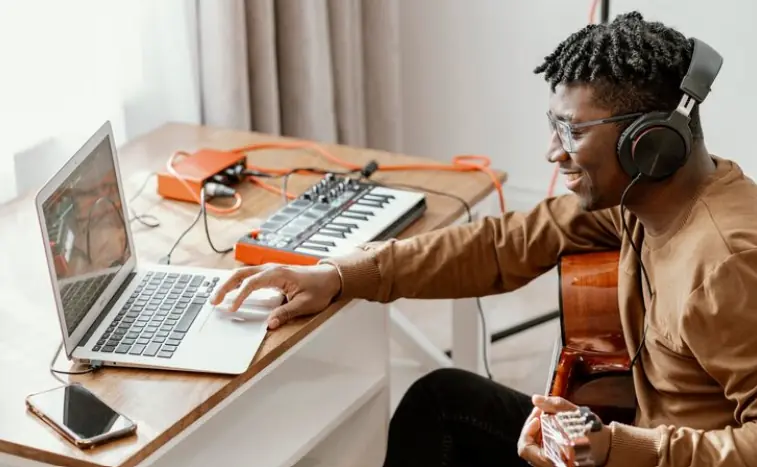
  • A Complete Guide to Writing Songs

    A Complete Guide to Writing Songs

    Writing songs is one of the most personal, powerful, and rewarding creative acts a human being can engage in. A great song can change someone’s day. A timeless song can change a generation. And in 2026, with the right combination of craft, tools, and release strategy, any aspiring songwriter — sitting in Mumbai, Manchester, Manila, or anywhere in between — can write, produce, and release songs that reach listeners across the world.

    But great songwriting is not magic. It is a craft built on understanding melody, harmony, rhythm, lyrics, structure, and emotion — and learning how those elements work together to create something memorable. In an era where over 120,000 tracks are uploaded to streaming platforms every day, simply writing a song is not enough. You need to write songs people actually want to hear, save, and share — and then release them strategically so they find the audiences they deserve.

    This complete guide walks you through everything you need to know about writing songs in 2026 — from understanding the core elements of songwriting and choosing the right structure to overcoming writer’s block, using AI tools intelligently, and releasing your finished songs globally through A3 Tunes for just ₹1 a day. By the end, you will have a clear, actionable roadmap to write better songs and share them with the world.


    Understanding the Art and Craft of Writing Songs in 2026

    Before diving into techniques, it helps to understand what songwriting really is — and why the rules have shifted in the streaming era.

    What Songwriting Really Means for Independent Artists Today

    Songwriting is the art of combining lyrics, melody, harmony, and rhythm into a complete musical idea that communicates emotion. Every great song — from a Tamil folk ballad to a Punjabi pop anthem to a global hip-hop hit — is built on this foundation. What changes from genre to genre is the style, instrumentation, and cultural context, not the underlying craft.

    For independent artists in 2026, songwriting is also a business skill. The songs you write determine your catalog, your streaming royalties, your sync opportunities, and your long-term brand. The more strong songs you write and release consistently, the more your career compounds.

    Why Memorable Songs Beat Technically Perfect Songs

    Streaming listeners are ruthless. About 35% of listeners skip a song within the first 30 seconds, and nearly half skip before the song ends. Technical perfection — flawless mixing, complex chord progressions, virtuosic performance — means nothing if your song does not grab attention immediately and hold it.

    Memorable songs win. They have hooks that stick in the listener’s head, lyrics that feel emotionally true, melodies that feel inevitable, and structures that pay off. Focus your songwriting on memorability first, polish second.

    How AI and Modern Tools Are Changing the Songwriting Process

    In 2026, AI tools like Soundverse, Suno, and Udio can generate lyric drafts, melody ideas, and even full song demos from text prompts. Browser-based DAWs let you write and record from anywhere. Stem separation tools let you analyze your favorite songs in detail. AI lyric writers help you break through writer’s block in seconds.

    These tools have lowered the barriers to entry dramatically — but they have not replaced the core craft. The songwriters who succeed in 2026 are using AI to accelerate their process, not to replace their voice.


    The Core Elements of Writing a Song

    Every great song combines five fundamental elements. Mastering each one is the foundation of strong songwriting.

    Melody — The Heartbeat of Every Memorable Song

    Melody is what people hum, whistle, and remember. A great melody can carry an average lyric to legendary status, while even brilliant lyrics struggle to find an audience without a strong melody behind them.

    Successful melodies typically move in stepwise motion — small steps up or down — with occasional leaps for emotional impact. They often have a focal note (a high point) that anchors the rest of the melody. They feel inevitable once you hear them, but unique enough to stand out. Spend more time on your melody than on any other single element.

    Harmony and Chord Progressions for Songwriting

    Harmony is built through chord progressions — the sequence of chords that supports your melody. The most common progression in pop music is I–V–vi–IV (for example, in C major: C–G–Am–F), used in thousands of hit songs across decades.

    Do not limit yourself to four chords. Explore minor chords, seventh chords, sus chords, and inversions to add color and emotional depth. Different chords evoke different feelings — major chords feel bright, minor chords feel introspective, diminished chords feel tense. Match your chord choices to the emotion of your song.

    Rhythm and Groove That Carry a Song Forward

    Rhythm is more than drums. It is the pulse and pacing of every element in your song — including the rhythm of your vocal phrasing. The most successful songs often have distinctive rhythmic identities that listeners can feel even before the lyrics register.

    Pay attention to the groove of your song. Is it driving and energetic? Slow and contemplative? Syncopated and unpredictable? Get the groove right and everything else falls into place.

    Lyrics That Connect Emotionally With Listeners

    Lyrics tell the story. They give the listener something to relate to, hold onto, and sing along with. The best lyrics balance specificity (the unique details that make a song feel real) with universality (the themes that anyone can connect with).

    Write how you talk. Sing how you feel. Avoid forced rhymes and clichés. The goal is not to impress other musicians — it is to reach real people.

    Song Structure — The Blueprint of a Complete Song

    Song structure is the arrangement of your song’s sections — intro, verse, pre-chorus, chorus, bridge, outro — and how they flow together. A great structure builds tension, delivers payoff, and keeps the listener engaged from start to finish. The structure you choose has as much impact on the listener’s experience as the melody and lyrics combined.


    Understanding Song Structure for Effective Songwriting

    Structure is the skeleton that holds your song together. Master it and your songwriting transforms.

    The Standard Verse-Chorus Song Structure Explained

    The most common modern song structure is: Intro → Verse 1 → Pre-Chorus → Chorus → Verse 2 → Pre-Chorus → Chorus → Bridge → Final Chorus → Outro. This structure works because it balances repetition (the chorus listeners remember) with variation (the verses and bridge that keep things interesting).

    The verse tells the story. The pre-chorus builds tension. The chorus delivers the main hook and emotional payoff. The bridge offers a contrasting moment before the final chorus lands harder than ever. Once you internalize this template, you can write countless variations of it.

    AABA, ABAB, and Other Classic Songwriting Structures

    The AABA structure (32-bar form) dominated American popular music in the early 20th century — used by Cole Porter, Bing Crosby, and later The Beatles in songs like “We Can Work It Out.” It consists of two A sections, a contrasting B section (the bridge), and a final A section.

    The ABAB structure alternates verses and choruses without a bridge, while ABABCB adds a bridge before the final chorus — common in modern pop. Older folk traditions sometimes use AAAA structures relying on a refrain to keep them interesting, as Bob Dylan did in “Tangled Up in Blue.”

    Each structure has its strengths. The more you understand them, the more options you have as a songwriter.

    Modern Non-Linear Structures Used by Today’s Biggest Artists

    In 2026, many of the biggest hits break traditional structure entirely. Travis Scott’s “SICKO MODE” stitches together three completely different song sections. Billie Eilish’s “Bad Guy” replaces a final chorus with a slow, bass-heavy outro. Hip-hop and pop artists routinely use beat switches, false endings, and unexpected drops to keep listeners on their toes.

    Non-linear structures work when the surprises still deliver emotional payoff. Use them when they serve the song — not just for novelty.

    Choosing the Right Song Structure for Your Genre

    Different genres lean on different structures. Pop and indie tend to use verse-chorus. Hip-hop often uses 16-bar verses with shorter choruses and frequent ad-libs. EDM uses build-drop structures. Bollywood and Indian classical-influenced songs often use mukhda-antara structures. Folk and acoustic songs sometimes lean on AAAA refrains.

    Study the songs you love in your genre. Map their structures section by section. Then use that framework as a starting point for your own writing.


    Step-by-Step Process for Writing a Song From Scratch

    Here is a proven workflow that takes you from blank page to finished song.

    Step 1 — Find Your Spark, Concept, or Hook Idea

    Every great song starts with a spark — a melody humming in your head, a lyric you cannot stop thinking about, an emotion you need to express, or a phrase that just sounds right. Capture every spark the moment it arrives. Use the voice memo app on your phone. Keep a notes file open at all times.

    Once you sit down to write, ask: What is this song about? What feeling do I want listeners to walk away with? What story am I telling? Even a single sentence answering these questions sets the direction for everything that follows.

    Step 2 — Improvise a Chorus Melody That Sticks

    The chorus is the heart of your song. Start there. Improvise a melody by humming or singing into your phone. Do not overthink it — many of the best melodies come from the first or second take. Award-winning songwriter LP has spoken about the importance of spontaneity in capturing the first instinct.

    Once you have a melody you love, work out the notes on an instrument or in your DAW. This melody will become the foundation everything else builds around.

    Step 3 — Build Your Chord Progression and Foundation

    Find chords that support your melody and match the emotion you want to convey. Start simple — four chords are enough for most songs. Common starting progressions include I–V–vi–IV (bright, uplifting), vi–IV–I–V (emotional, anthemic), and ii–V–I (jazzy, sophisticated).

    Lay down a simple drum pattern and bass line in the same key. This is your song’s foundation.

    Step 4 — Write Each Section of the Song

    With your chorus in hand, write your verses. Verses tell the story. They give context and depth before the chorus delivers the hook. Then add a pre-chorus if your song needs more build-up, and a bridge to create a moment of contrast before the final chorus.

    Sometimes the first verse leads directly into the chorus. Sometimes the song delays the chorus to build anticipation. There is no single right way — use what serves the song.

    Step 5 — Add Lyrics That Match the Emotion

    Once the melodies and chord progressions are in place, write your lyrics. Be flexible. Not every line needs to rhyme. The most effective lyrics have unified themes, clear images, and emotional truth. Rhyme is a tool — use it when it serves the song, abandon it when it forces awkward choices.

    Read your lyrics out loud. Sing them. Make sure they feel natural in the mouth and match the rhythm of your melody.

    Step 6 — Finalize Your Song Title and Hook

    Most songwriters do not name their songs until the end. Often the title comes from the most memorable lyric in the chorus, but there is no wrong way to choose one. The title should be evocative, easy to remember, and ideally appear somewhere in the chorus itself.

    Once your title is locked in, you have a finished song. Now you can move to demoing, producing, and eventually releasing it through a distributor like A3 Tunes.


    Writing Strong Lyrics That Connect With Listeners

    Lyrics are where songs become personal. Strong lyric writing is what separates forgettable songs from ones people return to for years.

    Storytelling Techniques for Lyric Writing

    Treat your song like a short story. Establish a character or situation in the first verse. Develop the story in the second verse. Use the bridge to introduce a twist, reflection, or change of perspective. Resolve the emotion in the final chorus.

    Even non-narrative songs benefit from this storytelling instinct. A clear emotional arc keeps listeners engaged from start to finish.

    Using Imagery, Metaphor, and Sensory Detail in Songs

    Specific details bring lyrics to life. Instead of writing “I was sad,” write about the rain on your bedroom window, the cold cup of tea on the table, the photo you keep turning over. Specific imagery lets listeners feel what you feel, even when their lives look nothing like yours.

    Metaphors and similes elevate lyrics above the literal. Compare emotions to physical things. Describe places like people, people like weather, time like rooms. The best lyrics often work on multiple levels — literal on the surface, deeper underneath.

    Rhyme Schemes, Cadence, and Internal Flow

    Rhyme makes lyrics catchy and memorable, but forced rhymes ruin songs. Learn common rhyme schemes (AABB, ABAB, ABBA) and use them as tools, not constraints. Internal rhymes, slant rhymes, and assonance can add musicality without sounding contrived.

    Pay attention to the cadence — how syllables fall against the beat. Read your lyrics out loud over the rhythm of your song. Adjust until they feel effortless.

    Writing Lyrics That Match Melody and Phrasing

    Lyrics and melody are partners. Each must support the other. Long melodic phrases need lyrics that breathe and flow. Short, punchy melodic phrases need tight, percussive lyrics. Sometimes the melody comes first and demands lyrics that fit. Sometimes a powerful lyric forces the melody to bend around it.

    The best songwriters develop both ears together — hearing how every syllable lands and adjusting until everything feels right.


    Crafting Memorable Melodies for Your Songs

    Melody is the most important single element in most popular music. Get it right and the song almost writes itself.

    How to Compose a Catchy Vocal Melody

    A catchy vocal melody is singable, memorable, and emotionally resonant. To compose one, hum freely without thinking about notes, sing without an instrument to avoid falling into familiar patterns, and record everything — even your worst ideas often contain a phrase worth keeping.

    Avoid melodies that try to do too much. The most enduring melodies are often surprisingly simple, built around a small number of repeated motifs with subtle variation.

    Stepwise Motion, Leaps, and Focal Notes in Melody

    Great melodies typically move in stepwise motion — one or two notes up or down at a time. This makes them feel natural and easy to sing. Occasional leaps to higher or lower notes create emotional spikes and dramatic moments.

    Most strong melodies have a focal note — usually a high note in the chorus that the rest of the melody builds toward and falls away from. Identify your focal note early and let it anchor the song.

    Building Hooks That Stay in the Listener’s Head

    The hook is the 15-30 second piece of your song that listeners cannot get out of their head. It might be the chorus melody, a vocal phrase, a guitar riff, a synth line, or a rhythmic pattern. Every great song has one.

    To write strong hooks, repeat your best ideas, simplify them ruthlessly, and put them in the most prominent place in your song — usually the opening of the chorus. If you cannot hum your hook within one listen, it is not strong enough yet.


    Using AI Tools to Write Songs Faster in 2026

    AI has become a powerful songwriting partner. Used well, it accelerates the process without replacing your creative voice.

    AI Lyric Writers and Songwriting Assistants

    Tools like Soundverse’s AI Lyrics Writer, Suno’s lyric generation, and various standalone apps can produce lyric drafts in any tone, theme, or genre within seconds. They are especially useful for breaking through writer’s block, generating fresh angles on a topic, or quickly drafting placeholder lyrics that you can rewrite into something personal.

    Treat AI-generated lyrics as raw material. Use the lines that resonate. Rewrite the rest. Add your own perspective, voice, and emotional truth.

    AI Melody, Chord, and Song Structure Generators

    AI music tools like Suno, Udio, Soundverse, and AIVA can generate complete melodic ideas, chord progressions, and even full song demos from simple prompts. These are useful for sparking inspiration, prototyping arrangements, and exploring genres you are less familiar with.

    Some artists use AI generators to create a starting point and then completely rewrite, restructure, and re-perform everything until it feels personally true. Others use AI only for inspiration without using any generated content directly. Both approaches work — find what fits your creative process.

    How to Use AI Without Losing Your Voice as a Songwriter

    The danger of AI is that it can produce technically competent but emotionally hollow songs. To avoid this trap, always start with your own creative intent, use AI to expand on ideas rather than replace them, rewrite AI-generated content in your own voice, and never release a song you are not personally proud of.

    Also stay aware of evolving AI disclosure requirements on streaming platforms. Spotify and other DSPs now require disclosure for tracks involving generative AI in certain cases. A trusted distributor like A3 Tunes helps you navigate these policies as they evolve.


    Common Songwriting Challenges and How to Beat Them

    Every songwriter hits walls. The trick is having strategies ready for when they appear.

    How to Overcome Writer’s Block as a Songwriter

    Writer’s block usually comes from one of three sources — pressure, lack of input, or boredom with your usual process. To break through, change your environment, write in a different time of day, switch instruments, try a new genre, write something deliberately bad to lower the stakes, or use AI tools to generate prompts.

    Sometimes the best fix is to take a break entirely. A long walk, a different creative project, or a few days away from songwriting often unblocks ideas faster than forcing yourself to write.

    Finishing Songs Instead of Starting New Ones

    Many songwriters start 50 songs and finish none. The fix is simple: force yourself to finish your first 10 songs even if they are not perfect. Finished songs teach you more than unfinished ones, and a small catalog of complete songs is worth more than a hard drive full of fragments.

    Set a deadline for every song. If something is not working, walk away for a day, then return with fresh ears and finish it.

    Avoiding Generic Lyrics, Predictable Melodies, and Tired Clichés

    Most beginner songs fall into predictable patterns — same chord progressions, same lyrical clichés, same melodic shapes. Break the pattern by studying songs outside your genre, writing from unusual perspectives, replacing clichés with specific imagery, and challenging yourself to write the same idea three different ways before settling on one.

    Balancing Structure and Spontaneity in Songwriting

    Great songs balance plan and play. Have a structure in mind. Have a theme. Have a target emotion. But leave space for accidents, surprises, and creative discoveries that emerge while you write. Many of the best lines, melodies, and structural choices come from moments of unplanned spontaneity within an otherwise disciplined process.


    Writing Songs Across Different Genres

    Every genre has its own songwriting conventions. Mastering them gives you flexibility as an artist.

    Songwriting for Pop, Indie, and Mainstream Markets

    Pop songs are built on hooks, accessibility, and emotional immediacy. Structures lean on verse-pre-chorus-chorus formats. Choruses arrive early — often within the first 60 seconds. Lyrics balance specificity with universal themes. Production polish matters.

    Indie songwriting allows more experimentation with structure, tone, and lyrical density while still rewarding strong melodies and emotional honesty.

    Songwriting for Hip-Hop, Rap, and Electronic Genres

    Hip-hop and rap songwriting prioritize lyrical flow, wordplay, internal rhymes, and storytelling within a 16-bar verse format. Hooks tend to be shorter and more rhythmic. Beat selection, cadence, and ad-libs are as important as the lyrics themselves.

    Electronic genres like EDM, house, and drum-and-bass often use minimal lyrics built around vocal hooks, with song structure organized around builds, drops, and breakdowns rather than verse-chorus templates.

    Songwriting for Folk, Acoustic, and Regional Indian Music

    Folk and acoustic songwriting often leans on storytelling, simple chord progressions, and authentic emotional delivery. Indian regional music — including Tamil, Telugu, Punjabi, Bengali, Marathi, and Bhojpuri songs — often uses mukhda-antara structures, classical raga influences, and cultural references rooted in specific traditions.

    Writing in regional languages opens up enormous audience opportunities. Streaming platforms in India aggressively promote regional content, and independent songwriters writing in their native languages are reaching millions of listeners. A3 Tunes actively supports Indian regional languages and genres.


    From Writing Songs to Recording and Releasing Them

    Writing the song is half the journey. Recording and releasing it brings it to the world.

    Demoing Your Song With Voice Memos and Simple DAWs

    Once your song is written, record a demo. Even a phone voice memo of you singing the melody and playing the chords is enough to start. Free DAWs like BandLab Studio and Cakewalk by BandLab let you build slightly more polished demos with basic drums, bass, and arrangement.

    Demos help you hear the song from outside your head, share it with collaborators, and refine arrangements before full production.

    Producing Your Song With AI Tools and Home Studio Gear

    Once your demo is solid, produce the full version. This involves recording final vocals, programming or recording instruments, designing sounds, and building the arrangement. AI tools can accelerate every step — from generating instrumental layers to stem separation for inspiration to AI-driven mixing.

    A modest home studio — a laptop, a USB microphone, headphones, and a free DAW — is enough to produce streaming-quality music. For a complete walkthrough, see our guide on how to make music and release on the A3 Tunes blog.

    Mixing, Mastering, and Preparing Your Song for Release

    Once your song is fully produced, mix it for clarity and balance, then master it for streaming loudness standards (around -14 LUFS for Spotify). AI mastering tools like LANDR, eMastered, and CloudBounce deliver release-ready masters in minutes. Get your cover art designed (3000×3000 px), finalize your metadata (titles, credits, genre, language), and set a release date 3-4 weeks out to allow time for pre-save campaigns and playlist pitching.


    How to Release Your Songs Globally After Writing Them

    The final step turns your songwriting into a career.

    Why Every Songwriter Needs a Music Distributor

    A music distributor is the service that delivers your finished songs to Spotify, Apple Music, JioSaavn, YouTube Music, Amazon Music, Deezer, Instagram, TikTok, and 150+ other streaming platforms. Without a distributor, you cannot get your music onto these platforms — they only accept submissions through approved distribution partners.

    Distributors also collect royalties from every territory where your song is streamed, process payouts, generate ISRC and UPC codes, and increasingly help with rights management and AI compliance.

    Distribute Your Songs With A3 Tunes for ₹1 a Day

    A3 Tunes makes global distribution affordable for every independent songwriter. Plans start at just ₹1 a day under the Startup Plan — roughly $10 a year — for distribution to 150+ platforms including Spotify, Apple Music, JioSaavn, YouTube Music, Instagram, TikTok, Deezer, Gaana, and Amazon Music.

    Additional Professional, EP, and Saver plans cater to different release patterns and feature needs. There are no hidden fees, no royalty cuts, and no surprises.

    Protect Your Songwriting Rights and Earn Royalties

    A3 Tunes provides comprehensive rights management support across publishing, mechanical, performance, and synchronization rights — ensuring you collect from every legitimate revenue stream your songs generate. You retain 100% ownership of your music and all associated rights forever.

    Real-time dashboard analytics show your streams, royalty earnings, fan locations, and platform-specific performance — giving you the data you need to plan your next release with confidence.


    Songwriting Tips From Successful Independent Artists

    The most successful songwriters share habits that any aspiring writer can adopt.

    Write Every Day to Strengthen Your Songwriting Muscle

    Songwriting is a craft, not just a talent. Write something every day — even just a single line, a melodic idea, or a chord progression. Over weeks and months, this consistency compounds into skill that beginners cannot imagine.

    The most prolific songwriters often produce hundreds of songs to find the few that become hits. Quantity is what produces quality.

    Step Away From Your Instrument to Find New Ideas

    Sitting at the same piano or guitar can lock you into familiar patterns. Try writing melodies in your head while walking. Sing ideas into your phone without an instrument nearby. Then return to your instrument and figure out how to play what you imagined.

    This trick — championed by countless professional songwriters — produces fresher, more interesting melodies than instrument-led writing.

    Collaborate With Other Songwriters and Producers

    Co-writing accelerates skill development and produces songs you could never write alone. Find other songwriters whose taste you respect, schedule writing sessions, and share ideas openly. The dynamic of two minds bouncing ideas often unlocks creative breakthroughs.

    Online platforms, songwriter communities, and producer collectives make collaboration easier than ever in 2026.

    Get Feedback and Refine Your Songwriting Craft

    Share your work. Get honest feedback. Listen to criticism without ego. The songwriters who improve fastest are the ones who actively seek input and use it to revise. Join songwriting communities online, post in producer forums, share work with trusted peers, and use feedback to refine your craft over time.


    Songwriting Trends Shaping 2026

    Modern songwriting is evolving fast. Staying aware of trends helps you make choices that match how listeners actually consume music today.

    Shorter Songs, Stronger Hooks, and Faster Intros

    The average hit song in 2026 is shorter than it was a decade ago — often under three minutes. Choruses arrive faster, sometimes within the first 30 seconds. Intros are tight and immediately grabbing. This shift is driven by streaming platforms that reward songs which retain listeners and short-form video platforms where songs need to land instantly to go viral.

    Multilingual and Cross-Cultural Songwriting

    Songs combining English with Hindi, Punjabi, Spanish, Korean, or other languages are seeing massive global success. Independent songwriters from regional Indian markets are particularly well-positioned — multilingual writing reaches both local and international audiences. Cross-cultural collaborations and language switching mid-song are now mainstream creative tools.

    AI-Assisted Co-Writing and the Future of Songwriting

    AI is becoming a creative co-writer for many songwriters — not as a replacement but as a productivity tool. Conversational AI music platforms like Soundverse Agent let songwriters describe what they want and receive instant musical responses to iterate on. This trend will accelerate, and the songwriters who learn to use these tools intelligently will move faster than those who do not.


    Why A3 Tunes Is the Perfect Partner for Songwriters

    Once your songs are written, recorded, and ready to share with the world, you need a distribution partner built around your needs.

    Affordable Distribution for Every Independent Songwriter

    A3 Tunes offers global distribution starting at just ₹1 a day — one of the most affordable price points in the global music distribution industry. For roughly $10 a year, you get distribution to 150+ platforms with full rights retention, real-time analytics, and dedicated artist support.

    Full Rights Retention and Comprehensive Royalty Management

    When you distribute through A3 Tunes, you retain 100% ownership of your music and earn 100% of your royalties. We act only as a delivery and royalty collection service — your masters, publishing rights, and creative control remain entirely yours. Comprehensive rights management support across publishing, mechanical, performance, and synchronization rights ensures you earn from every legitimate use of your songs.

    Built for Indian Songwriters, Global Audiences

    Headquartered in Bengaluru and backed by Aiplex, A3 Tunes is uniquely positioned to serve Indian independent songwriters while delivering true global reach. We support Indian languages and genres across the country’s full diversity — from Tamil and Telugu to Punjabi, Bengali, Marathi, Malayalam, Assamese, and more — connecting regional songwriters with both Indian and international listeners.

    Ready to release your first song? Sign up with A3 Tunes today and get your music live in days.


    Frequently Asked Questions About Writing Songs

    How do I start writing songs as a complete beginner? Start by listening to songs you love and analyzing why they work. Then pick a simple structure (verse-chorus-verse-chorus-bridge-chorus), improvise a chorus melody, build a basic chord progression around it, add lyrics that express a clear emotion, and finish the song even if it is not perfect. Skill builds through finishing songs, not through endless tweaking.

    What are the most important elements of a song? The five core elements of every song are melody, harmony, rhythm, lyrics, and structure. Each one shapes how the song feels and how memorable it becomes. Strong songwriters develop all five in balance — though melody is often the most important single element in popular music.

    Do I need to know music theory to write good songs? No, but basic music theory helps. Knowing the difference between major and minor keys, understanding common chord progressions, and recognizing song structure all accelerate your writing. A few hours of YouTube tutorials covering the basics is enough to dramatically improve your songwriting.

    Can I use AI to write songs? Yes. AI tools like Soundverse, Suno, and Udio can generate lyrics, melodies, chord progressions, and full song demos to spark ideas or break through writer’s block. The best approach is to use AI as a creative partner — generating raw material that you refine, rewrite, and personalize until the song feels uniquely yours. Be aware of evolving AI disclosure requirements on streaming platforms.

    How long does it take to write a song? A simple song can be written in 30 minutes. A polished, finished song with refined lyrics, melody, and arrangement typically takes 5-20 hours of work spread across days or weeks. Some legendary songs were written in minutes; others took years. There is no single right timeline.

    How do I release the songs I have written? You need a music distributor. A3 Tunes delivers your songs to Spotify, Apple Music, JioSaavn, YouTube Music, and 150+ other platforms starting at just ₹1 a day, with full rights retention and 100% royalty earning.

    Can I write and release songs in regional Indian languages? Yes. A3 Tunes proudly supports Indian languages and genres across the country’s full diversity — Tamil, Telugu, Punjabi, Bengali, Marathi, Malayalam, Assamese, and many more. Regional language songs are seeing massive growth in both Indian and global markets, making this an excellent time to write and release in your native language.

    How do I protect the songs I write? In India and most countries, copyright is automatic the moment you create an original work. For added protection on important releases, you can register with publishing administrators and performance rights organizations like IPRS in India. Your distributor handles ISRC and UPC codes that protect tracking and royalty collection globally.


    Final Thoughts

    Writing songs is one of the most rewarding creative practices a human being can pursue. In 2026, the tools, resources, and distribution networks available to independent songwriters are more accessible and powerful than at any point in history. The only barrier left is whether you actually sit down, write the song, finish it, and release it.

    The songwriters who succeed are not the most talented ones. They are the ones who write every day, finish what they start, learn from feedback, and release consistently. They treat songwriting as a craft to be mastered over a lifetime — not a one-time burst of inspiration. They use AI tools to accelerate their workflow without losing their voice. And they partner with the right distribution service to bring their finished songs to the world.

    A3 Tunes is built to be the distribution partner for songwriters at every stage. With global reach to 150+ platforms, full rights retention, real-time analytics, transparent pricing starting at just ₹1 a day, and dedicated support for Indian and global songwriters, we give you everything you need to share your songs with the world and build something that lasts.

    Your songs deserve to be heard. The world is ready to listen. Start your songwriting journey with A3 Tunes today.

  • How to Make Music and Release

    How to Make Music and Release

    Making music has never been more accessible — or more competitive. In 2026, any person with a laptop, a pair of headphones, and a song idea can produce a studio-quality track from their bedroom and release it to over 150 streaming platforms worldwide in a matter of days. The tools, technology, and distribution networks that once required record label budgets are now available to every independent artist for the price of a coffee a month.

    But making music and actually releasing it well are two different challenges. The journey from a spark of inspiration to a fully released, charting track involves dozens of decisions — choosing the right DAW, learning music theory, recording and mixing your sound, mastering for streaming, picking a release date, distributing globally, and promoting smartly across social platforms. Skip the wrong step and your release lands with no momentum. Get the workflow right, and you build a career that compounds with every track.

    This complete guide walks you through everything you need to know about how to make music and release it like a professional in 2026 — from setting up your home studio and learning production fundamentals to mastering your final track, distributing globally, and earning streaming royalties. By the end, you will have a clear, actionable roadmap to write, record, produce, release, and grow your music with A3 Tunes supporting you every step of the way.


    Understanding What It Takes to Make Music in 2026

    Before diving into the tools and techniques, it helps to understand the new reality of making music as an independent artist. The barriers that once defined this industry are gone — replaced by new ones that are far more learnable.

    The New Reality of Making Music as an Independent Artist

    In 2026, more than 68% of independent creators report using AI-powered tools in their music workflows. Free DAWs like BandLab Studio and Cakewalk offer professional-grade capabilities at zero cost. Cloud-based platforms let you collaborate with producers across the world in real time. And distribution services like A3 Tunes put your finished music on Spotify, Apple Music, JioSaavn, YouTube Music, and 150+ other platforms for as little as ₹1 a day.

    The result is a music industry where independent artists now account for over 40% of global recorded music revenue. Bedroom producers in Delhi, Kochi, Guwahati, and Shillong are reaching listeners in Tokyo, São Paulo, and Berlin without ever signing a label deal.

    How AI, Cloud DAWs, and Low-Cost Gear Have Transformed Music Creation

    The combination of AI and accessible technology has compressed the music creation timeline dramatically. AI tools now generate beats, melodies, and lyrics from text prompts. Stem separation tools isolate vocals, drums, and instruments from any audio file. AI mastering services deliver streaming-ready audio in minutes. Affordable USB microphones produce broadcast-quality recordings. And cloud DAWs let you make music on any device, from anywhere.

    A song that once required weeks in a professional studio can now be created in days — sometimes hours — from a bedroom setup costing under ₹20,000.

    Why Making Music Is Only Half the Journey — Release Strategy Matters Too

    Here is the hard truth: making a great song is necessary but not sufficient. With over 120,000 tracks uploaded to streaming platforms every single day, your music will not be heard unless your release strategy is just as strong as your production.

    That means planning your release date in advance, building a pre-save campaign, pitching to playlists, distributing through a reliable global service, promoting on social media, and following up with consistent releases. The artists who treat the release as a project — not an afterthought — are the ones who build sustainable careers.


    Setting Up Your Home Studio to Make Music

    You do not need a professional studio to make professional music. You do need the right basic setup. Here is what actually matters.

    Essential Equipment Every Beginner Needs to Make Music

    The bare minimum to start making music today is a computer (laptop or desktop), a Digital Audio Workstation (DAW), a pair of decent headphones, and an internet connection. That is it. Everything else — microphones, MIDI keyboards, audio interfaces, monitors — improves your sound but is not required to begin.

    Many new producers waste thousands of rupees on gear they do not need. Your skills matter 100 times more than your equipment in the first year. Start minimal, finish your first 10 tracks, and then upgrade based on what your music actually needs.

    Choosing the Right Digital Audio Workstation (DAW) for Your Workflow

    The DAW is the software where you actually make music. The best DAWs for beginners in 2026 include:

    Free options: BandLab Studio (cloud-based, browser-friendly, completely free), Cakewalk by BandLab (Windows-only, professional-grade), and Tracktion Waveform Free (cross-platform with a minimal interface).

    Paid options: Ableton Live (excellent for electronic music and live performance), FL Studio (popular with hip-hop and EDM producers), Logic Pro (Mac-only, deep features for songwriters), and Pro Tools (industry standard for recording studios).

    Pick one DAW and stick with it for at least six months. Switching constantly between DAWs slows your learning. The best DAW is the one you actually finish songs in.

    Headphones, Monitors, Microphones, and Audio Interfaces Explained

    Headphones are essential for making music in any room. Closed-back headphones like the Audio-Technica ATH-M40x or Sony MDR-7506 give you accurate sound without spending a fortune. Studio monitors (speakers designed for music production) help once your setup matures, but headphones are enough to start.

    Microphones vary by use. A USB microphone like the Audio-Technica AT2020USB+ or Rode NT-USB Mini is perfect for vocal recording without an interface. For higher-quality recordings, pair a condenser microphone with an audio interface like the Focusrite Scarlett Solo or PreSonus AudioBox.

    Room Treatment and Acoustic Setup for Better Recordings

    You do not need a sound-proofed studio. You do need to minimize echo and background noise. Record in a small room with soft furniture, hang blankets behind your microphone to absorb reflections, close windows, turn off fans and AC during recording, and use a pop filter for vocals. These simple tweaks dramatically improve recording quality without spending a rupee.


    Learning the Fundamentals of Music Production

    You can make music without formal training, but understanding a few core principles accelerates your progress enormously.

    Music Theory Basics Every Producer Should Know

    Learn the difference between major and minor keys, understand basic chord progressions (I-V-vi-IV is the most common in pop music), recognize common scales (C major, A minor are great starting points), and study song structure (verse, chorus, bridge). You do not need a music degree — a few hours on YouTube covering these basics will transform your productions immediately.

    Understanding Song Structure, Arrangement, and Composition

    Most popular songs follow a predictable structure: intro, verse, pre-chorus, chorus, verse, pre-chorus, chorus, bridge, final chorus, outro. Within this structure, arrangement decisions — when to bring in drums, when to drop the bass, when to layer harmonies — create the emotional journey that hooks listeners. Study songs you love. Notice when instruments enter and exit. Then apply the same arrangement principles to your own tracks.

    How to Find Your Sound and Define Your Genre

    Your sound is the combination of your influences, your strengths, your story, and your taste. To find it, list your 10 favorite artists and study what they have in common. Analyze the production techniques, instrumentation, and emotional themes that connect them. Then experiment until your music sits in a similar sonic space but feels uniquely yours.

    Defining your genre helps with playlist pitching, marketing, and metadata. You can blend genres, but pick one primary and one secondary tag for each release.


    Step-by-Step Process to Make Music From Scratch

    Here is the actual workflow most independent producers follow to take a song from idea to finished master.

    Step 1 — Inspiration, Concept, and Songwriting

    Every song starts with an idea — a melody humming in your head, a lyric you cannot stop thinking about, an emotion you need to express. Capture ideas the moment they arrive using your phone’s voice memo app. When you sit down to work on a song, start with the concept: What is this song about? What feeling do you want listeners to walk away with? What story are you telling?

    Write your lyrics first, or your melody first, or both at once. There is no single right way.

    Step 2 — Creating the Beat, Melody, and Chord Progression

    Open your DAW and lay down the foundation. Start with drums — even a simple kick-snare-hi-hat pattern works. Add a bass line in the same key as your melody. Build a chord progression using piano, guitar, or synth. Layer in your main melody on top.

    Keep it simple at first. The best songs are often built on three or four chords and a strong melody. Use AI tools like Soundverse, Suno, or LANDR for inspiration and to generate quick starting points, then bring those ideas into your DAW and shape them with your own creative direction.

    Step 3 — Recording Vocals and Live Instruments

    If your song needs vocals, record them in a quiet room with a pop filter and good microphone technique. Record multiple takes of each section so you have options when editing. Layer harmonies and ad-libs to add depth.

    For live instruments, record each one separately, in good acoustic conditions, with consistent mic placement. Use a metronome or click track to keep timing tight.

    Step 4 — Arranging the Full Song From Intro to Outro

    Take your verse, chorus, and any other sections and arrange them into a full song. Copy and paste your loops into intro, verse, chorus, bridge, and outro sections. Vary the instrumentation across sections to create movement — strip back during verses, add layers during choruses, build tension in the bridge.

    Aim for a total song length of 2:30 to 3:30 — the sweet spot for streaming platforms in 2026.

    Step 5 — Mixing Your Track for Clarity and Balance

    Mixing is the process of balancing volume, EQ (equalization), panning, and effects across all your tracks so every element sits properly in the final song. Start with rough volume balance, then EQ each track to carve out its space in the frequency spectrum, add reverb and delay for depth, compress dynamic elements to even out levels, and pan instruments left and right for stereo width.

    AI mixing tools like RoEx Automix and LANDR can help beginners get to a solid mix faster while educating you about the techniques used. A survey by Moises found that 32% of artists using AI are using it for mixing or mastering.

    Step 6 — Mastering Your Track for Streaming Platforms

    Mastering is the final polish — making your track sound loud, clear, and consistent across all listening environments (headphones, speakers, car stereos, phone earbuds). Streaming platforms have specific loudness standards (around -14 LUFS for Spotify), and proper mastering ensures your track sounds competitive against major label releases.

    AI mastering services like LANDR, eMastered, and CloudBounce deliver streaming-ready masters in minutes for less than ₹500 per track. For more critical releases, consider hiring a human mastering engineer.


    Using AI Tools to Make Music Faster in 2026

    AI has become the great equalizer in music creation. Used wisely, it accelerates your workflow without diluting your artistic identity.

    AI Music Generators for Beats, Melodies, and Lyrics

    AI music generators like Suno, Udio, Soundverse, AIVA, and SOUNDRAW let you generate full beats, melodies, and even complete songs from text prompts. Suno is widely considered the best all-around AI music generator in 2026, used by nearly 100 million people for everything from quick demos to finished tracks with stem export and MIDI export options.

    Use these tools to spark ideas, prototype demos quickly, or generate variations you can chop into your own productions. Then bring the ideas into your DAW and make them your own.

    AI Vocal Tools, Stem Separation, and Sample Discovery

    AI vocal tools like Kits.AI Pitch Editor offer browser-based vocal tuning and re-synthesis without needing a DAW or plugins. Stem separation tools like Moises.ai isolate vocals, drums, bass, and other instruments from any audio file — perfect for remixing, sampling, or learning from your favorite songs. AI sample discovery tools like Sampla.ai find the perfect loop or sound for your track in seconds, saving hours of crate-digging.

    AI Mixing and Mastering for Independent Artists

    AI mixing platforms like RoEx Automix automatically balance, EQ, and process your stems while educating you about the techniques applied. AI mastering platforms like LANDR have enhanced over 5 million tracks and deliver release-ready masters in minutes. Combined, these tools let independent artists produce professional-grade music without needing access to expensive studio engineers.

    How to Use AI Without Losing Your Creative Identity

    AI is a tool, not a replacement for your creativity. Use it to remove technical bottlenecks, generate ideas, and accelerate workflows — but always keep your taste, vision, and personality at the center of your music. The artists who win in 2026 are not the ones who let AI make their music for them. They are the ones who use AI to bring their unique creative ideas to life faster.

    Also stay aware of evolving AI disclosure requirements on streaming platforms. Spotify and other DSPs now require some form of AI disclosure for tracks involving generative AI, and your distributor — like A3 Tunes — can help you navigate these policies.


    How to Prepare Your Music for Release

    A great song that is poorly prepared for release loses momentum before it even reaches listeners. Get the prep right and you give your track its best shot.

    Final Quality Checks Before You Release Your Music

    Before you upload anything, listen to your final master on at least three different systems — headphones, phone speakers, and a car stereo. Check for clipping, distortion, awkward transitions, or volume imbalances. Get feedback from at least three trusted listeners. Sit with the track for a day or two before finalizing — fresh ears often catch what tired ears miss.

    Cover Art, Metadata, and Credits — The Release Essentials

    Your cover art is the visual identity of your release. It must be a square image, 3000 by 3000 pixels, in JPG or PNG format, with no blurry text, web addresses, or unauthorized logos or imagery. Hire a designer or use tools like Canva to create something striking and original.

    Metadata includes your track title, artist name (exactly as you want it displayed everywhere), primary and secondary genre, language, songwriter and producer credits, and release date. Clean metadata is the difference between a smooth release and weeks of delays and rejected uploads.

    ISRC Codes, UPC Codes, and Why They Matter

    ISRC (International Standard Recording Code) is a unique identifier assigned to every individual track, allowing it to be tracked across all platforms and territories for royalty collection. UPC (Universal Product Code) is a similar identifier at the release level (album, single, or EP).

    You do not need to buy these codes separately. Quality distributors like A3 Tunes generate ISRC and UPC codes automatically as part of the upload process at no extra cost.

    Choosing the Right Release Date and Format

    Most major releases drop on Fridays globally to align with chart cycles. Pick a Friday at least three to four weeks in the future to give yourself time for pre-save campaigns, playlist pitching, and editorial submissions.

    Decide whether to release as a single, EP (3–6 tracks), or album (7+ tracks). For new artists, releasing singles every 4-6 weeks is often the best strategy — it keeps you in algorithmic favor and builds momentum over time.


    How to Release Your Music Globally Through a Distributor

    Releasing your music to the world requires one critical partner: a music distributor.

    What Is a Music Distributor and Why You Need One

    A music distributor is the service that delivers your finished tracks to streaming platforms like Spotify, Apple Music, JioSaavn, YouTube Music, Amazon Music, Deezer, Instagram, TikTok, and over 150 other digital service providers. Without a distributor, you cannot get your music onto these platforms — they only accept submissions through approved distribution partners.

    A great distributor handles metadata formatting, code generation, royalty collection, payouts, dashboard reporting, and increasingly rights management and AI compliance support.

    Comparing Free vs Paid Music Distribution Services

    Free distributors like Amuse’s free tier and UnitedMasters typically take a percentage of your royalties (often 10-30%) in exchange for the no-cost upload. Paid distributors like A3 Tunes, DistroKid, TuneCore, and CD Baby charge flat annual or per-release fees and let you keep 100% of your royalties.

    For any artist serious about long-term growth, a low-cost paid plan delivers significantly better value than a free service taking a permanent cut of your earnings. To dive deeper into pricing models, see our complete guide on music distribution cost for independent artists.

    How to Upload Your Music Through A3 Tunes

    Releasing your music through A3 Tunes takes just a few minutes. Sign up with your email or mobile number, choose your plan, and access the upload dashboard. Upload your audio file along with cover art and metadata, choose your target platforms, set your release date, and confirm. A3 Tunes handles formatting for each DSP, generates your ISRC and UPC codes, and delivers your music to all selected platforms — typically within 2–7 business days.

    Distribute Your Music to 150+ Platforms for Just ₹1 a Day

    A3 Tunes offers professional-grade global distribution starting at just ₹1 a day under the Startup Plan — roughly $10 a year. For that price, you get distribution to over 150 platforms including Spotify, Apple Music, JioSaavn, YouTube Music, Instagram, TikTok, Deezer, Gaana, and Amazon Music, plus full rights retention, real-time analytics, and dedicated artist support.

    Additional plans include Professional, EP, and Saver tiers tailored to artists at different release frequencies and feature needs. Explore all options on the A3 Tunes pricing page.


    Promoting Your Music After You Release It

    Releasing your music is just the beginning. Promotion is what separates released tracks from successful ones.

    Pre-Save Campaigns and Building Hype Before Release

    Pre-save campaigns let fans commit to streaming your song the moment it drops. This boosts your first-day momentum and signals to streaming algorithms that your release deserves promotion. Set up pre-save links 3-4 weeks before release and promote them across your social channels.

    Build hype with teasers, behind-the-scenes content, lyric snippets, and short audio clips. The first 48 hours after release are the most important window for algorithmic momentum.

    Pitching Your Music to Editorial and Independent Playlists

    Submit your tracks to Spotify for Artists’ editorial team at least 7 days before release. Reach out to independent playlist curators with personalized, professional pitches. Use platforms like SubmitHub and Daily Playlists to pitch to curated lists.

    Playlist placements drive significant streams and build listener relationships that pay off long after release week.

    Using Instagram Reels, TikTok, and YouTube Shorts to Grow Your Audience

    Short-form video on Instagram Reels, TikTok, and YouTube Shorts now dominates music discovery. A single viral Reel can take an unknown artist from a few hundred streams to millions in days. Create authentic, engaging short videos using clips of your music — performance footage, lyric breakdowns, behind-the-scenes studio moments, fan reactions, and creative storytelling all perform well.

    Post consistently. Engage with comments. Collaborate with creators in your niche. The algorithms reward activity and authenticity.

    Email, WhatsApp, and Direct-to-Fan Promotion Strategies

    Build an email list and a WhatsApp community from day one. These direct-to-fan channels do not depend on algorithms — they let you reach your true fans whenever you have something to share. Use Mailchimp, Substack, or simple Google Forms for email capture. WhatsApp Business or WhatsApp Channels work well for direct community building.


    Understanding Royalties and Earnings After You Release Music

    Once your music is live, it starts earning royalties. Understanding how the system works helps you maximize your income.

    How Streaming Royalties Work in 2026

    Every time someone streams your song, downloads it, or uses it in a video, you earn a small royalty. These royalties are collected by the streaming platforms, passed to your distributor, and then paid out to you. Exact per-stream rates vary by platform, country, and listener subscription type — but the model is consistent: more streams across more platforms means more income.

    Publishing, Mechanical, Performance, and Sync Royalties Explained

    Publishing royalties relate to the underlying composition (melody, lyrics, structure). Mechanical royalties are triggered each time your music is reproduced via streams or downloads. Performance royalties apply when your music is performed publicly — on radio, TV, in restaurants, or at live events. Sync royalties are paid when your music is licensed for films, TV shows, ads, video games, or online content.

    Quality distributors like A3 Tunes support comprehensive rights management across all of these categories, ensuring you collect from every legitimate revenue stream.

    How to Maximize Your Music Earnings Long-Term

    Release consistently. Tag metadata accurately. Register with publishing administrators and performance rights organizations. Pursue sync placements through your distributor or specialized agencies. Diversify income with merchandise, direct fan support, live shows, and brand partnerships. The most successful independent artists in 2026 treat streaming as one income stream among several — not their only source.


    Common Mistakes Artists Make When They Make and Release Music

    Even talented artists make avoidable mistakes. Watching for these saves time, money, and momentum.

    Releasing Unfinished or Unmastered Tracks

    Many new artists rush their first releases. The result is tracks that sound amateurish compared to the competition on streaming platforms. Always master your tracks (AI mastering is enough for most independent releases), check the final audio on multiple systems, and only release music you are genuinely proud of.

    Skipping Metadata, Pre-Save, and Release Strategy

    Releasing without a pre-save campaign, editorial pitch, or social media plan leaves enormous reach on the table. Treat every release as a project with a 4-6 week marketing rollout, not just an upload.

    Choosing the Wrong Distributor or Settling for High Royalty Cuts

    Free distributors that take 20-30% of your royalties forever can cost you significantly more over time than a flat-fee subscription. Choose a transparent, affordable distributor like A3 Tunes that lets you keep 100% of your earnings.

    Not Promoting Music Consistently After Release

    The first 48 hours matter most, but promotion does not stop after release week. Keep pushing your track for weeks and months — through new social content, playlist outreach, fan engagement, and consistent follow-up releases. Music careers are built over years, not days.


    Music Creation and Release Trends Shaping 2026

    Staying ahead of trends helps you make decisions that pay off long term.

    AI Co-Production and Conversational Music Tools

    AI music platforms are evolving from simple generators into conversational co-producers that adapt to your style and reasoning. Tools like Soundverse Agent and Suno’s full audio workstation are blurring the line between human and AI creativity, while also raising important questions about ethics, originality, and disclosure on streaming platforms.

    Direct-to-Fan Revenue Beyond Streaming

    Streaming alone is a fragile business model. Smart artists are diversifying with merchandise, ticketed live streams, fan subscription platforms, exclusive content drops, and direct sales. Building strong direct fan relationships gives artists income independence and creative freedom.

    The Rise of Regional and Multilingual Music in India

    Music in regional Indian languages — Tamil, Telugu, Punjabi, Bengali, Marathi, Malayalam, Assamese, and more — is having a renaissance. Streaming platforms are aggressively promoting regional content, and Indian artists releasing in their native languages are reaching massive new audiences both domestically and internationally. A3 Tunes actively supports Indian languages and genres across its catalog, making it an ideal distribution partner for regional artists.


    Why A3 Tunes Is the Smart Choice to Release Your Music

    Once your music is finished, the distributor you choose shapes everything that comes next. Here is why A3 Tunes is built specifically for the modern independent artist.

    Distribute Globally for ₹1 a Day Across 150+ Platforms

    A3 Tunes offers global music distribution to 150+ platforms — including Spotify, Apple Music, JioSaavn, YouTube Music, Instagram, TikTok, Deezer, Gaana, and Amazon Music — starting at just ₹1 a day. That is one of the most affordable price points in the global music distribution industry, with no hidden fees and no royalty cuts.

    Full Rights Retention and 100% Royalty Earning

    When you release through A3 Tunes, you retain 100% ownership of your music and all associated rights. We act only as a delivery and royalty collection service — your masters, publishing rights, and creative control remain entirely yours. There are no contract lock-ins and no surprises.

    Real-Time Dashboard, Analytics, and Artist Support

    Every A3 Tunes plan includes a real-time analytics dashboard showing streams, revenue, fan locations, and platform-specific performance. We also offer comprehensive rights management support covering publishing, mechanical, performance, and synchronization rights — features competitors often reserve for premium tiers. And our dedicated artist support team is built to help you navigate every step from upload to royalty payout.

    Built for Indian Independent Artists and Global Creators

    Headquartered in Bengaluru and backed by Aiplex, A3 Tunes is uniquely positioned to serve Indian independent artists while also delivering true global reach. We support Indian languages and genres across the country’s full diversity — from Tamil folk and Punjabi pop to Bengali rock, Assamese rap, and Malayalam indie — while connecting regional artists with international audiences.

    Ready to release your first track? Sign up with A3 Tunes today and get your music live in days.


    Frequently Asked Questions About How to Make Music and Release

    How do I start making music as a complete beginner? Start with a free DAW like BandLab Studio or Cakewalk, a pair of decent headphones, and your laptop. Spend a few hours learning basic music theory through YouTube tutorials. Then focus on finishing your first 10 tracks — even imperfect ones. Skill builds fastest through making music, not watching tutorials.

    What is the best DAW for making music in 2026? The best DAW is the one you actually finish songs in. For free options, BandLab Studio and Cakewalk are excellent. For paid DAWs, Ableton Live, FL Studio, and Logic Pro (Mac only) are industry standards. Pick one and stick with it for at least six months before considering a switch.

    Can I make music using only AI tools? Yes. AI tools like Suno, Soundverse, Udio, and Loudly can generate complete songs from text prompts. However, the most successful artists in 2026 use AI to accelerate workflows and spark ideas rather than fully outsource creativity. Streaming platforms also have evolving disclosure requirements for AI-generated content.

    How long does it take to make a song? A simple beat or instrumental can be made in a few hours. A complete song with vocals, full arrangement, mixing, and mastering typically takes 10-40 hours of work spread across days or weeks. AI tools can compress this significantly for prototypes and demos.

    How do I release my music on Spotify, Apple Music, and JioSaavn? You need a music distributor. A3 Tunes delivers your music to Spotify, Apple Music, JioSaavn, YouTube Music, and 150+ other platforms starting at just ₹1 a day, with full rights retention and 100% royalty earning.

    How much does it cost to release music globally? Affordable music distribution starts at around ₹1 a day through services like A3 Tunes. This covers global distribution to 150+ platforms, ISRC and UPC code generation, and full rights retention. Free services exist but typically take 10-30% of your royalties permanently.

    Do I need to copyright my music before releasing it? In India and most countries, copyright is automatic the moment you create an original work. Formal registration is optional but recommended for important releases. Your distributor handles ISRC and UPC code generation, which protects your tracking and royalty collection rights globally.

    Can I release music in regional Indian languages through A3 Tunes? Yes. A3 Tunes proudly supports Indian languages and genres across the country’s full diversity — Tamil, Telugu, Punjabi, Bengali, Marathi, Malayalam, Assamese, and many more. Regional artists can reach both Indian and global audiences through a single upload.


    Final Thoughts

    Making music in 2026 is more accessible than at any point in human history. Free DAWs, AI tools, affordable equipment, and global distribution platforms have removed virtually every barrier that once stood between you and a release. The question is no longer “Can I make music?” — it is “Will I actually finish, release, and keep building?”

    The artists who win in 2026 are the ones who treat music as a craft, a business, and a long-term commitment. They set up their home studios, learn the fundamentals, finish their tracks, master them properly, prepare their releases carefully, distribute through trusted partners, and promote consistently across every channel that matters.

    A3 Tunes is built to be the distribution partner for exactly that kind of artist. With global reach to 150+ platforms, full rights retention, real-time analytics, transparent pricing starting at just ₹1 a day, and dedicated support for Indian and global creators, we give independent artists everything they need to release their music to the world and build something that lasts.

    Your music deserves to be heard. The world is ready to listen. Start your journey with A3 Tunes today.

  • Affordable Music Distribution Cost for Independent Artists

    Affordable Music Distribution Cost for Independent Artists

    Releasing music to the world has never been more accessible — but the actual price tag of doing it right can still confuse most independent artists. With dozens of distribution services advertising everything from “free forever” to premium tiers costing hundreds of dollars a year, understanding the real music distribution cost is essential before you commit to a platform.

    The wrong choice can quietly eat into your royalties for years. The right choice can pay for itself within weeks and accelerate your career growth. In 2026, with over 120,000 tracks uploaded to streaming services every day, your distribution strategy — and what you pay for it — directly affects how visible, profitable, and sustainable your music career becomes.

    This complete guide breaks down everything you need to know about music distribution cost in 2026: the different pricing models, average price ranges across major platforms, hidden fees to avoid, how much you should actually spend at different stages of your career, and why platforms like A3 Tunes offer some of the most affordable music distribution pricing available today — starting at just ₹1 a day. By the end, you will know exactly how to choose a music distribution plan that fits your budget without compromising on reach, royalties, or rights.

    Understanding Music Distribution Cost in 2026

    Music distribution cost refers to the total amount you pay — either upfront, recurring, or as a percentage of royalties — to deliver your recorded music to streaming platforms like Spotify, Apple Music, JioSaavn, YouTube Music, and over a hundred other digital service providers. The cost varies dramatically depending on the distributor you choose, the features included, and the pricing model they follow.

    For most independent artists, music distribution costs sit between $0 and $300 a year, with quality affordable options available well below the $50 mark. But the headline price rarely tells the whole story.

    What Does Music Distribution Cost Actually Cover?

    When you pay for music distribution, you are not just paying for an upload. A quality distributor handles a long list of behind-the-scenes services that make your release successful. These include metadata formatting to meet each streaming platform’s strict technical requirements, generation of unique identifiers like ISRC and UPC codes, delivery of your audio and artwork to every selected platform, royalty collection from every territory where your music is streamed, payout processing and reporting, customer support for release issues, and increasingly tools like analytics dashboards, rights management, and AI compliance.

    Some distributors bundle all of these into a single flat fee. Others charge a base price and add fees for extras. Understanding what your distribution cost actually includes is the first step to avoiding surprises.

    Why Music Distribution Pricing Varies Across Platforms

    Pricing differences exist because distributors target different segments of the market. Some focus on volume — offering low prices and unlimited uploads to maximize sign-ups. Others position themselves as premium services with advanced features like sync licensing, label-level support, or royalty advances. A few operate as free services that recoup costs by taking a percentage of artist royalties.

    Factors that drive pricing variation include the number of streaming platforms a distributor delivers to, the speed of payouts, the quality of analytics, customer support availability, additional services like publishing administration, and the geographic markets the distributor specializes in. Distributors built for the Indian and South Asian market, like A3 Tunes, often price their plans in line with regional purchasing power, making professional distribution accessible to artists who would find Western pricing prohibitive.

    The True Cost of “Free” Music Distribution Services

    “Free” music distribution sounds irresistible — and on the surface, it is. Platforms like Amuse’s free tier and UnitedMasters let you upload music without paying anything upfront. However, free services almost always recover their costs by taking a percentage of your royalties, often between 10% and 30%, for as long as your music stays on the platform.

    If your music earns even modest streams, that percentage compounds quickly. A track generating $500 a year on a 20% revenue-share plan costs you $100 every single year — far more than a $10 flat-fee subscription that lets you keep 100% of your royalties. The longer your music stays live and the more it earns, the worse the math becomes for free plans.

    Free distribution can work for casual hobbyists testing the waters, but for any artist serious about growth, a low-cost paid plan delivers significantly better long-term value.

    Common Music Distribution Pricing Models Explained

    Before comparing specific platforms, it helps to understand the four main pricing models used across the music distribution industry. Each has its own strengths and trade-offs.

    Flat-Fee Annual Subscription Pricing for Music Distribution

    The flat-fee model is the most popular and artist-friendly pricing structure in 2026. You pay a predictable annual fee — anywhere from $10 to $60+ per year — and get unlimited releases, full royalty retention, and access to standard distribution features. This model is offered by services like DistroKid, TuneCore Unlimited plans, Symphonic, and A3 Tunes.

    Pros include predictable budgeting, unlimited uploads, no royalty cut, and clear long-term math. Cons are mostly that some services require ongoing payment to keep your music live, meaning if you stop paying, your catalog can be removed.

    For active artists releasing multiple tracks per year, flat-fee subscriptions almost always offer the best value.

    Per-Release Music Distribution Cost Model

    Per-release pricing charges you each time you upload a single, EP, or album. Singles typically cost between $10 and $25, EPs between $20 and $35, and albums between $30 and $60 per release. CD Baby is the most well-known per-release distributor, often offering a one-time payment with lifetime distribution.

    This model suits artists who release infrequently — perhaps one or two singles a year. For artists releasing consistently, per-release costs add up far faster than a flat annual subscription.

    Revenue-Share and Commission-Based Distribution Pricing

    Revenue-share or commission-based distributors charge no upfront fee but keep a percentage of every dollar your music earns. Commission rates typically range from 10% to 30%, with some services charging different rates on different revenue streams (for example, lower commission on Spotify but higher on TikTok and Instagram).

    This model works for artists with no upfront budget who want to test releases, but becomes expensive once streaming volume grows. A successful artist on a 20% revenue-share plan effectively pays the equivalent of thousands of dollars over their career.

    Hybrid Music Distribution Cost Structures

    Some distributors combine flat fees with small revenue shares — for example, a $20 annual fee plus a 5% commission. Others bundle paid add-ons like sync licensing, publishing administration, or playlist pitching into premium tiers. Hybrid models can offer the predictability of flat fees with extra services that justify a higher total cost for established artists who need them.

    The right model depends entirely on your release frequency, earnings, and what additional services you genuinely need.

    Average Music Distribution Cost Comparison: Top Platforms in 2026

    To make smart decisions, you need to know what the major distributors actually charge. Here is a clear comparison of pricing across the most popular services in 2026.

    DistroKid, TuneCore, and CD Baby Pricing Breakdown

    DistroKid uses a flat-fee subscription starting around $22.99 per year for the Musician plan, which offers unlimited uploads for one artist. Higher tiers add features like custom labels, leave-a-legacy options, and multi-artist support, climbing to $79.99 a year or more.

    TuneCore offers tiered subscriptions starting at $24.99 a year for unlimited distribution on its Rising plan, with higher Breakout and Professional tiers offering additional features. TuneCore also offers per-release pricing — $24.99 per single and $44.99 per album per year — alongside renewal fees of $56.49 per release per year for older plans.

    CD Baby operates on a per-release model. Singles cost around $9.95 and albums around $29 as a one-time payment, with the service retaining 9% of streaming royalties unless you upgrade to a Pro plan.

    These pricing structures suit different artist profiles, but for budget-conscious independent artists, the long-term math often favors more affordable subscription-based alternatives.

    Amuse, Symphonic, and Ditto Music Distribution Cost Analysis

    Amuse offers a free tier with limitations, plus paid plans starting at around $24.99 a year for the Artist plan and rising to $59.99 a year for the Professional plan with three-artist support and priority features. Add-ons like cover song licensing ($14.99 per cover), mastering ($5.99 per track), and store sync ($9.99 per release) can quickly increase total cost.

    Symphonic keeps things simple with a Starter plan at $19.99 per year for unlimited releases and 100% royalty retention. A Partner plan with a 15% revenue share is available to established artists who want label-style support.

    Ditto Music offers unlimited distribution starting at $19 per year, with premium tiers reaching $99+ for advanced services.

    While all of these platforms are competitive, none combine global reach, full rights retention, and rock-bottom pricing the way some emerging Indian platforms do.

    How A3 Tunes Compares on Music Distribution Cost

    A3 Tunes is built around a single core promise: professional-grade global music distribution at the most affordable price point in the industry. Plans start at just ₹1 a day — roughly $10 a year — under the Startup Plan, with additional Professional, EP, and Saver plans available for artists with different release patterns and feature needs.

    For this fee, artists get distribution to over 150 streaming platforms including Spotify, Apple Music, JioSaavn, YouTube Music, Instagram, TikTok, Deezer, and Gaana. Artists retain 100% of royalties, get access to a real-time analytics dashboard, and receive comprehensive music rights management support across publishing, mechanical, performance, and synchronization rights.

    Compared to DistroKid’s $22.99, TuneCore’s $24.99, or Amuse’s $24.99 starting tiers, A3 Tunes delivers comparable distribution at less than half the cost — and with stronger support for regional Indian platforms and languages.

    Hidden Costs in Music Distribution You Should Watch Out For

    The advertised price of a distribution plan rarely tells the full story. Many distributors add charges for essential services that artists assume are included. Understanding these hidden costs is critical to avoiding budget surprises.

    Extra Charges for YouTube Content ID and Sync Licensing

    YouTube Content ID lets you monetize videos that use your music, including videos uploaded by other users. Many distributors charge a separate fee — sometimes $4 to $15 per release — to enroll your music in Content ID, or take a higher percentage cut of those revenues.

    Sync licensing — placing your music in films, TV shows, ads, and games — is another premium service often locked behind higher-priced tiers or pay-per-use fees. Artists who want serious access to sync opportunities should budget for this from the start.

    Royalty Cuts on TikTok, Instagram, and Reels Streams

    TikTok, Instagram Reels, and Facebook have become major revenue streams for music. However, some distributors take a significantly larger commission on royalties earned from these platforms — sometimes 20% or more — compared to Spotify or Apple Music. With short-form video driving an increasing share of total music revenue, these cuts can quietly cost artists hundreds of dollars a year.

    Always check whether your distributor charges the same royalty split across all platforms or whether social media earnings are treated differently.

    Catalog Migration and “Leave a Legacy” Fees

    Some distributors charge fees to migrate your catalog to another service or to keep your music live after you cancel your subscription. DistroKid’s “Leave a Legacy” feature, for example, requires a one-time fee per release if you want your music to stay on streaming platforms after you stop paying for service.

    For an artist with a catalog of 50 songs, leaving a service can cost $1,000 or more in legacy fees alone. Factor this into your long-term cost calculations.

    Add-On Fees for Pre-Saves, Splits, and Mastering

    Many distributors charge extra for what should arguably be standard features — pre-save campaigns, royalty split management between collaborators, AI mastering, custom label names, fan email collection, and priority support. Even a few small add-on fees can double your effective annual cost.

    A3 Tunes takes a different approach by including essential features within transparent, all-inclusive plans, with no hidden charges layered on top of the headline price.

    How Much Should an Independent Artist Spend on Music Distribution?

    The right music distribution budget depends entirely on where you are in your career. Spending too little can limit your reach. Spending too much can drain resources that should go toward production, marketing, or live performance.

    Music Distribution Cost for Beginners and First-Time Artists

    If you are releasing your first single or building your initial catalog, you should not need to spend more than $10 to $25 a year on distribution. At this stage, your priorities are getting your music on major platforms, establishing a presence on streaming services, and learning what works.

    A plan like the A3 Tunes Startup Plan at ₹1 a day gives beginners full distribution to 150+ platforms, real-time analytics, and 100% royalty retention without overextending the budget. This is more than enough for an artist’s first one to two years.

    Pricing for Established Independent Artists and Frequent Releasers

    Once you are releasing music regularly — say, four to twelve tracks a year — and earning consistent streaming revenue, it makes sense to consider higher-tier plans that include features like priority support, advanced analytics, sync licensing access, and dedicated rights management. Budgets at this stage typically range from $30 to $80 per year.

    The key is making sure each feature you pay for actually returns measurable value through better releases, more royalties, or saved time.

    Music Distribution Cost for Indie Labels and Music Collectives

    Independent labels and collectives managing multiple artists need distribution plans that support multi-artist accounts, custom label branding, advanced reporting across multiple catalogs, and royalty splitting tools. Pricing at this level can range from $60 to several hundred dollars per year depending on the number of artists and the scope of features.

    For Indian and South Asian labels, A3 Tunes offers scalable plans designed specifically for this segment, with regional pricing that makes label-level operations economically viable from day one.

    Factors That Influence Music Distribution Cost

    Several specific factors directly affect what you pay — and what you get for your money. Evaluating each one helps you compare plans accurately.

    Number of Streaming Platforms and Global Reach

    The more platforms a distributor delivers to, the wider your potential audience. Most quality distributors today reach 150 or more platforms, including major DSPs (Spotify, Apple Music, YouTube Music, Amazon Music), social platforms (Instagram, TikTok, Facebook), and regional services (JioSaavn, Gaana, Anghami, Boomplay, NetEase).

    Make sure your distributor covers both global and regional platforms — especially if you are an Indian artist who needs strong coverage on JioSaavn and Gaana alongside Spotify and Apple Music.

    Royalty Retention Percentage and Payout Speed

    A distributor that keeps 0% commission gives you more money over the long run than one charging even a small percentage. Look for services that explicitly offer 100% royalty retention.

    Payout speed also matters. Some distributors pay monthly, others quarterly, and a few withhold payouts until you cross specific thresholds. Faster, more frequent payouts improve your cash flow.

    Music Rights Management and Publishing Support

    Comprehensive rights management — covering publishing rights, mechanical royalties, performance rights, and synchronization licensing — can significantly increase your total income. Distributors that include these services within their base price (rather than charging premium fees for them) offer better overall value.

    A3 Tunes provides built-in rights management support for publishing, mechanical, performance, and sync rights, helping artists collect from every legitimate revenue stream without paying separate fees.

    Dashboard Analytics and Customer Support Quality

    Modern artists need real-time data to make informed decisions. A good dashboard shows daily streams, geographic breakdowns, platform-specific performance, royalty earnings, and fan demographics.

    Customer support quality is harder to measure but critical when something goes wrong. Slow or unresponsive support during a release week can cost you momentum that takes months to rebuild. Smaller, more focused distributors often deliver faster, more personalized support than mass-market alternatives.

    Why A3 Tunes Offers the Most Affordable Music Distribution Cost

    Among the dozens of distribution services in the global market, A3 Tunes has carved out a unique position by delivering professional-grade features at price points that almost no competitor can match — without compromising on reach, rights, or quality.

    Distribute Your Music for Just ₹1 a Day ($10/Year)

    The flagship A3 Tunes Startup Plan starts at just ₹1 per day — equivalent to roughly $10 a year — making it one of the most affordable music distribution options available globally. For that price, artists get distribution to 150+ streaming platforms, full ownership of their music, real-time analytics, and dedicated artist support.

    Compared to DistroKid ($22.99), TuneCore ($24.99), Amuse ($24.99), or Symphonic ($19.99), A3 Tunes delivers comparable global reach at less than half the price.

    Flexible Plans — Startup, Professional, EP, and Saver

    A3 Tunes offers multiple pricing tiers designed for different artist needs. The Startup Plan suits beginners and casual releasers. The Professional Plan unlocks advanced dashboard features, deeper analytics, and priority support for established artists. The EP Plan is built for artists releasing extended plays without committing to full annual coverage. The Saver Plan offers value-packed options for catalog-focused artists.

    This flexibility means artists pay only for what they actually need at their current career stage.

    Transparent Pricing With No Hidden Fees or Royalty Cuts

    A3 Tunes commits to full pricing transparency. There are no surprise fees, no royalty cuts on streaming or social platforms, no extra charges for ISRC and UPC code generation, and no charges to keep your music live once you renew. What you see on the pricing page is what you pay — making budgeting predictable and stress-free.

    Built-In Rights Management and Real-Time Analytics

    Beyond raw distribution, every A3 Tunes plan includes comprehensive rights management support covering publishing, mechanical, performance, and synchronization rights. Artists also get access to a real-time analytics dashboard showing streams, earnings, fan locations, and platform-specific performance — features that competitors typically reserve for premium tiers.

    For Indian and global artists who want maximum value per rupee or dollar spent, A3 Tunes is hard to beat.

    How to Choose a Music Distribution Plan That Fits Your Budget

    Picking the right plan is less about finding the cheapest option and more about matching cost to value. Here is how to evaluate plans like a strategist.

    Match the Distribution Cost to Your Release Frequency

    If you release one or two tracks a year, a per-release plan or the lowest-tier subscription is enough. If you release four or more tracks a year, an unlimited subscription almost always saves money. If you release monthly or run a label, a higher-tier subscription with multi-artist support and advanced features pays for itself through saved time and improved royalty collection.

    Evaluate the ROI of Paid vs Free Music Distribution

    Calculate your projected annual streams and the royalties they would generate. Compare that against the percentage a free distributor would take versus the flat fee a paid distributor charges. In almost every realistic scenario, a paid plan saves money once streaming volume reaches even modest levels. Free distribution only makes sense for true hobbyists who do not expect meaningful streams.

    Plan for Long-Term Catalog Growth and Renewal Fees

    Music is a long-term asset. A song released today can keep earning royalties for decades. Choose a distributor whose pricing remains affordable over time, who does not charge punitive fees to migrate your catalog elsewhere, and who clearly communicates what happens to your music if you ever cancel.

    Distributors with transparent pricing and reasonable migration policies are worth more than those with cheap headline prices and expensive exit costs.

    Music Distribution Cost Trends Shaping 2026

    The economics of music distribution are shifting rapidly. Understanding the trends helps you make decisions that hold up over the next five to ten years.

    The Shift Toward Affordable DIY Music Distribution

    The biggest trend in 2026 is the steady decline in baseline music distribution costs. Competition among distributors, combined with automation and AI tools reducing operational overhead, has pushed prices down across the board. Quality global distribution that cost $50+ a year just five years ago is now available for $10 to $20.

    This shift benefits independent artists enormously, making professional-grade distribution accessible to creators at every income level.

    AI-Powered Distribution Reducing Overall Costs for Artists

    AI is now embedded across the distribution workflow — automating metadata tagging, optimizing release timing, recommending playlists, flagging compliance issues, and even handling routine customer support queries. Distributors that integrate AI well, like A3 Tunes, can pass cost savings on to artists without sacrificing service quality.

    This trend will continue, with AI-driven personalization and automation becoming a standard expectation rather than a premium feature.

    Regional Pricing for Music Distribution in India and Emerging Markets

    Distributors serving the Indian and South Asian markets are increasingly pricing their plans in local currency at levels that reflect regional purchasing power. A3 Tunes, headquartered in Bengaluru, exemplifies this trend by offering distribution at just ₹1 a day — a price point that makes professional release possible for artists in Tier 2 and Tier 3 cities, regional language creators, and emerging musicians across the subcontinent.

    Expect more distributors to follow this model in the coming years, expanding access to music distribution for billions of creators worldwide.

    Tips to Maximize Value From Your Music Distribution Investment

    Spending less on distribution is good. Getting more value from what you spend is even better. Here are practical ways to stretch every rupee or dollar.

    Bundle Releases to Reduce Per-Track Distribution Cost

    If you are using a per-release pricing model, consider bundling singles into EPs or albums to reduce your per-track cost. Releasing a five-track EP can cost less than releasing five separate singles depending on the distributor’s pricing.

    On unlimited subscription plans like A3 Tunes, this strategy is less important — you can release as often as you want at the same flat annual cost.

    Use Built-In Promotion Tools Instead of Paid Add-Ons

    Many distributors charge extra for pre-save campaigns, mastering, splits management, and playlist pitching. Before paying for these add-ons, check what your distributor already includes for free, what you can do yourself with publicly available tools, and what genuinely justifies an additional spend.

    Free pre-save tools, AI mastering platforms, and DIY playlist pitching often deliver 80% of the value of paid alternatives at a fraction of the cost.

    Track Your Streaming ROI Through Dashboard Analytics

    Use your distributor’s analytics dashboard to track which releases generate the most streams, which platforms drive the most revenue, and which markets are growing fastest. This data lets you reinvest your distribution budget intelligently — focusing on the releases, platforms, and territories that actually move the needle.

    A3 Tunes’ real-time dashboard makes this kind of tracking simple and accessible, even for artists just starting out.

    Frequently Asked Questions About Music Distribution Cost

    How much does music distribution cost on average in 2026? Music distribution typically costs between $0 and $300 a year for independent artists, with most quality flat-fee subscriptions falling between $10 and $50 annually. A3 Tunes offers one of the most affordable options at just ₹1 a day (around $10 a year) for distribution to 150+ platforms.

    Is free music distribution really free? No. “Free” distributors usually recover their costs by taking a percentage of your royalties — typically 10% to 30%. Over time, this often costs significantly more than a low-cost paid plan that lets you keep 100% of your earnings.

    What is the cheapest way to distribute music globally? The cheapest way to distribute music globally without sacrificing reach or royalties is a flat-fee subscription plan. A3 Tunes’ Startup Plan at ₹1 a day is one of the most affordable global music distribution options available in 2026.

    Do I have to pay every year to keep my music on Spotify? Most flat-fee distributors require ongoing annual payment to keep your music live on streaming platforms. Some offer one-time payment plans or legacy options, but these usually come with their own fees. Always check the distributor’s renewal and cancellation policies before signing up.

    Does A3 Tunes charge any hidden fees? No. A3 Tunes commits to full pricing transparency. There are no royalty cuts, no extra fees for ISRC or UPC codes, and no surprise charges. You can review all plan details on the official pricing page.

    What is the best music distribution plan for beginners on a tight budget? For beginners with a limited budget, the A3 Tunes Startup Plan at ₹1 a day offers full global distribution to 150+ platforms, 100% royalty retention, and a built-in analytics dashboard — making it one of the most cost-effective entry points into professional music distribution.

    Can I switch distributors without losing my music? Yes, but the process requires careful planning. You will need to coordinate the takedown of your existing release before uploading through a new distributor to avoid duplicate listings. Some distributors also charge migration or “leave a legacy” fees, so factor these into your switching costs.

    Final Thoughts

    Music distribution cost is no longer the barrier it used to be. In 2026, independent artists can access global streaming platforms, retain 100% of their royalties, manage their rights, and track their performance in real time — all for the price of a single coffee per month.

    The artists who succeed are not the ones who spend the most on distribution. They are the ones who spend smartly — choosing transparent, affordable platforms that grow with their careers, retaining ownership of their music and rights, and reinvesting saved budget into the things that actually drive growth: better production, smarter marketing, and stronger fan connections.

    A3 Tunes is built specifically for this kind of artist. With plans starting at just ₹1 a day, distribution to over 150 platforms, full rights retention, built-in rights management, real-time analytics, and zero hidden fees, it offers the most affordable path to professional music distribution available today.

    Your music deserves to be heard. Your budget deserves to be respected. Both are possible. Start your journey with A3 Tunes today.
  • Boost Your Music Career with A3 Tunes

    Boost Your Music Career with A3 Tunes

    The more there has been boost in opportunity for starting a music career, more has increased in the last few years. 

    Every musician dreams of turning their passion into a thriving music career, but the road from creating great tracks to gaining recognition can be complex. From music production and distribution to promotion and audience engagement, the industry’s many layers can be overwhelming. This is where A3 Tunes becomes a game-changer, providing artists with the tools and support to amplify their presence in the digital music world and boost their music career.

    Whether you’re an aspiring musician or a seasoned performer, A3 Tunes offers everything you need to elevate your professional journey. In this blog, we’ll explore how A3 Tunes helps artists build a successful music career through its innovative services, global distribution network, and artist-first approach. You’ll discover essential tips, key opportunities, and practical steps to take your music to the next level. Ready to make your mark in the industry? Let’s dive into how A3 Tunes can help you achieve your musical dreams.

    Things to Know Before Growing Your Music Career

    Before diving into music distribution and promotion, it’s crucial to understand the fundamentals that shape a successful journey in the music industry. These factors not only define your growth but also determine how well you connect with your audience and industry stakeholders. A3 Tunes equips artists with essential knowledge and resources to ensure they make informed decisions every step of the way.

    1. Understanding the Music Industry Landscape

    The modern music industry is highly competitive, with digital platforms reshaping how artists reach listeners. Knowing the landscape means understanding streaming platforms, royalties, licensing, and the business side of music. Artists must adapt to technological trends and changing audience preferences to stay relevant. A3 Tunes simplifies this complexity by guiding artists through every stage of music distribution and monetization, helping them stay ahead of industry changes.

    Furthermore, understanding your audience and genre positioning is vital. A3 Tunes helps artists analyze streaming data, identify listener demographics, and tailor marketing efforts effectively. With such insights, musicians can create strategies that enhance their visibility and expand their fanbase globally.

    2. Importance of Branding in Your Music Career

    Branding is what differentiates one artist from another. A strong brand identity helps you build a connection with your audience and stay memorable. A3 Tunes assists artists in refining their online presence, and disributing music to their potential loyal fans. Additionally, consistent branding across all digital platforms builds trust. Listeners are more likely to follow an artist who presents themselves authentically and professionally. With A3 Tunes’ support, artists learn to establish a brand that reflects their music style and resonates with their audience.

    3. Building a Solid Online Presence

    Your online presence is your stage. From Spotify and Apple Music to Instagram and YouTube, each platform is a potential gateway to new fans. A3 Tunes provides distribution across top streaming platforms, ensuring your music reaches global audiences effortlessly. This distribution not only enhances reach but also opens new monetization opportunities.

    Beyond music uploads, A3 Tunes helps artists optimize their profiles with compelling bios, high-quality visuals, and consistent updates. By engaging followers through stories, reels, and live sessions, artists can build loyal communities that sustain their growth and long-term success.

    4. Understanding Music Distribution and Royalties

    Music distribution is the backbone of a successful music career. It ensures that your tracks are available on all major platforms, generating revenue through streams and downloads. A3 Tunes simplifies this process by handling global distribution while ensuring fair royalty collection and transparent reporting. This allows artists to focus on creativity while A3 Tunes manages the business side.

    Moreover, understanding royalty structures helps artists track earnings and maximize revenue. With A3 Tunes, artists gain clarity over how their music performs across platforms and territories, enabling smarter release planning and income growth.

    5. The Role of Networking and Collaboration

    Networking is an indispensable part of building a sustainable music career. Connecting with other artists, producers, and promoters can open doors to collaborations, gigs, and learning opportunities. A3 Tunes encourages community growth through artist networking and partnership opportunities that elevate your professional journey.

    Collaborations not only expand your audience but also enhance your creative range. By leveraging A3 Tunes’ network, musicians can find like-minded artists and producers, fostering growth through shared creativity and exposure.

    Top Ways A3 Tunes Helps You Boost Your Music Career

    1. Seamless Music Distribution Services

    A3 Tunes provides comprehensive digital distribution to ensure your tracks are available on all major platforms such as Spotify, Apple Music, Amazon, and Deezer. The platform’s automated system makes it easy to upload, manage, and track your releases. This accessibility ensures that your music reaches audiences worldwide without technical barriers or delays.

    In addition, A3 Tunes prioritizes timely royalty payouts and transparent performance analytics. Artists can monitor their streams and earnings in real-time, empowering them to make data-driven decisions about future releases and promotional strategies.

    2. Music Promotion and Marketing Support

    Getting your music heard requires more than just distribution; it needs strategic promotion. A3 Tunes provides tailored music marketing campaigns that include playlist pitching, social media advertising, and influencer collaborations. These efforts ensure that your tracks reach the right listeners at the right time.

    By combining targeted advertising with organic growth tactics, A3 Tunes helps artists enhance visibility and engagement. With expert support, your promotions are designed to convert listeners into long-term fans, building sustainable growth for your career.

    3. Artist Management and Career Guidance

    A3 Tunes goes beyond distribution by offering artist management and career development services. Their experienced team helps you identify your artistic direction, plan releases strategically, and navigate contracts and industry opportunities. This guidance gives artists the confidence to make career-defining decisions with clarity.

    Additionally, A3 Tunes offers mentorship from industry professionals who provide valuable insights into market trends, branding, and growth tactics. This support ensures artists remain competitive and future-ready.

    4. Access to Global Music Networks

    One of A3 Tunes’ greatest strengths is its extensive industry network. By partnering with international labels, producers, and event organizers, A3 Tunes opens pathways for artists to collaborate globally. This connectivity allows musicians to showcase their talent on larger platforms and access performance opportunities beyond their region.

    These global collaborations also help artists diversify their sound and audience. With A3 Tunes’ global reach, your music gains exposure to listeners from various cultures, enhancing both recognition and influence.

    5. Data-Driven Insights and Analytics

    A3 Tunes empowers artists through actionable data analytics. With detailed insights on listener demographics, regions, and preferences, artists can tailor their future releases to maximize reach and engagement. This analytical approach ensures that every creative decision is backed by measurable performance metrics.

    Furthermore, A3 Tunes’ transparent dashboard simplifies monitoring performance, giving artists control over their progress. Whether tracking stream counts or analyzing promotional success, data-driven strategies make your music career more efficient and rewarding.

    Why Choose A3 Tunes for Your Music Career

    Choosing A3 Tunes means partnering with a platform that values artists’ creativity and career growth equally. The company’s artist-first approach ensures transparency, fairness, and long-term support. Unlike generic distribution platforms, A3 Tunes combines technology with personalized artist management to offer a holistic growth experience.

    Moreover, A3 Tunes stands out for its commitment to empowering independent artists. Whether through fair royalty systems, promotional opportunities, or networking access, A3 Tunes creates an environment where every musician can thrive and turn their art into a sustainable career.

    Conclusion

    Building a successful music career requires more than just talent—it demands the right tools, strategy, and support system. A3 Tunes provides everything an artist needs to navigate the music industry confidently, from digital distribution and marketing to management and analytics. With A3 Tunes by your side, you can transform your creative vision into measurable success.

    Whether you’re releasing your first track or planning a full album launch, A3 Tunes is the partner you can trust. Explore A3Tunes.com today to begin your journey and take your music career to the next level.


  • How Hard is it to Build A Music Career in India in 2025-26?

    How Hard is it to Build A Music Career in India in 2025-26?

    The journey of pursuing a Music Career in India in 2025–26 has become both competitive, challenging yet interesting, as the new artists have started to promote and distribute their music in the most creative ways, via social media.

    With the new digital platforms, such as social media, independent artists gaining visibility, and audiences becoming more diverse, many aspiring musicians now feel more motivated than ever to step into the field. Yet, the competition is intense, and knowing where to begin or how to sustain momentum can feel overwhelming. This blog explores the realities, opportunities, and effort required to build a successful path in today’s dynamic Indian music landscape.

    In this blog, you will find a detailed breakdown of the factors that influence a Music Career in India, what you must understand before entering the industry, and the exact areas that demand your focus. You will also get structured insights into essential knowledge, growth pathways, and strategic actions that can help position you in the right direction. As you go through each section, you will learn how to make informed decisions and navigate the complexities with confidence. And if you dream of taking your talent to the professional level, A3Tunes offers the guidance and development support you need to advance.

    Things You Must Know Before Starting a Music Career in India

    Building a sustainable career in music requires a deep understanding of how the ecosystem opearates today. While talent is essential, the evolving ecosystem demands strong planning, market awareness, and long-term commitment. Many aspiring artists underestimate the technical, promotional, and professional effort required, which leads to discouragement early on. Understanding the industry landscape before starting your journey ensures you remain realistic, prepared, and strategic as you progress.

    Below are the essential areas you must understand before you dive into your creative journey. Each of these factors influences the speed, stability, and growth of your career in the Indian music environment. Exploring them will give you clarity on how the industry works and help you build a strong foundation.

    The Importance of Industry Awareness

    Without awareness of how labels, streaming platforms, distribution channels, and revenue models operate, many artists spend years experimenting blindly. Learning the basics of publishing rights, streaming monetization, and promotional dynamics can dramatically improve how you approach your releases and collaborations. This foundational awareness empowers you to make smart decisions instead of relying solely on instinct.

    At the same time, industry awareness helps you stay ahead of emerging trends, which is crucial in 2025–26 as consumption patterns shift regularly. Whether it is the rise of short-form content, the increasing demand for original music in films and OTT, or the growing dominance of independent artists, being informed allows you to align your strategy with what the market values. This preparation ensures that your effort translates into progress instead of getting lost in the noise.

    Understanding the Time Commitment

    One of the most common misunderstandings among new artists is the timeline required to build a successful music presence. Unlike careers where progress is linear, the music industry demands experimentation, learning, and consistency before noticeable results begin to show. Many musicians underestimate the effort required to master their craft, create high-quality content, and maintain audience engagement. Real success often takes years of practice, learning, and persistence.

    Recognizing the time commitment is essential to avoid frustration or early burnout. As you enter the field, being realistic about timelines keeps your expectations grounded and ensures you continue to grow even during challenging phases. Those who stick to the process, improve steadily, and stay consistent eventually find their path, regardless of competition.

    The Role of Digital Platforms

    Digital platforms have transformed music careers in India by democratizing visibility, distribution, and audience reach. Today, any artist can upload music on streaming apps or social platforms and gain traction without needing a traditional label. However, this accessibility has also increased competition, making strategy, consistency, and content quality more important. Understanding how algorithms work, how engagement builds reach, and how to maintain visibility is crucial in today’s creator-driven world.

    These platforms also offer unique opportunities for niche artists to find their specific audience. Whether you’re creating indie, regional, classical, fusion, or electronic music, there is a space for your sound. Learning how to use digital tools effectively helps you stand out and steadily build your presence over time.

    Importance of Skill Growth

    A strong music career is built on continuous skill development; vocals, production, composition, performance, and emotional expression. Many aspiring artists focus only on recording songs, missing the importance of upgrading their musical skills. High-quality skills reflect in your sound and help you remain competitive even in a crowded market. The artists who grow consistently often become the ones who break through the noise.

    Skill growth also makes you more adaptable. With genres evolving, collaboration opportunities increasing, and audiences expecting polished sound, learning new techniques ensures you stay relevant. Continuous improvement gives you the confidence to experiment, innovate, and diversify your artistic identity.

    Understanding Industry Competition

    Competition in the Indian music industry is higher than ever, as thousands of artists upload content daily. This doesn’t mean opportunities are limited, it just means your strategy and execution matter significantly. Instead of seeing competition as a barrier, it’s useful to view it as motivation to elevate your craft and output. Observing what successful artists do can inspire stronger choices for your own path.

    When you understand competition, you learn to differentiate yourself. That differentiation becomes your brand over time. Whether through your voice, storytelling, genre, or style, finding your uniqueness is key to building a long-lasting career.

    Key Areas You Need to Work On to Build a Strong Music Career

    Developing a successful music career is not about focusing on one skill but aligning multiple pillars that shape your growth. These pillars collectively determine your long-term stability and success. Below are essential areas that every aspiring musician must work on, each explained in two in-depth paragraphs.

    Vocal and Musical Skill Development

    Your music career begins with your core skill, your sound. Whether you sing, compose, or produce, the strength of your skill determines how well your music connects with listeners. Training regularly, practicing technical routines, and exploring different styles help you refine control, clarity, and expression. The stronger your foundation, the more confidence you build while recording or performing.

    Skill development also increases your opportunities for collaboration and industry placements. Musicians who focus on continuous learning often stand out to producers, studios, and labels who look for versatility and professionalism. Strong musical skills create a lasting impression, making your talent suitable for long-term career growth.

    Music Production Quality

    In 2025–26, high production quality is non-negotiable. Listeners compare every song with polished commercial releases. Even if your composition is strong, poor mixing or outdated sound design can affect listener engagement. This is why understanding production basics or working with skilled producers becomes essential. Good production helps your music feel professional and market-ready.

    Producing high-quality sound also helps in building your brand as an artist. When your tracks consistently sound clean and well-balanced, audiences develop trust in your quality. Over time, this consistency attracts more streams, followers, and industry attention.

    Building Your Artist Identity

    Your identity is what sets you apart in a crowded market. It defines how listeners perceive you and whether they remember your work. A clear identity includes your sound, visual aesthetic, messaging, and overall artistic personality. When these elements align, your audience develops emotional connection, making them more likely to follow your journey.

    Working on your identity also helps in creating targeted content. When you know who you are as an artist, you produce material that reflects your style and attracts the right listeners. A strong identity builds loyalty and distinguishes you from thousands of emerging artists.

    Consistent Content Creation

    Content is one of the biggest growth drivers for musicians today. Regular posting on social platforms builds reach, engagement, and audience familiarity. While quality matters, consistency creates momentum and improves algorithmic visibility. Even behind-the-scenes content, short performances, or small clips can help you grow.

    Being consistent ensures that your presence stays active in the digital space. In a time where attention spans are short, continuous content keeps your audience connected and builds anticipation for your music releases. Over time, this consistency helps establish your authority as a serious artist.

    Networking and Collaboration

    The Indian music industry thrives on collaboration. Working with producers, singers, composers, and creators introduces you to new audiences and fresh creative opportunities. Networking helps you understand industry expectations and gives you insight into how different professionals operate.

    Collaborations also offer exposure to diverse styles and techniques. Each partnership becomes a stepping stone that expands your skills and increases your market presence. For upcoming musicians, strong networks often lead to breakthrough opportunities.

    Why You Should Choose A3Tunes to Build Your Music Career

    A3Tunes provides artists with a structured support system designed to help them grow creatively and professionally. Whether you are an independent musician or someone just starting out, A3Tunes focuses on guiding your development through professional-quality music production, training, and artist growth programs. Having the right support system significantly increases your chances of building a successful and stable path in the music industry.

    The platform also offers end-to-end assistance, including skill improvement, recording, content development, branding, and distribution support. This ensures that every aspect of your journey is aligned with professional standards. When you work with experts who understand the industry deeply, your progress becomes faster, more efficient, and more strategic.

    Conclusion

    Building a music career in India in 2025–26 requires dedication, strategy, and continuous learning. The landscape is competitive but full of opportunities for artists who are willing to commit to their growth. When you understand the industry, stay consistent with your craft, and leverage digital platforms effectively, your chances of building a strong and lasting career increase significantly. The journey may take time, but every step you take contributes to your long-term success.

    If you are serious about shaping your musical future, seeking structured support from platforms like A3Tunes can help you accelerate your growth and position yourself confidently in the industry. Your passion, combined with the right guidance, can turn your dream into a sustainable reality.


  • How Social Media Can Boost Your Music Career

    How Social Media Can Boost Your Music Career

    Social media has transformed how artists break into the industry, making it one of the most powerful tools available for growing a Music Career in today’s digital age. With millions of fans scrolling through platforms every minute, musicians now have unprecedented access to global audiences, industry professionals, and potential collaborators. This shift means artists no longer rely solely on traditional gatekeepers like radio stations, talent scouts, or record labels to gain exposure. Instead, they can create their own momentum through creative content, relatable storytelling, and authentic fan engagement. Whether you’re just starting or looking to scale your presence, social media provides a direct path to visibility.

    This blog will guide you through everything you need to know about leveraging social media to elevate your Music Career, from understanding platform dynamics to implementing strategies that help you stand out. You’ll learn key essentials about building your presence, engaging with fans, releasing content effectively, and using analytics to continuously refine your brand. As you read, you’ll discover how to apply these strategies step-by-step while understanding the massive role social media plays in shaping today’s music industry. And if you’re serious about accelerating your journey, platforms like A3Tunes provide tools, resources, and services tailored to help artists grow efficiently. Start exploring A3Tunes today to take your artistic trajectory to the next level.

    Things to Know Before Using Social Media for Your Music

    Before diving into specific strategies and platform-based techniques, it’s important to understand the fundamental concepts that shape success on social media for musicians. Every artist’s online journey may look different, but the universal truth is that building traction requires consistency, authenticity, and a clear understanding of how digital audiences behave. The music landscape on social media is vibrant and highly competitive, meaning your growth depends not only on talent but on how effectively you communicate your brand. These foundational principles will prepare you to approach social media from a place of clarity rather than confusion.

    The following insights will help you develop a strong base before moving into platform-specific strategies and content creation. Each of these points plays a vital role in establishing credibility, building audience trust, and maximizing engagement. Understanding these factors will ensure that when you begin implementing advanced tactics, you’ll be doing so with purpose and direction. This section is particularly important for artists looking to avoid common mistakes, such as inconsistent posting, poorly defined branding, or lack of engagement. Let’s break down these essential elements to help you build confidence and clarity in your digital approach.

    Understanding Social Media Algorithms

    Social media algorithms determine who sees your content and how often it gets exposure, making them central to your success. These algorithms analyze user behavior, engagement levels, content relevance, and consistency to decide which posts get pushed to a broader audience. For musicians, this means your visibility depends heavily on how well you design content that encourages interaction. While algorithms may seem complicated, they all share similar priorities: rewarding creators who keep users engaged. The more people interact with your music videos, stories, or posts, the more the algorithm will amplify your reach. Learning how these systems work allows you to tailor your content strategy accordingly.

    Another important aspect of algorithms is their preference for fresh, consistent content. Musicians who post regularly often see better visibility than those who upload sporadically. Quality matters, but consistency plays an equally critical role in triggering algorithmic boosts. Engaging with audience comments, participating in trends, and experimenting with different content formats can dramatically enhance your performance across platforms. Understanding algorithms isn’t about manipulating the system but aligning your content with what each platform naturally promotes. With this knowledge, you’ll be better equipped to craft posts that resonate and perform consistently well.

    Importance of Personal Branding

    Personal branding defines how fans perceive you as an artist, making it an essential component of your social media foundation. A strong brand helps you stand out from the thousands of musicians online by presenting a clear identity that audiences can connect with. This includes your visual style, messaging, storytelling, and the emotions you evoke through your music. When your brand is consistent across platforms, it becomes easier for new listeners to understand who you are and what your artistry represents. A well-defined brand also enhances your credibility, making industry professionals more likely to take interest in your work.

    Developing a personal brand requires intentional choices about colors, tone, photo style, communication style, and the overall image you want to portray. Fans want authenticity, so your branding should reflect your true artistic identity rather than something forced or trendy. Over time, your brand becomes your signature — something people recognize immediately, even before hearing your newest release. This identity helps deepen fan loyalty and motivates followers to share your content naturally. When your brand aligns with your creative vision, your social media presence becomes more compelling and memorable.

    Consistency and Posting Schedule

    Consistency is critical to succeeding on social media because it signals reliability to both your audience and the platform’s algorithm. When you post regularly, you remain at the top of your followers’ feeds and establish a rhythm that keeps fans returning. Many musicians fail online not because they lack talent, but because they disappear for weeks or months between uploads. Maintaining a schedule doesn’t mean sacrificing quality; rather, it encourages you to plan ahead and create content strategically. Posting consistently helps build momentum, which is one of the strongest catalysts for account growth.

    A well-planned posting schedule also reduces stress and burnout, as it allows you to batch content in advance rather than scrambling last-minute. Many artists benefit from planning weekly themes or rotating content types — such as behind-the-scenes clips, performance videos, personal updates, or studio sessions. Consistency is also key to audience trust; when people know they can depend on you for regular content, they’re more likely to stick around long-term. By maintaining a steady posting rhythm, you strengthen your connection with fans and give yourself the best chance for upward growth.

    Knowing Your Target Audience

    Understanding your target audience helps you create content that resonates, making it essential for musicians aiming to grow their online presence. Your audience isn’t just anyone who listens to music — it’s a specific group of people who connect with your sound, personality, and artistic message. Knowing their age range, interests, listening habits, and preferred platforms helps you craft more intentional posts. When your content speaks directly to their preferences, it becomes more engaging and shareable, increasing your chances of organic growth.

    Identifying your audience also helps you avoid wasting time on content that doesn’t perform well or appeal to the right demographic. For example, if your main listeners are active on TikTok and Instagram, but you’re focused solely on Facebook, you might miss out on major engagement opportunities. When you understand your fans, you also understand what motivates them to interact — whether it’s humor, emotional storytelling, or high-quality performance videos. Tailoring your strategy this way gives your content a competitive edge.

    Using Analytics for Growth

    Analytics provide insight into what works and what doesn’t, making them invaluable for musicians looking to grow strategically. Social media platforms offer tools that reveal important data such as engagement rates, audience demographics, peak activity times, and more. By studying these metrics, you can refine your strategy and focus on content that consistently performs well. Analytics help you avoid guesswork — instead of posting blindly, you can make informed decisions based on real audience behavior. When used correctly, these insights can accelerate your growth significantly.

    Another advantage of analytics is that they allow you to track long-term progress. Seeing patterns in your engagement helps you understand which content types drive the most interactions or follower increases. This information can guide your future creative decisions and help you optimize your posting schedule. Analytics also highlight potential weaknesses, giving you the opportunity to adjust before your engagement drops. Learning how to use these tools effectively empowers you to build a more sustainable and successful presence on social media.

    Best Social Media Platforms for Musicians

    Each social media platform offers unique advantages for musicians, meaning your strategy should be tailored to the strengths of each one. Some platforms are optimized for short-form videos, while others excel at long-form storytelling or community building. Understanding the differences between them helps you choose where to focus your efforts for maximum impact. This section will break down the major platforms musicians should consider when building their online presence. By evaluating how each platform supports music content, you can tailor your approach for better results.

    TikTok

    TikTok has become one of the most influential platforms for musicians due to its ability to make songs go viral quickly. With millions of users creating short, engaging videos, the platform gives artists an opportunity to showcase their music in creative and interactive ways. Trends, challenges, and user-generated content play a major role in boosting songs to massive visibility. Many artists have landed record deals, charted on Billboard, or gained international attention solely from TikTok exposure. Its algorithm favors discoverability, making it an ideal place for musicians to reach new fans.

    TikTok also encourages authenticity, allowing artists to post everything from behind-the-scenes clips to casual performances. This raw and unfiltered approach helps build deeper connections with fans, as viewers feel like they’re getting a real glimpse into your personality. Consistency and creative engagement are key to growth on this platform. By participating in trends, collaborating with creators, and sharing original content, musicians can significantly boost their reach. TikTok remains one of the fastest ways for artists to gain traction and visibility in today’s music landscape.

    Instagram

    Instagram is a versatile platform that allows musicians to share photos, videos, stories, and reels, making it an essential tool for showcasing your artistic lifestyle. Its visually-driven approach helps you build a memorable brand aesthetic while engaging with fans through personal and professional content. Features like Reels, IGTV, and Stories give you multiple ways to share performances, studio updates, or promotional materials. Instagram is particularly powerful for building long-term connections, as users tend to follow artists whose lifestyle and personality resonate with them.

    Engagement on Instagram thrives when musicians use a mix of high-quality visuals and relatable behind-the-scenes content. The platform also supports collaborations and influencer partnerships, which can amplify your reach. Additionally, hashtags and geo-tags help you increase discoverability, while tools like Instagram Insights allow you to monitor performance and adjust your strategy. By maintaining a consistent posting schedule and using the platform’s features creatively, musicians can significantly strengthen their online presence.

    YouTube

    YouTube is one of the most important platforms for musicians because it supports long-form content and helps build a loyal fan base. It’s the go-to place for official music videos, lyric videos, live sessions, and vlogs, making it an excellent hub for showcasing your full creative expression. YouTube’s search engine power also helps fans discover your music organically. With monetization options available, musicians can earn revenue from views, making it both a promotional and income-generating platform.

    Consistency is key on YouTube, as regular uploads help trigger the algorithm and keep your channel growing. Engaging with your audience through comments, community posts, and personal content helps create a loyal fan base. Musicians who treat YouTube as their primary content hub often see long-term benefits, as it becomes a central archive of their journey. Whether you’re uploading covers, originals, or behind-the-scenes footage, YouTube provides enormous potential for exposure.

    Facebook

    Facebook remains relevant for musicians due to its strong community-building features and event promotion capabilities. While younger audiences may gravitate toward platforms like TikTok, Facebook still holds a massive user base that includes adults who attend concerts, purchase merch, and support artists financially. The platform allows you to create artist pages, join music groups, and post a variety of content formats. Live streaming on Facebook is particularly effective for hosting virtual concerts or connecting with your audience in real time.

    Facebook’s algorithm favors engagement-heavy content, such as comments and shares, making it important to create posts that spark conversation. Events, groups, and watch parties help musicians connect with fans in more interactive ways. It’s also a strong platform for advertising, allowing artists to run targeted ads to promote releases, shows, or merch. While it may not be the primary platform for younger musicians, Facebook continues to provide valuable tools for growth and engagement.

    X (Twitter)

    X — formerly Twitter — is an excellent platform for musicians who want to communicate directly with fans and industry professionals. Its fast-paced environment allows for quick updates, real-time conversations, and instant reactions to trends. Musicians can share thoughts, announcements, lyrics, or quick video clips, making it a versatile tool for staying top-of-mind. X is also one of the best places to engage in conversations with other artists, producers, and fans, helping build relationships that can lead to collaborations.

    While the platform may not be as music-focused as TikTok or YouTube, its conversational nature helps musicians appear more relatable and approachable. Hashtags, trending topics, and fan interactions play major roles in increasing visibility. X is especially effective for creating hype around releases, shows, or milestones. By interacting authentically and keeping your audience updated, you can use X as a powerful complement to your other social media platforms.

    Why You Should Choose A3Tunes for Your Music Growth

    A3Tunes offers musicians a reliable and supportive platform designed to help them grow in the ever-evolving digital music industry. With a variety of tools, services, and resources tailored for artists, it provides solutions to challenges such as low visibility, inconsistent branding, or limited promotional reach. Choosing A3Tunes gives you access to expert guidance, growth strategies, and opportunities that many independent artists struggle to find on their own. It serves as a partner in your artistic journey, helping you build momentum and take control of your career.

    One of the biggest advantages of A3Tunes is its commitment to empowering artists at every stage of their Music Career. Whether you’re just starting or looking to expand your reach, A3Tunes ensures you have the tools to succeed. From promotional opportunities to educational content, the platform bridges the gap between creativity and strategy. By leveraging A3Tunes, musicians can grow more efficiently and confidently, knowing they have a support system that understands the modern music landscape.

    Conclusion

    Social media has revolutionized how musicians build their careers, offering tools and opportunities that were once accessible only through traditional industry channels. By understanding platform fundamentals, refining your branding, staying consistent, and connecting with your audience thoughtfully, you can elevate your Music Career significantly. Each platform presents unique ways to grow, and when used strategically, they become powerful extensions of your artistry.

    As you continue building your presence, remember that growth doesn’t happen overnight — but with intentionality and persistence, your online influence will expand. And when you’re ready to amplify your efforts with professional guidance and artist-focused support, A3Tunes is here to help you accelerate your journey.

    Summary

    In this blog, we explored how social media can boost your Music Career by breaking down essential concepts such as algorithms, branding, audience understanding, and analytics. We also examined the strengths of major platforms like TikTok, Instagram, YouTube, Facebook, and X, helping you understand where to focus your creative energy. Each section provided insights to help you grow your audience, improve engagement, and present your artistry with purpose and authenticity.

    Choosing A3Tunes gives you access to tools and resources specially crafted for musicians looking to thrive in the digital age. By combining strong social media strategies with the professional support A3Tunes offers, you can build a sustainable, successful, and impactful music journey. Your future as an artist is full of potential — and with the right guidance, you can turn that potential into lasting success.


  • How to Get Studio-Quality Sound with Free Tools

    How to Get Studio-Quality Sound with Free Tools

    Creating music today is more accessible than ever, and musicians around the world are searching for ways to elevate their sound without investing in expensive plugins or studio sessions. If you’ve been exploring options for free online mastering, you’re likely looking for tools that can help your tracks sound polished, powerful, and radio-ready without stretching your budget. Whether you’re an independent artist, producer, or hobbyist, achieving high-quality audio is a crucial step in making your music stand out in an increasingly competitive world. This blog helps you navigate the best ways to refine your sound using tools that cost nothing but deliver impressive quality.

    As you continue reading, you’ll discover a complete breakdown of the essential things to know before choosing a mastering tool, followed by an in-depth list of the best free mastering platforms available today. This guide also covers professional tips to help you get the most out of these tools and refine your workflow for consistent results. Each section is crafted to give you clear, actionable insights while reinforcing how free online mastering can be both effective and easy to use. If you’re ready to transform your tracks, you can explore high-quality mastering right away with A3Tunes’ mastering service for incredible results.

    Things to Know Before Using Free Online Mastering Tools

    Before jumping straight into the tools, it’s important to understand the key factors that influence your mastering results. Free platforms can produce impressive outcomes, but the quality of your mix, file format preparation, monitoring setup, and understanding of presets all significantly impact how good the final master will sound. By learning the essentials first, you’ll be equipped to choose the best tools and use them properly.

    Understanding Audio Quality Requirements (audio clarity, dynamic range)

    Before using any mastering tool, it helps to understand how audio clarity and dynamic range affect the final output. Audio clarity determines how well individual elements of your mix stand out, while dynamic range defines the distance between the quietest and loudest parts of your track. When mastering, these two qualities work together to create an immersive and balanced listening experience. If your mix lacks clarity, even the best mastering tools will struggle to bring out the details you intended. Similarly, poor dynamic range may lead to distortion once the track is compressed or enhanced.

    To get the most out of free online mastering tools, carefully analyze your mix for unwanted noise, muddiness, or frequency clashes before uploading it for processing. Many artists rely heavily on mastering to fix problems that should have been corrected during the mixing stage, but mastering cannot replace proper mixing. Free tools can improve your results, but only if the foundational audio quality is solid. By ensuring clarity and a healthy dynamic range ahead of time, your mastering results will sound more vibrant, controlled, and professional.

    Preparing Your Mix for Mastering (mix balance, headroom)

    A well-prepared mix is essential for achieving great results from any mastering engine. Start by ensuring that your mix balance is stable, meaning that no instrument overpowers another unless intended. Proper panning, EQ, and level adjustments help the mastering tool better understand your mix and apply enhancements effectively. Balancing frequencies across the spectrum will reduce the risk of muddiness or overly sharp highs, which can become exaggerated during mastering.

    Equally important is leaving headroom, generally around –6 dB, to give your mastering tool space to work. Without sufficient headroom, the engine may compress your track too aggressively or introduce distortion. Free online mastering services rely on analyzing peaks and RMS levels, so if your mix is too loud, the algorithms may misinterpret the material and yield poor-quality results. By creating a clean, balanced mix with enough headroom, you enable mastering tools to deliver a more polished and dynamic final output.

    File Formats and Export Settings (WAV format, sample rate)

    Understanding WAV format and sample rate settings ensures your track retains its quality throughout the mastering process. Most free mastering engines prefer uncompressed WAV files, as formats like MP3 remove vital audio information. Exporting your mix as a 24-bit WAV with a 44.1 kHz or 48 kHz sample rate will preserve maximum detail for mastering. Avoid using overly compressed or low-resolution formats, as they limit the mastering engine’s ability to enhance your audio.

    Choosing the right export settings also helps maintain consistency across playback devices. A higher bit depth allows the mastering tool to apply EQ and compression more accurately, resulting in a clearer final master. If you submit a low-quality file, no amount of processing will fully recover the lost information. Therefore, always export your track using the recommended formats and sample rates to ensure your mastering results sound as clean, dynamic, and professional as possible.

    Choosing the Right Monitoring Environment (studio monitors, acoustic treatment)

    When preparing your mix for mastering, selecting a reliable monitoring environment is just as important as choosing the tool itself. Using high-quality studio monitors or headphones helps you detect subtle issues that lower-end speakers may hide. This ensures your final master translates well across different listening devices. For example, if your bass is too loud in your room but sounds normal elsewhere, your monitoring may be misrepresenting frequencies.

    Basic acoustic treatment can improve the accuracy of your listening space. This doesn’t require expensive upgrades; simple adjustments like adding foam panels, rugs, or curtains can help reduce reflections and improve clarity. Without a proper environment, you might make mixing decisions that negatively affect your mastering results. With the right monitoring setup, you’ll better understand your audio’s strengths and weaknesses, ensuring your free online mastering tools produce consistent and professional results.

    Understanding Mastering Presets and Algorithms (mastering presets, loudness standards)

    Most free online mastering platforms include built-in mastering presets designed to help users achieve specific musical styles. These presets can add warmth, brightness, punch, or smoothness depending on your genre. Understanding how these algorithms work helps you choose the right preset instead of relying on trial and error. Some presets aim for a modern loudness profile, while others prioritize clarity or balanced tone.

    Additionally, mastering tools adhere to loudness standards such as LUFS levels required for streaming platforms. If your master is too loud or too soft, it may not meet platform requirements. Learning how the algorithms adjust EQ, compression, stereo width, and limiting gives you more control over your final sound. By selecting appropriate presets and understanding their impact, you can ensure your master sounds aligned with professional standards.

    Best Free Online Mastering Tools to Achieve Studio-Quality Sound

    There are many free mastering platforms available today, each offering unique features for different types of artists and producers. Whether you want instant results, AI-powered enhancements, or customizable mastering chains, the following tools provide high-quality outcomes at no cost. This section introduces the top options and explains why they stand out among today’s online mastering tools.

    A3Tunes Free Mastering Engine (AI mastering, online mastering service)

    A3Tunes offers one of the most intuitive and powerful AI mastering engines available online. Designed for artists who want fast yet high-quality results, this online mastering service reads your audio signal, applies intelligent enhancements, and delivers a polished master within minutes. What sets A3Tunes apart is its focus on clarity, punch, and tonal balance—all while remaining completely free. Whether you’re mastering a demo, single, or full project, the platform delivers consistent results aligned with professional standards.

    One of the biggest advantages of A3Tunes is its user-friendly interface that guides beginners while still offering value for experienced producers. You can upload your track instantly and download your mastered version without complex settings or slow rendering times. The AI engine analyzes frequency spectrum, stereo image, and dynamics to improve overall depth and impact. For artists seeking reliable free mastering with a professional touch, A3Tunes is a top choice. Explore it through their mastering page to get started.

    BandLab Mastering (cloud mastering, music production)

    BandLab is a popular platform known for its complete suite of music production tools, and its free cloud mastering feature is one of the best in the industry. Users benefit from an easy-to-navigate interface that offers multiple mastering styles, each tailored to enhance different genres. With just a few clicks, BandLab processes your track and provides a clean, industry-ready master.

    BandLab also allows unlimited free mastering, making it ideal for artists who need frequent revisions or want to compare different versions of their tracks. The platform’s cloud-based technology helps ensure fast processing and smooth workflow integration with other BandLab tools. Whether you’re a beginner exploring music production or a seasoned artist seeking quick mastering solutions, BandLab’s AI-driven mastering delivers powerful, clear, and competitive results.

    LANDR Free Version (AI audio mastering, mastering platform)

    LANDR is one of the most recognized names in the mastering platform space and has been a pioneer in AI audio mastering. Even though LANDR offers paid subscriptions, its free version still provides access to high-quality mastering options. This tool is especially known for its ability to analyze harmonic content and tailor EQ, compression, and limiting to match the style of your track.

    What makes LANDR appealing is its reputation for producing warm, polished masters suitable for streaming and distribution. Although the free plan has limited export options, it still allows artists to achieve great sound quality without spending money. LANDR continues to be a go-to mastering platform for beginners and professionals seeking fast, automated, and effective mastering.

    Soundation Mastering Tool (browser-based DAW, mastering chain)

    Soundation, known for its browser-based DAW, also includes a simple yet effective mastering chain designed for artists wanting instant improvements to their tracks. The platform offers a clean interface with straightforward controls, making it ideal for those who want minimal setup and maximum results. Though not as advanced as some AI-driven services, Soundation’s mastering tool does an excellent job enhancing basic mixes.

    One of the standout features is its integration within the Soundation ecosystem. Users can produce, mix, and master all within the browser, making it an excellent solution for beginners or laptop-based musicians. The mastering chain applies EQ, compression, and limiting to improve loudness and clarity. Even with fewer advanced settings, Soundation remains a reliable free tool for basic mastering needs.

    MasteringBOX Free Mastering (instant mastering, audio enhancement)

    MasteringBOX is a well-regarded tool offering instant mastering powered by intelligent audio analysis. Its free tier allows users to upload tracks and receive mastered versions with enhanced loudness and tonal balance. The algorithm focuses on improving dynamics and clarity, giving your track a professional finish suitable for demos, streaming, or showcasing.

    The platform also provides helpful features such as loudness meters, target profiles, and customizable output formats. While some features are behind a paywall, the free version still delivers high-quality audio enhancement for musicians needing fast and easy mastering. For artists looking to improve their music without technical complexity, MasteringBOX is an excellent choice.

    Tips to Get Professional-Level Mastering Results with Free Tools

    Even the best tools can’t compensate for poor preparation or lack of technique. To help you achieve consistently great results, the following tips break down the most effective strategies for elevating your mastering workflow. By applying these methods, you’ll get more mileage out of your favorite free mastering tools.

    Use Reference Tracks for Consistency (reference tracks, tonal balance)

    Using reference tracks is one of the most effective ways to create professional-sounding masters. Reference tracks help you understand the tonal balance of commercially successful songs in your genre. By comparing your mix with a polished track, you can determine whether your low end is too heavy, your mids are muddy, or your highs are lacking brightness.

    When working with free online mastering tools, reference tracks also help you select the right presets and processing styles. Uploading mixes that already echo the structure and balance of your chosen reference ensures the mastering engine enhances the sound rather than correcting major flaws. This method leads to more consistent, predictable mastering results.

    Avoid Overprocessing Your Mix (audio distortion, overcompression)

    It’s easy to apply too many effects during mixing, leading to audio distortion or overcompression in the final track. Overprocessed mixes often leave mastering tools with little room to make improvements. Instead of creating a cleaner and more powerful sound, the tools may amplify flaws or introduce harshness.

    To avoid this, take a minimalist approach during mixing. Focus on proper EQ, light compression, and clear balance instead of drastic enhancements. Free mastering engines perform best when the input track is clean and well-organized, allowing them to apply their processing efficiently. Less is often more when preparing your track for mastering.

    Compare Multiple Mastering Outputs (mastering versions, A/B testing)

    Many free tools allow you to generate multiple mastering versions of the same track. This is especially useful when you’re experimenting with different styles or presets. Conducting A/B testing helps you hear subtle differences in loudness, tone, and stereo width between versions.

    A/B testing also trains your ears to make better decisions. By comparing various masters, you become more aware of your sonic preferences and can select the version that best matches your artistic vision. Free online mastering platforms make this easy by offering quick rendering and downloadable options.

    Match Loudness Levels Properly (LUFS level, loudness normalization)

    Understanding LUFS level is essential for preparing your music for streaming platforms. Each platform uses loudness normalization to ensure a consistent listening experience. If your track is too loud, it may be turned down, losing impact; if it’s too soft, it may sound weak next to other songs.

    Free mastering tools often aim to meet these loudness standards automatically. However, it’s still important to monitor your loudness levels and ensure they align with professional recommendations. This prevents your master from sounding flat or overly compressed once normalized by streaming services.

    Enhance Depth with Subtle EQ Tweaks (equalization, frequency spectrum)

    While mastering tools apply broad tonal shaping, sometimes adding your own fine adjustments using equalization can help achieve a more polished sound. Subtle EQ tweaks allow you to control specific parts of your frequency spectrum, bringing clarity to vocals, warmth to mids, or punch to drums.

    However, avoid aggressive EQ changes at the mastering stage. Small adjustments are usually enough to add depth or fix minor issues before submitting your track to free mastering tools. With the right balance, your mastering results will feel more refined and cohesive.

    Why Choose A3Tunes for Free Online Mastering?

    A3Tunes stands out as a leading choice for artists seeking reliable, high-quality mastering without expensive software or subscriptions. Their free online mastering service combines AI technology with professional-grade processing, offering tracks that sound polished, balanced, and ready for streaming. The platform is easy to use, making it ideal for beginners, yet powerful enough to satisfy experienced producers seeking fast, consistent results. With a commitment to clarity, punch, and loudness accuracy, A3Tunes ensures your master complements your creative vision.

    Beyond excellent mastering quality, A3Tunes offers additional music services designed to support artists at every stage of their careers. From production assistance to editing and enhancement, their tools help streamline your workflow and improve your final output. Choosing A3Tunes means partnering with a platform that values user experience, transparency, and professional results. As free online mastering continues to grow in popularity, A3Tunes remains a trusted solution for musicians worldwide.

    Conclusion

    Mastering is a crucial step in the music production process, and thanks to modern technology, artists can now achieve studio-quality results using free online tools. By understanding the fundamentals of audio quality, selecting the right platforms, and applying proven strategies, you can elevate your tracks without costly plugins or equipment. Whether you’re new to mastering or refining your approach, free tools offer a reliable and accessible starting point.

    As you experiment with different mastering services and techniques, you’ll gain a better sense of what works best for your musical style. Remember that mastering begins with a clean mix, thoughtful preparation, and clear artistic goals. With tools like A3Tunes and other free platforms, achieving professional sound is now within reach for every artist.

    Summary

    In this blog, we explored everything you need to know to achieve studio-quality sound using free online mastering tools. From essential preparation tips to a curated list of top mastering platforms, this guide showed you how to upgrade your music without spending a dime. By understanding audio quality, using reference tracks, comparing mastering versions, and applying EQ wisely, you can produce polished, professional-level results. Among the options available, A3Tunes stands out as a powerful, user-friendly choice that delivers reliable mastering for artists at any level. If you’re looking to take your music to the next stage, A3Tunes provides excellent results, seamless usability, and high-quality processing—all for free.