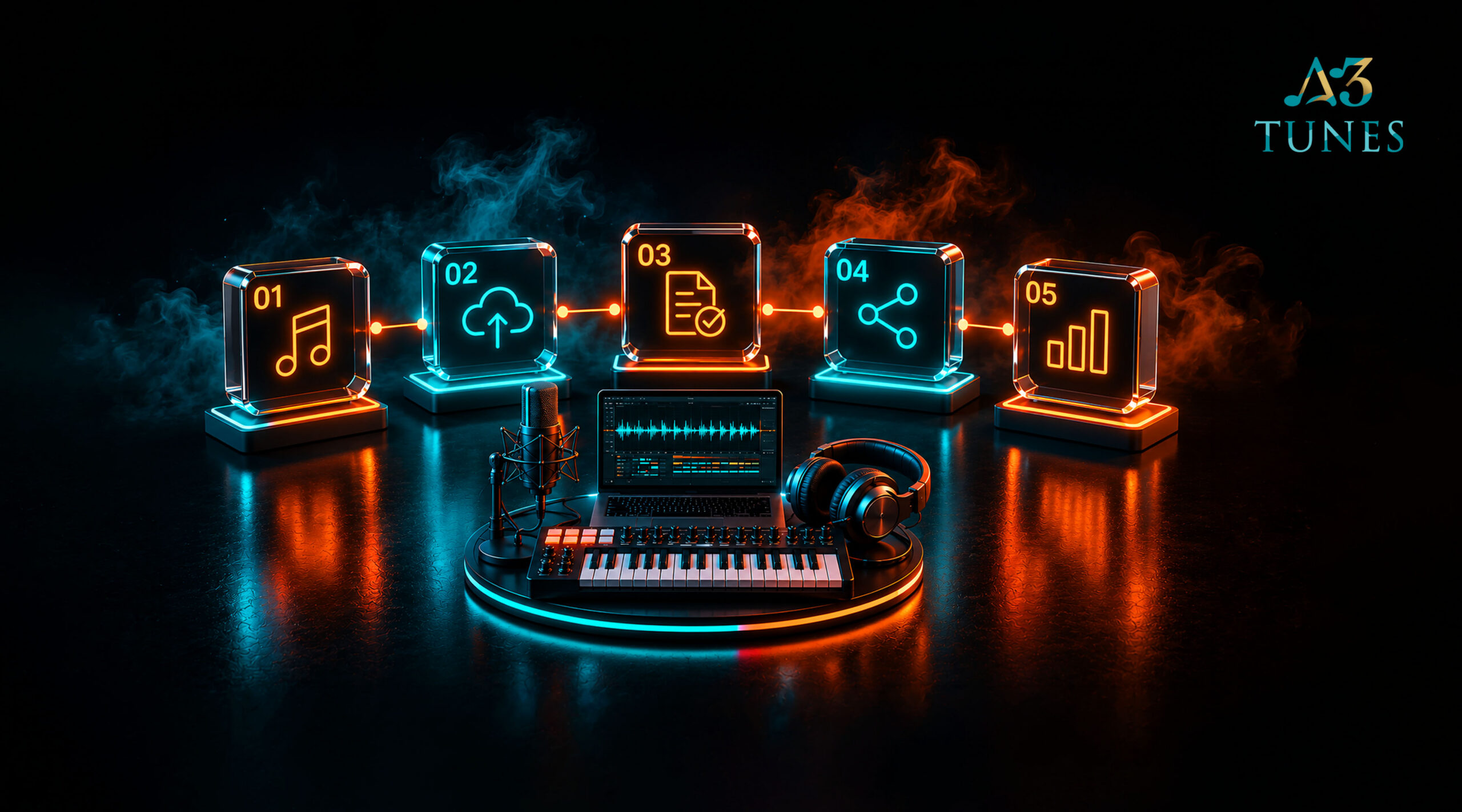
For many independent artists, finishing a song feels like reaching the summit of a long creative climb. Yet the real journey often begins after the final mix is ready. Musicians who want listeners across the world to hear their work must understand how music distribution actually works. Without a clear process, songs may sit on a hard drive instead of reaching streaming platforms where audiences discover new music every day. Learning the structure behind music distribution helps beginners move from private creativity to public release with confidence, clarity, and realistic expectations about how their music will travel across platforms.
This guide explains the full process of music distribution step by step so beginners can move forward without confusion. Instead of guessing what happens after recording a track, artists can understand each stage involved in delivering music to streaming services and digital stores. From preparation and metadata to platform selection and release scheduling, every part of music distribution plays a role in how your work appears to listeners. By understanding this structure early, musicians can avoid common delays, present their music professionally, and prepare themselves for consistent releases as their audience continues to grow.
Things to Know Before Starting Music Distribution
Before sending your track to platforms, there are several essential aspects of the distribution process that artists should understand. Many beginners focus only on uploading a file, but successful releases require more preparation than that. Distribution involves ownership verification, structured information about the track, release timing, and an understanding of how streaming platforms organize content. When these details are handled correctly, the release process becomes smooth and predictable. When they are ignored, artists may experience delays, incorrect listings, or missed opportunities for audience discovery.
Understanding these core elements ensures that the process of releasing music is not rushed or incomplete. Each part of preparation supports the next stage of the release journey, helping your track appear correctly across platforms and giving listeners accurate information about your work. By learning these fundamentals before beginning music distribution, beginners can approach their first release with the same level of organization used by experienced artists and labels.
Understanding Digital Platforms
Digital streaming services organize music using structured catalog systems that categorize artists, tracks, albums, and release dates. When a song is distributed, the platforms do not simply upload a file. Instead, they integrate the music into a massive database that allows listeners to search, stream, and discover content efficiently. This means every track must arrive with accurate information and follow the platform’s formatting standards. Without these requirements being met, the release may not appear correctly or could be delayed during review.
For beginners, understanding how these platforms operate removes much of the mystery behind the release process. Streaming services prioritize accurate listings so that listeners can find the correct artist profiles and track details. When an artist approaches music distribution with knowledge of how platforms categorize and display music, they are better prepared to submit complete information and ensure that their songs reach listeners without technical obstacles or confusion.
Rights and Ownership
One of the most important aspects of releasing music is confirming that the artist has the full right to distribute the track. Ownership includes the recording itself as well as any compositions, samples, or collaborative contributions included in the song. Distribution platforms require confirmation that the music being delivered is legally controlled by the artist or the team responsible for releasing it. This protects both the creator and the streaming services from potential copyright conflicts.
Artists who plan their releases carefully make sure that all collaborators are properly credited and that permissions are clearly established before starting music distribution. Handling rights early avoids complications later, especially if the track begins gaining attention. Proper ownership documentation also ensures that royalties are correctly assigned, which helps maintain transparency between all contributors involved in the creation of the music.
Metadata Importance
Metadata refers to the information attached to a track when it is distributed. This includes the song title, artist name, featured performers, release date, genre, and other identifying details. Although it may seem like simple information, metadata is what allows platforms to display music accurately in search results, artist pages, and playlists. Incorrect metadata can cause songs to appear under the wrong artist profile or become difficult for listeners to find.
Preparing metadata carefully is one of the most important responsibilities during music distribution. Artists who review every detail before submission reduce the chance of errors that might affect how their music appears online. Accurate metadata ensures listeners see the correct artist name, collaborators receive proper credit, and the track is placed within the right categories across streaming services.
Release Planning
A release should not be treated as a last-minute decision. Planning the timing of a track gives the distribution process enough time to deliver the song to platforms and complete internal checks. Most services recommend submitting music several weeks before the intended release date. This allows platforms to process the submission and ensures that the track appears on the selected day without delays.
Artists who schedule releases thoughtfully also create opportunities to build anticipation around their music. Even a simple timeline helps coordinate artwork preparation, promotional activities, and announcements. When beginners approach music distribution with a clear schedule instead of rushing the upload process, their releases appear more organized and professional to both listeners and industry partners.
Revenue Streams
Digital music releases generate earnings through several channels, including streams, downloads, and licensing opportunities. Each platform calculates payouts based on its own model, meaning artists earn revenue when listeners engage with their music. While the amounts may vary depending on audience size, understanding how these systems operate helps artists track their progress and evaluate the impact of their releases.
Before beginning music distribution, it is helpful for artists to understand how royalties are collected and reported. This knowledge encourages realistic expectations while also highlighting the importance of consistent releases. Over time, building a catalog of music across platforms can increase listening activity and gradually expand the revenue generated from distributed tracks.
Step 1: Prepare Your Music for Distribution
The first step in releasing a track is ensuring that the audio file is fully finalized. This means the recording, mixing, and mastering stages should already be complete before starting music distribution. Streaming platforms expect audio files that meet technical standards for clarity and volume consistency. Submitting unfinished or poorly prepared files can affect the listening experience and reduce the professional impression of the release.
Preparation also includes organizing artwork and verifying all track information. Album or single artwork must meet specific size and quality requirements so it appears clearly across streaming platforms. When artists gather every required element in advance, they prevent delays during submission and ensure that their music arrives on platforms with the correct presentation and technical quality.
Step 2: Choose a Music Distribution Platform
After preparing the music, the next stage is selecting a distribution service that will deliver the track to streaming platforms. These services act as the bridge between independent artists and digital stores. Instead of submitting music individually to each platform, artists upload their track once and allow the distribution service to send it across multiple services simultaneously.
Choosing the right provider depends on factors such as supported platforms, royalty reporting systems, and ease of use. Beginners often benefit from a service that offers a straightforward submission process and clear analytics. By selecting a reliable distribution partner, artists can focus more on creating music while the technical process of delivering the track to platforms is handled efficiently.
Step 3: Upload Your Track and Metadata
Once a distribution platform is selected, artists begin the upload process. This step involves submitting the audio file along with all required metadata. During this stage, every piece of information attached to the track must be reviewed carefully. Incorrect spelling, missing contributor credits, or inaccurate release details can lead to confusion when the song appears on streaming services.
The upload process is also when artists confirm how their track should appear publicly. Details such as the artist name, track title, and featured performers become part of the permanent listing across platforms. Taking extra time to double-check this information ensures that music distribution results in an accurate and professional presentation for listeners worldwide.
Step 4: Select Streaming Platforms
Most distribution services allow artists to choose which platforms will receive their music. Popular streaming services, digital download stores, and emerging music apps may all be available options. Selecting multiple platforms increases the chances that listeners will discover the track through their preferred service.
For beginners, reaching a wide range of platforms helps build early visibility. Each platform has its own audience and listening habits, meaning the same track may reach different groups of listeners depending on where it is available. By selecting appropriate platforms during music distribution, artists maximize the potential reach of their release without needing to manage separate uploads for every service.
Step 5: Schedule and Publish Your Release
The final step in the process is scheduling the release date. This determines when the track will appear publicly across all selected platforms. Setting a clear date ensures that streaming services publish the song at the same time, giving listeners consistent access regardless of the platform they use.
Once the release is scheduled, the distribution service sends the music to platforms for processing. During this period, platforms review the submission and prepare the track for publication. After approval, the song becomes available to listeners on the selected release date, completing the music distribution process and officially introducing the track to the global streaming ecosystem.
Why Choose A3Tunes for Music Distribution
Artists looking for a reliable partner often focus on platforms that simplify the distribution process while maintaining professional standards. A3Tunes provides a structured system that allows independent musicians to deliver their music to major streaming services with clarity and efficiency. By focusing on accessibility and organized submission tools, the platform helps beginners navigate the release process without unnecessary complications.
In addition to delivering music to digital platforms, A3Tunes supports artists by ensuring that releases are handled with accuracy and consistency. Clear submission workflows, organized data handling, and reliable platform connections help artists focus on creativity while their music reaches listeners worldwide. For beginners entering the industry, a structured distribution partner can make the transition from recording to global release far more manageable.
Conclusion
Releasing music today requires more than simply finishing a track. Artists who understand the structure behind digital distribution can approach their releases with preparation and confidence. From organizing audio files and metadata to selecting platforms and scheduling a release date, every stage contributes to how the final song appears to listeners. When each step is handled carefully, the result is a smooth release that represents the artist professionally across streaming services.
By learning the process early, beginners build habits that support long-term growth in their music careers. Consistent releases, organized information, and reliable distribution systems allow artists to focus on expanding their catalog and connecting with listeners. With the right preparation and a clear understanding of music distribution, musicians can turn completed recordings into accessible releases that reach audiences around the world.
