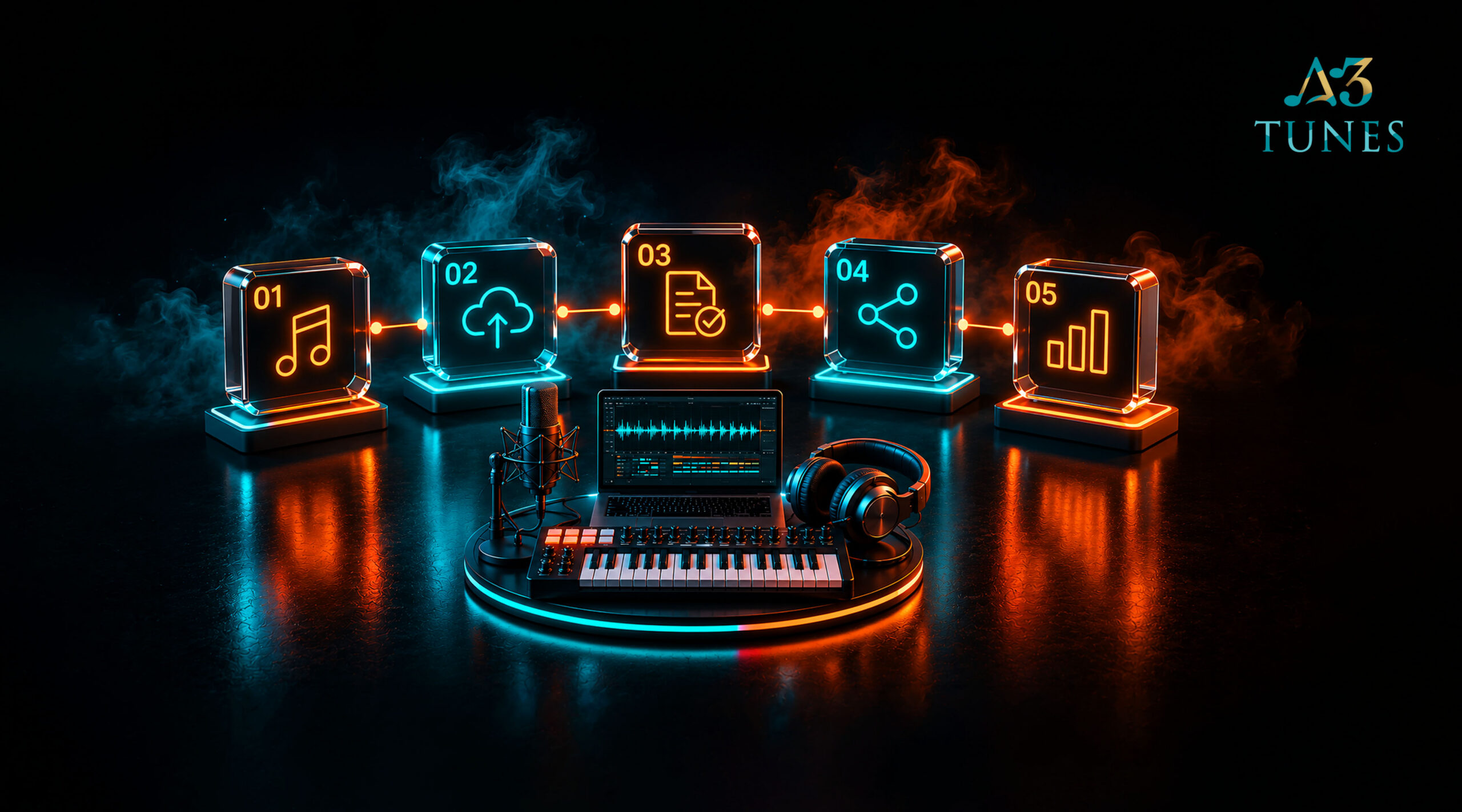
Tag: DIY music distribution

  • Everything You Need to Know About Music Distribution

    Everything You Need to Know About Music Distribution

    The music industry has transformed dramatically over the past decade. What once required signing a contract with a record label, pressing physical CDs, and praying for radio play has now become something any artist can do from their bedroom with a laptop and a song. At the heart of this revolution sits one powerful concept — music distribution.

    If you are an independent artist, producer, songwriter, or even an established label looking to reach a global audience, understanding music distribution is no longer optional. It is the foundation of every modern music career. In 2026, over 120,000 tracks are uploaded to streaming platforms every single day, and independent artists now earn nearly half of all Spotify royalties paid out globally. The opportunity has never been bigger — but neither has the competition.

    This complete guide walks you through everything you need to know about music distribution: how it works, why it matters, how to choose the right service, the latest industry trends, the mistakes to avoid, and how a platform like A3 Tunes can help you launch your music to the world for just $10 a year. By the end of this article, you will have a clear roadmap to release your music globally, retain your rights, earn royalties, and build a sustainable career as an independent artist.

    What Is Music Distribution? Understanding the Basics

    Music distribution is the process of getting your recorded music onto digital streaming platforms, online stores, and social media apps so that listeners around the world can discover, stream, download, and share it. In simple terms, it is the bridge between an artist’s finished track and the global audience waiting to hear it.

    Without distribution, your music stays trapped on your hard drive or limited to a handful of listeners on personal channels. With distribution, the same song can appear on Spotify, Apple Music, YouTube Music, JioSaavn, Amazon Music, Deezer, Instagram, TikTok, and over a hundred other platforms — often within just a few days.

    How Digital Music Distribution Works in 2025–2026

    Digital music distribution follows a consistent pipeline regardless of which service you use. The process begins when you upload your audio file (usually in WAV, FLAC, or high-quality MP3 format) along with cover art, metadata, and release information to a distribution platform. The distributor then formats your release to meet each streaming service’s specific technical requirements, generates unique identifiers like ISRC codes for tracks and UPC codes for releases, and delivers your music to the platforms you have selected.

    Once your music goes live, the distributor collects royalties from every territory where your song is streamed or purchased, processes those earnings, and pays them out to you according to its reporting cycle. Modern distribution platforms also handle metadata corrections, takedown requests, content ID claims on YouTube, and increasingly even AI disclosure compliance for tracks involving generative tools.

    The shift toward AI-assisted production and stricter platform policies has made the distributor’s role more important than ever. Today, a quality distributor does not just upload your music — it acts as a long-term partner across your entire release strategy.

    The Difference Between Physical and Digital Music Distribution

    Physical music distribution refers to the manufacturing, shipping, and retail placement of tangible formats like vinyl records, CDs, and cassette tapes. While vinyl has enjoyed a notable comeback among collectors and audiophiles, physical distribution today represents only a fraction of total industry revenue and primarily serves niche markets and superfans.

    Digital music distribution, by contrast, dominates the modern landscape. Streaming alone now accounts for over 67% of global recorded music revenue, and that share continues to grow. Digital distribution is faster, cheaper, more scalable, and accessible to any artist with an internet connection. There are no inventory costs, no shipping logistics, and no minimum order quantities — your music exists everywhere at once, ready to be discovered by anyone, anywhere.

    For independent artists in 2026, digital distribution is the default and often the only realistic path to a global audience.

    Key Terms Every Artist Should Know (DSPs, ISRC, UPC, Metadata)

    Before diving deeper, it helps to understand the vocabulary of music distribution. DSPs, or Digital Service Providers, are the platforms where your music lives — Spotify, Apple Music, JioSaavn, YouTube Music, and so on. ISRC stands for International Standard Recording Code, a unique identifier assigned to every individual sound recording that allows it to be tracked across all platforms and territories. UPC (Universal Product Code) is a similar identifier but applied at the release level, such as an album or EP.

    Metadata refers to the information attached to your music — track titles, artist names, songwriter credits, genre tags, release date, language, and so on. Clean, accurate metadata is one of the most overlooked yet most important parts of a successful release. Errors in metadata cause delays, misattributed royalties, and even rejected uploads. Modern distributors like A3 Tunes handle metadata formatting and code generation automatically, but the artist remains responsible for providing correct information at the upload stage.

    Why Music Distribution Matters for Independent Artists

    The independent music sector is experiencing one of the most significant shifts in industry history. Independent market share of global recorded music has grown from approximately 30% in 2020 to over 40% in 2025, and that number continues to climb. For the first time in modern history, artists no longer need a record label to reach a global audience — they need a distribution partner.

    How Independent Artists Are Winning Without a Record Label

    The traditional record label model required artists to give up significant ownership of their masters, accept advances that needed to be recouped, and operate within timelines and creative directions dictated by the label. Today, distribution democratization has eliminated the distribution advantage that labels once held exclusively. Any artist can now access global streaming platforms for minimal cost, retain full ownership of their music, and build direct relationships with fans.

    Macklemore’s self-released “Thrift Shop” hitting number one worldwide, Chance the Rapper winning Grammys without a label, and countless smaller-scale success stories prove that the right distribution strategy can take an unsigned artist to the top of the charts. In India specifically, independent artists across genres like Tamil folk, Punjabi pop, Assamese rap, and Bollywood-influenced indie are building substantial followings entirely on their own terms.

    The calculation has shifted permanently. Artists now value ownership of their masters and creative control more than the marketing muscle a label might provide. A good distributor closes the remaining gap.

    The Role of Music Distribution in Building a Global Fanbase

    Distribution is the first and most essential step in building a global audience. When your music is available on Spotify, Apple Music, JioSaavn, and YouTube Music simultaneously, a listener in Mumbai, Tokyo, Toronto, or São Paulo can discover your track through algorithmic playlists, editorial features, social media clips, or simple word of mouth.

    Modern distribution platforms also integrate with Instagram, TikTok, Reels, and Facebook Stories, meaning your music can soundtrack user-generated content across the world. A single viral clip on TikTok or Reels can transform an unknown artist into a global name overnight — but none of that is possible if your music is not properly distributed in the first place.

    How Streaming Royalties Are Generated Through Distribution

    Every time someone streams your song, downloads it, or uses it in a video, you earn a small royalty. These royalties are collected by the streaming platforms, paid to your distributor, and then passed on to you. The exact amount per stream varies by platform, country, and listener subscription type, but the model is simple: more streams across more platforms means more income.

    Quality distributors provide transparent dashboards showing exactly where your streams are coming from, which countries are growing your audience fastest, and how much you have earned in any given period. This data is invaluable for planning tours, targeting ad campaigns, and making informed decisions about your next release.

    Types of Music Distribution Services Explained

    Not all music distribution services are created equal. They differ in pricing models, royalty splits, platform reach, additional features, and the kind of artist they are designed for. Understanding the categories helps you pick the right partner for your stage of career.

    Free Music Distribution — Pros, Cons, and What to Watch Out For

    Free music distribution services allow you to upload and distribute your music without paying any upfront fees. Platforms like Amuse’s free tier and UnitedMasters offer this model, and on the surface it sounds ideal for beginners. However, free services almost always come with trade-offs.

    Some free distributors take a percentage of your royalties — often anywhere from 10% to 30% — in exchange for the no-cost upload. Others limit your access to features like YouTube Content ID monetization, faster payouts, advanced analytics, or priority customer support. A few have faced criticism for slow payment processing or poor service quality.

    Free distribution works well as a way to test the waters with a single release, but most serious artists outgrow these limitations quickly. If your goal is long-term growth, the percentage taken from your royalties often ends up costing more than a low annual subscription.

    Paid Music Distribution Plans — What You Get for Your Money

    Paid music distribution services charge a flat annual or per-release fee and typically let you keep 100% of your royalties. This model is offered by services like DistroKid, TuneCore, CD Baby, and A3 Tunes. The benefits are significant: faster payouts, better support, access to advanced features like Spotify pre-saves, YouTube Content ID, sync licensing opportunities, and detailed analytics dashboards.

    A3 Tunes stands out in this category by offering professional-grade distribution starting at just $10 per year — one of the most affordable price points in the global market. For that fee, artists get distribution to over 150 streaming platforms, full rights retention, real-time performance tracking, and dedicated artist support.

    The math is simple: if your music earns even a small amount in royalties, a flat-fee distributor pays for itself many times over compared to a percentage-based free service.

    AI-Powered Music Distribution — The New Frontier for Independent Artists

    Artificial intelligence has become the defining force in the music industry in 2025 and 2026. AI tools now assist with mastering, metadata tagging, playlist pitching, fan discovery, and release strategy. AI-powered distribution platforms use machine learning to recommend optimal release times, suggest target playlists, and even predict which markets will respond best to a given track.

    A3 Tunes positions itself as the world’s first AI-powered DIY global music distribution platform, integrating intelligent recommendations and automation directly into the upload and tracking workflow. As DSPs like Spotify and Apple Music tighten their policies around AI-generated content, distributors that build compliance tools and clear guidelines into their platforms give artists a significant advantage.

    This is the direction the entire industry is moving in, and choosing a forward-looking distributor positions you to benefit from these shifts rather than scramble to catch up.

    How to Choose the Right Music Distribution Platform

    With dozens of distribution services available, picking the right one can feel overwhelming. The right choice depends on your career stage, release frequency, budget, and long-term goals. Here are the key factors to evaluate.

    Royalty Percentage vs. Flat Fee — Which Model Is Better?

    This is the single biggest financial decision you will make. Percentage-based services take a cut of every dollar you earn forever, which can become very expensive once your streams grow. Flat-fee services charge predictable annual or release fees and let you keep everything you earn.

    For most artists who plan to release regularly and grow their catalog, flat-fee subscription models are significantly more cost-effective. A $10 per year plan like A3 Tunes pays for itself with just a few hundred streams, after which every additional play is pure profit.

    The only scenario where percentage-based makes sense is for artists who plan to release only once or twice and do not expect significant streaming activity — but even then, the difference is often negligible.

    Platform Reach — Why 150+ Stores Matter for Your Music Career

    The number of platforms your distributor delivers to directly affects how discoverable your music is. The major DSPs — Spotify, Apple Music, YouTube Music, Amazon Music — are essential, but so are regional powerhouses like JioSaavn and Gaana in India, NetEase Cloud Music in China, Anghami in the Middle East, and Boomplay across Africa.

    A distributor that reaches 150 or more platforms gives your music the widest possible chance to be discovered. A3 Tunes delivers to over 150 streaming platforms and social apps including Spotify, Apple Music, JioSaavn, YouTube Music, Instagram, TikTok, Deezer, Gaana, and many more, making it especially well-suited for artists targeting both international and Indian audiences.

    Music Rights Management and Who Owns Your Music

    One of the biggest reasons artists go independent is to retain ownership of their masters and creative work. A good distributor never takes ownership of your music — it simply acts as a delivery and royalty collection service. Always read the terms carefully before signing up with any platform.

    Beyond ownership, look for distributors that actively support rights management. This includes publishing rights administration, mechanical royalty collection, performance rights tracking, and synchronization licensing for film, TV, ads, and remixes. A3 Tunes offers comprehensive rights support across publishing, mechanical, performance, and synchronization rights, helping artists earn from every legitimate use of their music.

    Dashboard, Analytics, and Real-Time Reporting Features

    Data is power in the modern music business. A quality dashboard shows you which songs are performing, where your listeners are located, how much you have earned, and which platforms are driving the most engagement. Without this information, you are essentially flying blind.

    Look for distributors that offer real-time or near-real-time reporting, detailed geographic breakdowns, playlist tracking, and clear royalty statements. These tools turn raw streaming data into actionable insights that can shape your entire release strategy.

    Step-by-Step Guide to Distributing Your Music Online

    Releasing music globally for the first time can feel intimidating, but the process is more straightforward than most artists realize. Here is the workflow from finished track to live release.

    Preparing Your Music for Distribution — Format, Artwork, and Metadata

    Before you upload anything, make sure your assets are ready. Your audio should be exported as a high-quality WAV or FLAC file at 16-bit or 24-bit resolution and 44.1 kHz sample rate or higher. Mastered audio always performs better than unmastered — if you cannot afford professional mastering, even basic AI-based mastering services can dramatically improve sound quality.

    Your cover art must be a square image, typically 3000 by 3000 pixels, in JPG or PNG format, with no blurry text, web addresses, or unauthorized logos. Metadata should include accurate track titles, artist names exactly as you want them displayed, primary and secondary genres, language, songwriter and producer credits, and the planned release date.

    Clean preparation prevents 90% of rejection issues and delays.

    How to Upload and Release Your Music Globally

    Once your assets are ready, sign up for your chosen distribution service. With A3 Tunes, the process takes just a few minutes — register with your email or mobile number, choose your plan, and access the upload dashboard. Upload your audio file along with artwork and metadata, choose the streaming platforms you want to reach, and confirm the release.

    The distributor handles formatting for each DSP, generates your ISRC and UPC codes, and submits your music to all selected platforms. Most distributors deliver music to Spotify within two to seven business days, though setting a release date at least three to four weeks in advance gives you the best shot at editorial playlist consideration.

    Setting Your Release Date and Pre-Save Strategy

    Release date strategy is one of the most underrated elements of a successful launch. Most major releases drop on Fridays globally to align with chart cycles, but the specific Friday matters too. Avoid weeks crowded with major artist releases unless you have a strong reason to compete head-to-head.

    Pre-save campaigns are essential in 2026. They allow fans to commit to streaming your song the moment it drops, which boosts first-day momentum and signals to algorithms that your release deserves attention. Quality distributors offer built-in pre-save tools or integrate with services that do.

    Build hype in the weeks leading up to release with social media teasers, behind-the-scenes content, and direct messaging to your existing fanbase. The first 48 hours after release are the most algorithmically important.

    How to Monitor Performance After Your Music Goes Live

    Once your music is live, the work is just beginning. Use your distributor’s dashboard to track daily streams, geographic spread, playlist additions, and revenue. Look for unexpected spikes — they often signal a TikTok or Reels moment that you can amplify with paid promotion.

    Submit your tracks to independent playlist curators, pitch to editorial teams through Spotify for Artists, and engage directly with fans who post your music on social media. Monitoring performance closely lets you double down on what is working and learn from what is not.

    Music Distribution in India — Opportunities for Regional Artists

    India is one of the most exciting and rapidly growing music markets in the world. With over a billion potential listeners, hundreds of distinct languages and dialects, and a streaming culture that crosses age groups and economic backgrounds, the opportunity for Indian artists has never been larger.

    The Rise of Independent Music in the Indian Music Industry

    For decades, the Indian music industry was dominated by film soundtracks and a handful of major labels. That has changed dramatically. Independent artists across genres — indie pop, hip-hop, fusion, classical, devotional, regional folk — are now building substantial fanbases entirely outside the traditional Bollywood ecosystem.

    Platforms like JioSaavn and Gaana have made local-language content more accessible than ever, while global platforms like Spotify and YouTube Music aggressively promote Indian independent music both domestically and internationally. The result is a thriving creator economy where bedroom producers in Tier 2 and Tier 3 cities can reach audiences that were unreachable a decade ago.

    How to Get Your Music on JioSaavn, Gaana, and Indian Platforms

    To reach Indian streaming platforms, you need a distributor that delivers directly to JioSaavn, Gaana, Wynk, Hungama, and other regional services. Many international distributors focus primarily on Western platforms and treat Indian DSPs as an afterthought.

    A3 Tunes, headquartered in Bengaluru and built specifically with the Indian market in mind, distributes to all major Indian streaming services alongside global platforms. This dual focus makes it an ideal choice for artists who want to win both at home and abroad without compromising on either.

    Supporting Regional Languages and Genres Through Distribution

    India’s linguistic and cultural diversity is one of its greatest creative strengths. From Tamil folk and Malayalam indie to Punjabi rap, Bengali rock, Assamese hip-hop, and Marathi pop, regional music is having a renaissance. Modern distribution platforms support metadata in dozens of languages and let artists tag their music accurately so it reaches the right audiences.

    A3 Tunes specifically supports Indian languages and genres across its catalog, ensuring that regional artists are not pushed into the margins by platforms optimized only for English-language content.

    Understanding Music Royalties and Rights in Distribution

    Royalties are how artists actually get paid, and the system is more complex than most beginners realize. Understanding the different types of rights and the income each one generates is essential to building a sustainable career.

    Publishing Rights, Mechanical Rights, and Performance Rights Explained

    Publishing rights relate to the underlying composition of a song — the melody, lyrics, and musical structure — as opposed to a specific recording. Whenever your song is used in a commercial context (ads, films, TV shows), publishing royalties are generated.

    Mechanical rights are triggered whenever your music is reproduced, whether through downloads, physical copies, or interactive streams. Each play on a streaming service generates a small mechanical royalty in addition to other payments.

    Performance rights apply when your music is performed publicly — played in restaurants, bars, on radio, on television, or during live events. Performance rights organizations like ASCAP, BMI, PRS, and IPRS collect these royalties on behalf of songwriters and publishers.

    A complete distribution and rights management service ensures you collect from all three streams, not just one.

    Synchronization and Adaptation Rights — New Revenue Streams

    Synchronization licensing — placing your music in films, TV shows, advertisements, video games, and online content — has become one of the most lucrative income streams for independent artists. A single sync placement can pay more than millions of streams.

    Adaptation rights cover remixes, cover versions, and translations of your original work. Modern distributors like A3 Tunes help artists license their music for sync opportunities and manage adaptation rights, opening doors that were once accessible only through major labels.

    How to Maximize Your Streaming Royalty Income

    Maximizing royalties requires both volume and strategy. Release music consistently — algorithms and listeners both reward frequent activity. Tag your metadata accurately so all royalty types are correctly attributed. Register with performance rights organizations relevant to your country and a publishing administrator that collects mechanical royalties globally.

    Diversify your revenue beyond streaming with merchandise, direct fan support platforms, live performances, and sync opportunities. The most successful independent artists in 2026 treat streaming as one income stream among several rather than their only source of income.

    Common Mistakes Artists Make in Music Distribution

    Even experienced artists make avoidable mistakes when distributing their music. Watching for these pitfalls saves you time, money, and lost opportunities.

    Releasing Music Without Proper Metadata

    This is the single most common mistake. Incorrect or inconsistent artist names, misspelled track titles, wrong genre tags, and missing songwriter credits cause royalties to be misattributed or lost entirely. Some platforms will reject releases with poor metadata outright, delaying your launch by weeks.

    Always double-check every field before submitting. Keep a master document with your exact artist name, social media handles, and standard credits so you can copy and paste consistently across releases.

    Ignoring Release Date Strategy and Pre-Save Campaigns

    Dropping music with no advance planning is a missed opportunity. Without pre-save campaigns, social media teasers, and editorial pitches, your release lands with no momentum and gets buried under the 120,000+ other tracks uploaded that day.

    Plan releases at least three to four weeks in advance. Build hype. Submit to editorial playlists through Spotify for Artists at least seven days before release. Treat every drop as a marketing event, not just an upload.

    Choosing a Distributor Based on Price Alone

    The cheapest distributor is not always the most cost-effective. A free service that takes 20% of your royalties forever costs far more than a $10 per year subscription once you have meaningful streams. Conversely, an expensive distributor that does not deliver to the platforms you need is a waste of money no matter how good its other features are.

    Evaluate distributors holistically — platform reach, royalty model, rights support, analytics, customer service, and long-term value. A3 Tunes hits the sweet spot for most independent artists by combining ultra-affordable pricing with full platform reach and professional features.

    Music Distribution Trends Shaping the Industry in 2026

    The distribution landscape is evolving faster than ever. Staying informed about emerging trends helps you make decisions that pay off long term.

    AI Integration in Music Distribution Platforms

    Artificial intelligence is now embedded across the entire music value chain. AI tools assist with mastering, metadata tagging, playlist pitching, and audience discovery. Distribution platforms that integrate AI intelligently — for upload optimization, release strategy, and analytics — give artists a significant competitive edge.

    At the same time, streaming platforms are introducing stricter rules around AI-generated content, requiring disclosure for tracks created with generative tools. Distributors that build compliance into their platforms help artists navigate these evolving policies smoothly.

    Direct-to-Fan Revenue Beyond Streaming

    Relying solely on streaming royalties is increasingly fragile. Per-stream rates fluctuate, algorithms change, and platforms can shift policies without warning. Smart artists are diversifying with merchandise, ticketed live streams, fan subscription platforms, exclusive content drops, and direct sales.

    Forward-thinking distributors are adding tools for direct fan engagement — pre-save campaigns, email list building, merch integration, and fan-gated content. The future belongs to artists who own their fan relationships, not just their masters.

    The Growing Market Share of Independent Artists

    Independent artists now account for over 40% of global recorded music revenue, and that number is growing every year. Half of all royalties paid out by Spotify in 2025 went to independent artists. This shift has fundamentally changed the power dynamic in the industry — labels need indie artists more than indie artists need labels.

    The implication is clear: independent music is no longer the alternative path. It is the default path. And the distributor you choose is the single most important strategic decision in that path.

    Why A3 Tunes Is the Smart Choice for DIY Music Distribution

    With dozens of distributors competing for independent artists, A3 Tunes has carved out a unique position by combining affordability, global reach, and artist-first features into one platform built for the modern music creator.

    Affordable Pricing — Distribute Your Music at Just $10/Year

    At just $10 per year under its Startup Plan, A3 Tunes offers one of the most accessible price points in the global music distribution market. There is no hidden royalty cut, no surprise fees, and no long-term lock-in. Artists keep 100% of their earnings and pay a transparent flat fee for the service.

    This pricing makes professional-grade distribution accessible to artists at every stage — from first-time uploaders to established independent musicians managing growing catalogs.

    150+ Platforms, Full Rights Retention, and a Powerful Dashboard

    A3 Tunes distributes to over 150 streaming services and social platforms including Spotify, Apple Music, JioSaavn, YouTube Music, Instagram, TikTok, Gaana, Deezer, Amazon Music, and many more. Artists retain full ownership of their music and rights at all times.

    The built-in dashboard provides real-time updates on streams, revenue, fan locations, and platform-specific performance, giving artists the data they need to make informed decisions about their next release, tour, or campaign. Comprehensive rights management support covers publishing, mechanical, performance, and synchronization rights.

    Built for Independent Artists in India and Beyond

    Headquartered in Bengaluru, A3 Tunes is uniquely positioned to serve Indian independent artists while also delivering global reach. The platform supports Indian languages and genres across the country’s full diversity — from Tamil folk to Assamese rap, from Punjabi pop to Malayalam indie — and connects regional artists with both domestic and international audiences.

    Backed by Aiplex, A3 Tunes combines startup-friendly agility with enterprise-grade infrastructure, making it a trustworthy long-term partner for serious independent musicians anywhere in the world.

    Frequently Asked Questions About Music Distribution

    What is music distribution in simple terms? Music distribution is the process of delivering your recorded music to streaming platforms and online stores like Spotify, Apple Music, and JioSaavn so listeners worldwide can discover and stream your songs. It is the bridge between a finished track and a global audience.

    How much does it cost to distribute music in 2026? Costs vary widely. Free services typically take a percentage of your royalties, while paid services charge flat annual fees. A3 Tunes offers professional distribution starting at just $10 per year with no royalty cut, making it one of the most affordable options globally.

    Do I need a record label to distribute my music? No. Modern digital distribution platforms let any independent artist upload music directly to all major streaming services without a record label. Independent artists now account for over 40% of global recorded music revenue.

    How long does it take for my music to appear on Spotify after distribution? Most distributors deliver music to Spotify within two to seven business days. Setting your release date at least three to four weeks in advance gives you the best chance of editorial playlist consideration and a successful launch.

    Who owns my music after I distribute it through a service like A3 Tunes? You retain 100% ownership of your music and all associated rights. A3 Tunes acts only as a delivery and royalty collection service — your masters, publishing rights, and creative control remain entirely yours.

    Can I distribute music in regional Indian languages? Yes. A3 Tunes proudly supports Indian languages and genres across the country’s full diversity, from Tamil folk and Punjabi pop to Bengali rock, Assamese rap, and beyond. Regional artists can reach both Indian and global audiences through a single upload.

    What is the best music distribution service for beginners? For beginners looking for affordability, global reach, and full rights retention, A3 Tunes offers an excellent starting point at just $10 per year, with distribution to over 150 platforms and a beginner-friendly dashboard.

    Final Thoughts

    Music distribution in 2026 is no longer a barrier — it is an opportunity. The tools, platforms, and economic models that once made the music industry inaccessible to independent artists have been completely transformed. Anyone with a song and a story can now reach a global audience for the price of a coffee.

    The artists who succeed in this new landscape are the ones who treat distribution as a strategic foundation rather than a one-time task. They choose the right distributor, prepare their releases carefully, leverage pre-save campaigns and editorial pitches, monitor their performance data, and diversify their income beyond streaming alone.

    A3 Tunes is built for exactly that kind of artist — independent, ambitious, global-minded, and ready to own their career. With distribution to over 150 platforms, full rights retention, real-time analytics, comprehensive rights management, and pricing starting at just $10 per year, it offers everything an independent artist needs to launch their music to the world and build something that lasts.

    Your music deserves to be heard. The world is waiting. Start distributing today.
  • Music Distribution for Independent Artists: The Complete Guide to Getting Your Music Heard Worldwide

    Music Distribution for Independent Artists: The Complete Guide to Getting Your Music Heard Worldwide

    Introduction — The Independent Music Revolution Is Here

    You’ve spent months — maybe years — writing, recording, and mixing your music. The track sounds incredible. Your friends love it. You’re ready for the world to hear it.

    And then comes the question every independent artist faces: “Now what?”

    A decade ago, the answer was painful. You needed a record label, a manager, a distribution deal, and a lot of luck just to get your music onto a CD shelf. Today, the entire model has flipped. A solo artist sitting in their bedroom in Guwahati, Lagos, or Los Angeles can release a song on Spotify, Apple Music, JioSaavn, and 150+ other platforms by tomorrow morning — and keep 100% of their royalties.

    This is the independent music revolution. And music distribution for independent artists is the engine driving it.

    But here’s the catch: most artists still don’t understand how distribution actually works, what royalties they’re entitled to, how to choose the right platform, or what to do after they hit “release.” That gap costs artists millions of dollars in unclaimed earnings and missed opportunities every year.

    This guide fixes that. Whether you’re releasing your first single or your fiftieth, you’ll walk away knowing exactly how to distribute, monetize, and grow your music — independently and on your own terms.

    Let’s get into it.


    What Is Music Distribution for Independent Artists?

    Music distribution is the process of getting your songs from your computer onto every streaming platform, digital store, and social media app where listeners can discover them. Think of a music distributor as the bridge between you (the artist) and platforms like Spotify, Apple Music, YouTube Music, Amazon Music, JioSaavn, Deezer, TikTok, and Instagram.

    Without a distributor, you simply cannot upload music directly to most major streaming services. Spotify, for example, doesn’t accept music from individual artists. They only work with approved distribution partners. That’s where music distribution platforms come in.

    How Music Distribution Works (The Simple Version)

    Here’s the entire process in plain English:

    1. You upload your finished track (audio file + cover art + metadata) to a music distribution platform.
    2. The distributor formats and delivers it to every streaming service and store you’ve selected.
    3. The platforms publish your music on their apps, usually within 1–7 days.
    4. Listeners stream, download, or purchase your music worldwide.
    5. The streaming services pay royalties to your distributor.
    6. Your distributor pays you (minus their fee, if any).

    That’s it. No record label. No middlemen. No physical CDs. Just you, your music, and a global audience.

    The Old Way vs. The New Way — Why You Don’t Need a Record Label Anymore

    In the traditional music industry, a record label was a gatekeeper. They controlled recording budgets, distribution deals, marketing, and — most importantly — your master recordings. In exchange for getting your music heard, you typically gave up 70–90% of your royalties and most of your creative control.

    Today, the model has flipped. Modern music distribution platforms let independent artists:

    • Release music globally for as little as $10 per year
    • Keep 100% of their royalties
    • Retain full ownership of their masters
    • Access real-time analytics dashboards
    • Pitch directly to playlist editors
    • Manage publishing, mechanical, and performance rights

    The label isn’t dead — it still has value for some artists. But it’s no longer required. In 2024, more than 60% of new music uploaded to Spotify came from independent artists and DIY distributors, not major labels. The shift is permanent.

    What Happens After You Distribute Your Music?

    Distribution isn’t the finish line — it’s the starting line. Once your music is live, several things happen in parallel:

    • Your track becomes searchable and streamable on every platform you chose.
    • You can claim your artist profiles on Spotify for Artists, Apple Music for Artists, and YouTube for Artists.
    • Streaming royalties begin accruing every time someone plays your track.
    • Your distributor’s dashboard starts populating with stream counts, listener demographics, and earnings data.
    • You can pitch to playlist curators, get featured in editorial playlists, and start building a real audience.

    The artists who treat distribution as a launchpad — not a one-and-done event — are the ones who build sustainable careers.


    Why Music Distribution Matters More Than Ever in 2025

    The music industry generated over $28 billion in 2024, with streaming accounting for more than 67% of all revenue. Independent artists now claim over 31% of that market — a number that has tripled in the last decade.

    Here’s why distribution is more important now than ever before:

    The Numbers Don’t Lie — Streaming Stats Every Independent Artist Should Know

    • Spotify has over 700 million monthly active users across 184 markets.
    • Over 100,000 new tracks are uploaded to Spotify every single day.
    • The average independent artist earns between $0.003 and $0.005 per Spotify stream.
    • TikTok now drives more than 75% of Gen Z music discovery.
    • India alone has over 200 million paid music streaming subscribers as of 2025.

    What this means: there has never been a bigger audience for independent music. But there has also never been more competition. Without proper distribution, your music is invisible — no matter how good it is.

    How Distribution Affects Your Royalties, Visibility, and Career Growth

    Distribution determines three critical outcomes for your career:

    1. Royalty Collection. Every stream, download, and sync placement generates royalties. Without a distributor connecting you to the right collection systems, that money simply doesn’t reach you.

    2. Algorithmic Visibility. Streaming platforms use algorithms to recommend music. Tracks that are properly delivered with clean metadata, correct genre tagging, and complete credits perform significantly better in recommendations like Spotify’s Discover Weekly and Release Radar.

    3. Career Infrastructure. Distribution gives you a verified artist profile, analytics, fan demographics, and the ability to pitch to playlists — all of which are foundational to growing a music career.

    The Cost of NOT Distributing Your Music Properly

    Many artists make the mistake of uploading songs only to YouTube or SoundCloud and assuming that’s enough. Here’s what they lose:

    • Access to over 80% of global streaming audiences (who use Spotify, Apple Music, etc.)
    • Performance and mechanical royalties from streaming platforms
    • Eligibility for editorial playlist placement
    • Sync licensing opportunities (films, ads, TV)
    • Verified artist credibility

    Skipping proper distribution can cost an emerging artist tens of thousands of dollars in lifetime earnings — money they were entitled to but never collected.


    Types of Music Distribution — Which One Is Right for You?

    Not all distribution is the same. Depending on your goals, you might use one type or a combination of several.

    Digital Music Distribution (Streaming Platforms)

    This is the modern standard. Your music goes to Spotify, Apple Music, YouTube Music, Amazon Music, JioSaavn, Deezer, Tidal, and 100+ other platforms. Digital distribution is fast, affordable, and gives you the widest possible reach.

    Best for: All independent artists, full stop. This is non-negotiable in 2025.

    Physical Music Distribution (CDs, Vinyl — Is It Still Worth It?)

    Surprisingly, vinyl sales have grown for 18 consecutive years. CDs still sell well in markets like Japan and Germany. But physical distribution requires manufacturing, warehousing, and retail relationships — usually managed by specialized partners.

    Best for: Artists with a dedicated fanbase, collectors’ editions, or genre-specific communities (jazz, classical, indie rock, K-pop).

    Direct-to-Fan Distribution (Bandcamp, Patreon, Your Own Website)

    Selling directly to fans through your website, Bandcamp, or a Patreon community gives you the highest profit margins (often 85–95%) and the deepest fan relationships. The trade-off is reach — you have to build the audience yourself.

    Best for: Artists with an existing fanbase who want to monetize loyalty rather than scale.

    Social Media Distribution (Instagram Reels, TikTok, YouTube Shorts)

    Short-form video has become the discovery engine of modern music. Distributing your track to TikTok, Instagram Reels, and YouTube Shorts means anyone can use your song in their videos — and every use sends listeners back to your full track on streaming platforms.

    Best for: Every artist. If your distributor doesn’t include social media platforms, you’re leaving discovery on the table.

    The smart move? Combine all four. A modern indie release plays well across digital, social, and direct-to-fan channels simultaneously.


    How to Choose the Best Music Distribution Platform

    This is where most artists make their biggest mistake. They pick the cheapest option, get burned by hidden fees or poor support, and switch platforms a year later — losing momentum and analytics history in the process.

    Choose carefully the first time.

    Key Factors to Evaluate Before Signing Up

    When comparing music distribution platforms, evaluate these seven factors:

    • Royalty percentage: Do you keep 100% of your royalties, or does the platform take a cut? Top-tier platforms let you keep all of it.
    • Pricing model: Annual flat fee vs. per-release vs. revenue share. Annual flat fees are usually best for active artists.
    • Number of platforms covered: Look for 150+ platforms, including regional services like JioSaavn, Gaana, Anghami, and QQ Music.
    • Speed of delivery: Fast turnaround (under 5 days) is critical for time-sensitive releases.
    • Dashboard and analytics: Real-time stream counts, fan locations, and revenue data help you make informed decisions.
    • Rights management: Does the platform help with publishing, mechanical, and performance royalties?
    • Customer support: When something breaks at midnight before your release, will someone respond?

    Free vs. Paid Music Distribution — What’s the Real Difference?

    Free distribution sounds great until you read the fine print. Most “free” platforms make money by:

    • Taking a percentage of your royalties (usually 15–30%)
    • Limiting the number of platforms they distribute to
    • Restricting features like analytics and pre-save campaigns
    • Charging fees for splits, ISRC codes, or content ID
    • Locking you into long-term agreements

    A paid annual plan — often as low as $10 per year — typically pays for itself after just a few hundred streams, since you keep 100% of your royalties.

    Red Flags to Watch Out for in Music Distribution Contracts

    Before signing up with any distributor, watch for these warning signs:

    • Vague language about royalty splits or “service fees”
    • Long-term contracts (anything longer than 12 months should raise eyebrows)
    • Claims to your master recordings or publishing rights
    • Hidden fees for taking music down or transferring it elsewhere
    • No clear refund or cancellation policy
    • Lack of transparent pricing on their website

    If a distributor isn’t upfront about how they make money, run.


    A3 Tunes vs Other Music Distribution Platforms — How Do They Compare?

    With dozens of distribution platforms competing for your attention, a clear comparison helps cut through the noise. Here’s how A3 Tunes stacks up against typical alternatives.

    What to Look for in a Music Distribution Platform (Evaluation Criteria)

    Before comparing platforms, set your criteria. The features that matter most for independent artists are pricing transparency, royalty retention, regional platform coverage (especially for Indian and Asian markets), rights management support, dashboard quality, and human-level artist support.

    Side-by-Side Comparison Table — A3 Tunes vs Other Distributors

    Feature A3 Tunes Other Distribution Platforms
    Annual Pricing $10/year (Startup Plan) $20–$50/year average
    Royalty Retention 100% — you keep every cent Often 85–100% (some take cuts)
    Number of Platforms 150+ global stores & streaming services Usually 30–150
    Regional Music Support Strong support for Indian languages, Tamil folk, Assamese rap, Punjabi, Bengali, and more Limited regional language support
    JioSaavn, Gaana, Wynk Coverage Yes — full Indian platform coverage Often missing or extra fee
    AI-Powered Features World’s 1st AI-powered DIY distribution platform Mostly manual workflows
    Analytics Dashboard Real-time streams, income, fan locations Varies — often delayed by 1–7 days
    Music Rights Management Publishing, mechanical, performance, sync Usually distribution only
    Artist Support Dedicated support for independent artists Often automated, ticket-based
    Time to Live on Spotify Fast turnaround Varies widely
    Master Ownership You retain 100% of your masters Usually yes, but read fine print

    Why Independent Artists Are Switching to A3 Tunes

    Three reasons stand out:

    1. Genuine affordability. At $10/year, A3 Tunes is one of the most accessible professional distribution platforms in the world — without sacrificing quality or coverage.
    2. Regional strength. Most global distributors treat Indian and Asian markets as an afterthought. A3 Tunes was built with deep regional expertise — supporting Tamil, Telugu, Hindi, Punjabi, Assamese, Bengali, and dozens of other languages and genres natively.
    3. Full rights ecosystem. Most distributors only get your music to streaming platforms. A3 Tunes also handles publishing, mechanical, performance, and sync rights — meaning you collect every type of royalty you’re entitled to.

    Free vs. Paid Distribution — What the Fine Print Usually Hides

    When comparing platforms, check for the same hidden costs we discussed earlier: royalty cuts, limited platform reach, locked-in agreements, and surprise fees. A transparent paid plan with full royalty retention almost always outperforms a “free” plan over the long term.


    Step-by-Step Guide: How to Distribute Your Music Independently

    Here’s the complete process for releasing your music the right way.

    Step 1 — Prepare Your Music (Audio Quality, Formats & Mastering)

    Before you upload anything, make sure your audio is industry-standard:

    • Format: WAV or FLAC (lossless, 16-bit or 24-bit, 44.1 kHz minimum)
    • Mastering: Professionally mastered for streaming (target loudness around -14 LUFS for Spotify)
    • Length: Most platforms accept tracks between 30 seconds and 10 minutes
    • No clipping or distortion: Your peaks should never exceed -1 dBTP

    Invest in mastering. A poorly mastered track sounds amateur next to professionally produced songs in the same playlist.

    Step 2 — Create Your Artwork (Cover Art Rules & Best Practices)

    Your cover art is the first thing listeners see. It must be:

    • Resolution: Minimum 3000 x 3000 pixels (square)
    • Format: JPG or PNG, RGB color
    • File size: Under 10 MB
    • Original: Do NOT use copyrighted images, stock photos with watermarks, or AI-generated art that mimics existing artists
    • Readable at small sizes: Test how it looks as a thumbnail
    • No promotional text: Avoid social handles, websites, or “out now” badges — most platforms will reject these

    Step 3 — Gather Your Metadata (ISRC, UPC, Genre, Credits)

    Metadata is the invisible information that makes your music searchable, payable, and discoverable. You’ll need:

    • Track title (matching exactly what’s in the audio file)
    • Artist name(s) including features and producers
    • ISRC code (your distributor usually generates this)
    • UPC code (assigned at the album/EP level)
    • Genre and subgenre
    • Release date
    • Songwriter and producer credits
    • Lyrics (if available)
    • Explicit content flag (if applicable)

    Sloppy metadata is the #1 reason songs get rejected, mis-credited, or under-paid.

    Step 4 — Choose Your Release Date Strategically

    Your release date affects everything from playlist eligibility to algorithmic boost.

    • Friday is global release day. Most editorial playlists update on Fridays, so releasing then maximizes pitching opportunities.
    • Submit at least 4 weeks in advance. Spotify’s editorial team needs lead time to consider your track.
    • Avoid major label release weeks (e.g., when a global superstar drops an album). You’ll get drowned out.
    • Consider time zones. A midnight release in your local time may miss the morning commute audience elsewhere.

    Step 5 — Upload & Submit to a Distribution Platform

    Once your audio, artwork, and metadata are ready:

    1. Sign in to your distribution platform (e.g., A3 Tunes).
    2. Click “New Release” and choose single, EP, or album.
    3. Upload your audio file(s).
    4. Upload your cover art.
    5. Fill in metadata for each track.
    6. Select your stores (Spotify, Apple Music, JioSaavn, etc.).
    7. Set your release date.
    8. Review and submit.

    The platform will validate everything and deliver your music to the selected stores.

    Step 6 — Pitch to Playlists Before Your Release

    This is where most artists drop the ball. Once your release is scheduled:

    • Pitch through Spotify for Artists at least 7 days before release day.
    • Submit to independent playlist curators through platforms like SubmitHub, Groover, or Daily Playlists.
    • Reach out to blogs and music journalists with a personalized pitch.
    • Activate your existing fanbase with email, Instagram, and TikTok teasers.

    A strong pre-save campaign signals to algorithms that your track has demand — which boosts its launch performance.

    Step 7 — Monitor Your Analytics and Royalties

    After release, log into your dashboard and check:

    • Stream counts per platform and per country
    • Listener demographics (age, gender, location)
    • Save and follower growth
    • Playlist additions (editorial vs. user-generated)
    • Revenue accrual

    Use this data to plan your next release, your tour cities, and your marketing spend.


    Understanding Music Royalties — How Independent Artists Get Paid

    Most artists know they earn money from streams. Few understand the four distinct royalty streams they’re entitled to.

    The 4 Types of Music Royalties You Need to Know

    1. Mechanical Royalties. Earned every time your song is reproduced — including digital downloads, streams, and physical copies. In the US, the Mechanical Licensing Collective (MLC) handles digital mechanical royalties.

    2. Performance Royalties. Earned when your song is publicly performed — radio play, live venues, TV, restaurants, or even on streaming platforms. Collected by Performance Rights Organizations (PROs) like ASCAP, BMI, SESAC, PRS, IPRS (in India), and others.

    3. Synchronization (Sync) Royalties. Earned when your music is licensed for use in films, TV shows, ads, video games, or YouTube videos. Sync deals can pay anywhere from $50 to $500,000 per placement.

    4. Publishing Royalties. Earned by the songwriter every time their composition is used. Even if you wrote and performed the song, the songwriter side and the recording side are paid separately.

    If you’re only collecting streaming royalties, you may be leaving 30–60% of your potential income on the table.

    How Streaming Royalties Are Calculated (With Real Numbers)

    Streaming royalties are paid based on a “pro-rata” model. The platform pools all subscription and ad revenue, deducts its cut (usually 30%), and pays the rest to rights holders proportional to their share of total streams.

    Approximate per-stream payouts:

    • Spotify: $0.003 – $0.005 per stream
    • Apple Music: $0.007 – $0.010 per stream
    • YouTube Music: $0.001 – $0.002 per stream
    • Tidal: $0.012 – $0.015 per stream
    • Amazon Music: $0.004 – $0.005 per stream

    So 1 million Spotify streams typically generates between $3,000 and $5,000 — paid to your distributor, then to you.

    PROs (Performance Rights Organizations) — Should You Register?

    Yes. Always.

    If you’re not registered with a PRO, you cannot collect performance royalties — even if your song plays on the radio thousands of times.

    Common PROs by region:

    • USA: ASCAP, BMI, SESAC
    • UK: PRS for Music
    • Canada: SOCAN
    • India: IPRS (Indian Performing Right Society)
    • Australia: APRA AMCOS
    • Germany: GEMA

    Pick the one in your country, register as a songwriter, and register every song you release.

    How to Maximize Your Royalty Income as an Independent Artist

    • Register with a PRO and a mechanical rights organization.
    • Use a distributor (like A3 Tunes) that supports publishing administration.
    • Add your songs to platforms like SoundExchange (US) for non-interactive streaming royalties.
    • Pitch your music for sync placements through licensing libraries.
    • Make sure all credits and splits are accurate before release.

    Music Rights Management — Protecting Your Work

    Distribution gets your music heard. Rights management makes sure you get paid for it — and that no one else can profit from it without permission.

    Copyright Basics Every Independent Artist Must Understand

    In most countries, you automatically own the copyright to a song the moment you create it. But registering your copyright (with the U.S. Copyright Office, India’s Copyright Office, etc.) gives you stronger legal protection in case of infringement.

    Two copyrights exist for every song:

    1. Composition copyright — covers the lyrics and melody (owned by the songwriter).
    2. Sound recording copyright — covers the actual recorded version (owned by whoever paid for the recording, usually the artist or label).

    As an independent artist, you typically own both.

    What Is Music Publishing and Do You Need a Publisher?

    Publishing is the business of monetizing your songwriting copyrights — collecting performance, mechanical, and sync royalties tied to the composition.

    You can:

    • Self-publish — keep 100% of publishing royalties (requires more work).
    • Use a publishing administrator — they collect royalties globally for a small fee (10–15%).
    • Sign with a publisher — they actively pitch your songs for sync and other deals (in exchange for 25–50%).

    For most independent artists, a publishing administrator is the sweet spot.

    How A3 Tunes Helps You Manage Your Rights End-to-End

    A3 Tunes goes beyond standard distribution by supporting:

    • Publishing rights — earn money every time your music is used in ads, movies, or other projects.
    • Mechanical rights — collect royalties when your music is copied or downloaded.
    • Performing rights — earn when your music is played live or in public venues.
    • Synchronization & adaptation rights — license your music for films, shows, and remixes.

    This end-to-end approach is what separates a true artist platform from a basic upload tool.


    Promoting Your Music After Distribution — Don’t Just Upload and Wait

    Releasing your music is just the beginning. The artists who win are the ones who treat every release as a multi-week campaign, not a single-day event.

    Spotify for Artists — How to Claim Your Profile and Pitch to Editorial Playlists

    Spotify for Artists is free and essential. Once your music is distributed:

    1. Go to artists.spotify.com and request access to your artist profile.
    2. Verify your identity (usually takes 1–3 days).
    3. Customize your bio, photos, and artist’s pick.
    4. Use the “Pitch a Song” feature for upcoming releases — Spotify’s editorial team reviews thousands of pitches weekly, and a good pitch can land you on Discover Weekly, Release Radar, or even editorial playlists like RapCaviar or Today’s Top Hits.

    The same applies to Apple Music for Artists and YouTube for Artists. Claim them all.

    Social Media Strategies That Actually Move the Needle

    In 2025, music discovery happens on social media first, streaming second. Focus on:

    • TikTok — short, hooky clips of your song with a trend or challenge.
    • Instagram Reels — repurposed TikToks plus behind-the-scenes content.
    • YouTube Shorts — shorter-form versions of your music videos.
    • Live streams — Twitch, Instagram Live, and YouTube Live for direct fan interaction.

    Consistency beats production value. Post daily for 30 days and watch what changes.

    Building Your Email List as an Independent Artist

    Algorithms come and go. Your email list is yours forever. Use tools like ConvertKit, Mailchimp, or Substack to:

    • Capture fans’ emails through a free download or pre-save link.
    • Send tour announcements, merch drops, and exclusive content.
    • Convert casual listeners into superfans who buy everything you release.

    A list of 1,000 engaged fans is more valuable than 100,000 passive Instagram followers.

    Press, Blogs, and Playlist Curators — How to Get Coverage

    To land coverage:

    • Build a one-page EPK (Electronic Press Kit) with your bio, photos, and music links.
    • Pitch genre-specific blogs and YouTube channels with personalized emails.
    • Use SubmitHub, Groover, or Musosoup for paid submission to vetted curators.
    • Engage with smaller blogs first — they’re more responsive and build momentum that bigger outlets notice.

    Paid Promotion vs. Organic Growth — What Works in 2025

    Paid promotion (Meta ads, TikTok ads, Spotify Marquee) can amplify a release that’s already gaining traction. But paid ads on a track with no organic momentum usually waste money.

    The winning formula: build organic buzz first, then add paid fuel to accelerate what’s already working.


    Music Distribution for Regional and Indian Independent Artists

    The global music industry is finally paying attention to non-English markets — and India is leading the surge.

    The Rise of Independent Music in India

    Indian independent music has exploded over the past five years. Genres like Punjabi pop, Tamil hip-hop, Assamese folk-fusion, Bengali indie rock, and Hindi rap are charting globally, not just locally. Artists like Diljit Dosanjh, Hanumankind, Raftaar, and Karan Aujla have proven that regional Indian music can compete on the world stage.

    The Indian music streaming market is projected to surpass $1 billion in revenue by 2026, with paid subscribers growing 25% year-over-year.

    Platforms That Support Indian Languages and Regional Genres

    For Indian independent artists, distribution to local platforms is just as important as global streaming services. Make sure your distributor covers:

    • JioSaavn — leading Indian music streaming platform
    • Gaana — strong reach across regional languages
    • Wynk Music — Airtel’s music platform
    • YouTube Music India — massive reach for music videos
    • Hungama Music — popular for Bollywood and regional hits
    • Resso — short-form music discovery

    JioSaavn, Gaana, Wynk — Why Regional Platform Coverage Matters

    Many global distributors don’t include Indian platforms in their standard package — or they charge extra. For an Indian artist, that’s a dealbreaker. Your fans are on JioSaavn and Gaana, not just Spotify.

    Choose a distributor with native Indian platform coverage from day one.

    How A3 Tunes Supports Assamese, Tamil, Punjabi & Other Regional Artists

    A3 Tunes was built in India, for the global stage. The platform proudly supports Indian languages and genres — from Tamil folk to Assamese rap, Bhojpuri to Bengali indie. Regional artists get full distribution coverage across both Indian and global platforms, plus dedicated support that understands the unique needs of non-English markets.

    For independent artists in India and across Asia, this combination of regional depth and global reach is rare — and it’s exactly why A3 Tunes is becoming the platform of choice for the next generation of artists.


    Common Mistakes Independent Artists Make with Music Distribution

    Even talented artists sabotage their own success with avoidable distribution mistakes. Here are the biggest ones.

    Releasing Without a Strategy

    Hitting “release” on a Tuesday with no pitch, no social media campaign, no email blast, and no playlist submissions is the most common — and most damaging — mistake. Your release deserves a 4-week minimum runway.

    Ignoring Metadata and Credits

    Wrong songwriter credits, missing producer info, incorrect ISRC codes — these errors cost real money and create attribution headaches that take years to fix. Triple-check every field before submission.

    Not Collecting All Your Royalties

    If you’re only collecting streaming royalties and not registering with a PRO, a publishing administrator, and SoundExchange, you’re leaving 30–60% of your potential income unclaimed.

    Choosing the Cheapest Option Without Reading the Fine Print

    A distributor that takes 15% of your royalties forever isn’t free — it’s expensive. Always calculate the total cost over 3–5 years before signing up.

    Releasing Too Infrequently (or Too Frequently)

    Releasing once a year? You’ll never gain algorithmic momentum. Releasing every two weeks? Your fans (and the algorithms) won’t have time to engage. The sweet spot for emerging artists is one release every 4–8 weeks.


    FAQs — Music Distribution for Independent Artists

    Can I distribute my music for free?

    Yes, some platforms offer free distribution — but they typically take a percentage of your royalties (15–30%) or limit the number of platforms they distribute to. Paid plans like A3 Tunes’ $10/year package usually pay for themselves quickly because you keep 100% of your royalties.

    How long does it take for music to appear on Spotify?

    Most distributors deliver music to Spotify within 1–7 days, though some can be faster. To be safe, submit your release at least 3–4 weeks in advance — this also gives you time to pitch through Spotify for Artists.

    Do I keep 100% of my royalties with independent distribution?

    With most modern distributors — including A3 Tunes — yes. You keep 100% of your streaming royalties. Always read the fine print to confirm there are no hidden percentage cuts.

    What’s the difference between a distributor and a record label?

    A distributor delivers your music to streaming platforms and helps collect royalties. A record label invests in your career — funding recording, marketing, and promotion — usually in exchange for a large share of royalties and ownership of your masters. As an independent artist, you can build a successful career using just a distributor.

    Can I distribute music on multiple platforms at once?

    Yes. A single upload to a distributor like A3 Tunes sends your music to 150+ platforms simultaneously — including Spotify, Apple Music, JioSaavn, YouTube Music, Amazon Music, Deezer, Tidal, Instagram, TikTok, and more.

    Is A3 Tunes good for beginners?

    Yes. A3 Tunes is designed for independent artists at every stage — from first-time releases to established artists. The Startup Plan at $10/year makes it one of the most beginner-friendly platforms in the world, with no technical knowledge required and dedicated support for new artists.


    Conclusion — Your Music Deserves to Be Heard

    The barriers to a global music career have never been lower. You don’t need a label. You don’t need a manager. You don’t need permission.

    What you do need is a clear strategy, the right distribution partner, and the willingness to treat your music career like the business it is.

    If you’ve made it this far, you already understand more about music distribution than 90% of independent artists releasing music today. You know how royalties work, what to look for in a distributor, how to release strategically, and how to protect your rights.

    Now it’s time to act.

    Your music is sitting on your hard drive doing nothing. Somewhere in the world, there’s a listener who would love your sound — but they’ll never hear it until you put it in front of them.

    Start your release today with A3 Tunes — affordable global distribution at just $10/year, full royalty retention, 150+ platforms, and dedicated support for independent artists like you.

    The world is waiting. Let’s get your music heard.

    Sign Up Now and Distribute Your Music Globally →


    Looking for more resources? Explore our Features, check out our Pricing Plans, or read more on the A3 Tunes Blog.

  • Step by Step Music Distribution Process for Beginners

    Step by Step Music Distribution Process for Beginners

    For many independent artists, finishing a song feels like reaching the summit of a long creative climb. Yet the real journey often begins after the final mix is ready. Musicians who want listeners across the world to hear their work must understand how music distribution actually works. Without a clear process, songs may sit on a hard drive instead of reaching streaming platforms where audiences discover new music every day. Learning the structure behind music distribution helps beginners move from private creativity to public release with confidence, clarity, and realistic expectations about how their music will travel across platforms.

    This guide explains the full process of music distribution step by step so beginners can move forward without confusion. Instead of guessing what happens after recording a track, artists can understand each stage involved in delivering music to streaming services and digital stores. From preparation and metadata to platform selection and release scheduling, every part of music distribution plays a role in how your work appears to listeners. By understanding this structure early, musicians can avoid common delays, present their music professionally, and prepare themselves for consistent releases as their audience continues to grow.

    Things to Know Before Starting Music Distribution

    Before sending your track to platforms, there are several essential aspects of the distribution process that artists should understand. Many beginners focus only on uploading a file, but successful releases require more preparation than that. Distribution involves ownership verification, structured information about the track, release timing, and an understanding of how streaming platforms organize content. When these details are handled correctly, the release process becomes smooth and predictable. When they are ignored, artists may experience delays, incorrect listings, or missed opportunities for audience discovery.

    Understanding these core elements ensures that the process of releasing music is not rushed or incomplete. Each part of preparation supports the next stage of the release journey, helping your track appear correctly across platforms and giving listeners accurate information about your work. By learning these fundamentals before beginning music distribution, beginners can approach their first release with the same level of organization used by experienced artists and labels.

    Understanding Digital Platforms

    Digital streaming services organize music using structured catalog systems that categorize artists, tracks, albums, and release dates. When a song is distributed, the platforms do not simply upload a file. Instead, they integrate the music into a massive database that allows listeners to search, stream, and discover content efficiently. This means every track must arrive with accurate information and follow the platform’s formatting standards. Without these requirements being met, the release may not appear correctly or could be delayed during review.

    For beginners, understanding how these platforms operate removes much of the mystery behind the release process. Streaming services prioritize accurate listings so that listeners can find the correct artist profiles and track details. When an artist approaches music distribution with knowledge of how platforms categorize and display music, they are better prepared to submit complete information and ensure that their songs reach listeners without technical obstacles or confusion.

    Rights and Ownership

    One of the most important aspects of releasing music is confirming that the artist has the full right to distribute the track. Ownership includes the recording itself as well as any compositions, samples, or collaborative contributions included in the song. Distribution platforms require confirmation that the music being delivered is legally controlled by the artist or the team responsible for releasing it. This protects both the creator and the streaming services from potential copyright conflicts.

    Artists who plan their releases carefully make sure that all collaborators are properly credited and that permissions are clearly established before starting music distribution. Handling rights early avoids complications later, especially if the track begins gaining attention. Proper ownership documentation also ensures that royalties are correctly assigned, which helps maintain transparency between all contributors involved in the creation of the music.

    Metadata Importance

    Metadata refers to the information attached to a track when it is distributed. This includes the song title, artist name, featured performers, release date, genre, and other identifying details. Although it may seem like simple information, metadata is what allows platforms to display music accurately in search results, artist pages, and playlists. Incorrect metadata can cause songs to appear under the wrong artist profile or become difficult for listeners to find.

    Preparing metadata carefully is one of the most important responsibilities during music distribution. Artists who review every detail before submission reduce the chance of errors that might affect how their music appears online. Accurate metadata ensures listeners see the correct artist name, collaborators receive proper credit, and the track is placed within the right categories across streaming services.

    Release Planning

    A release should not be treated as a last-minute decision. Planning the timing of a track gives the distribution process enough time to deliver the song to platforms and complete internal checks. Most services recommend submitting music several weeks before the intended release date. This allows platforms to process the submission and ensures that the track appears on the selected day without delays.

    Artists who schedule releases thoughtfully also create opportunities to build anticipation around their music. Even a simple timeline helps coordinate artwork preparation, promotional activities, and announcements. When beginners approach music distribution with a clear schedule instead of rushing the upload process, their releases appear more organized and professional to both listeners and industry partners.

    Revenue Streams

    Digital music releases generate earnings through several channels, including streams, downloads, and licensing opportunities. Each platform calculates payouts based on its own model, meaning artists earn revenue when listeners engage with their music. While the amounts may vary depending on audience size, understanding how these systems operate helps artists track their progress and evaluate the impact of their releases.

    Before beginning music distribution, it is helpful for artists to understand how royalties are collected and reported. This knowledge encourages realistic expectations while also highlighting the importance of consistent releases. Over time, building a catalog of music across platforms can increase listening activity and gradually expand the revenue generated from distributed tracks.

    Step 1: Prepare Your Music for Distribution

    The first step in releasing a track is ensuring that the audio file is fully finalized. This means the recording, mixing, and mastering stages should already be complete before starting music distribution. Streaming platforms expect audio files that meet technical standards for clarity and volume consistency. Submitting unfinished or poorly prepared files can affect the listening experience and reduce the professional impression of the release.

    Preparation also includes organizing artwork and verifying all track information. Album or single artwork must meet specific size and quality requirements so it appears clearly across streaming platforms. When artists gather every required element in advance, they prevent delays during submission and ensure that their music arrives on platforms with the correct presentation and technical quality.

    Step 2: Choose a Music Distribution Platform

    After preparing the music, the next stage is selecting a distribution service that will deliver the track to streaming platforms. These services act as the bridge between independent artists and digital stores. Instead of submitting music individually to each platform, artists upload their track once and allow the distribution service to send it across multiple services simultaneously.

    Choosing the right provider depends on factors such as supported platforms, royalty reporting systems, and ease of use. Beginners often benefit from a service that offers a straightforward submission process and clear analytics. By selecting a reliable distribution partner, artists can focus more on creating music while the technical process of delivering the track to platforms is handled efficiently.

    Step 3: Upload Your Track and Metadata

    Once a distribution platform is selected, artists begin the upload process. This step involves submitting the audio file along with all required metadata. During this stage, every piece of information attached to the track must be reviewed carefully. Incorrect spelling, missing contributor credits, or inaccurate release details can lead to confusion when the song appears on streaming services.

    The upload process is also when artists confirm how their track should appear publicly. Details such as the artist name, track title, and featured performers become part of the permanent listing across platforms. Taking extra time to double-check this information ensures that music distribution results in an accurate and professional presentation for listeners worldwide.

    Step 4: Select Streaming Platforms

    Most distribution services allow artists to choose which platforms will receive their music. Popular streaming services, digital download stores, and emerging music apps may all be available options. Selecting multiple platforms increases the chances that listeners will discover the track through their preferred service.

    For beginners, reaching a wide range of platforms helps build early visibility. Each platform has its own audience and listening habits, meaning the same track may reach different groups of listeners depending on where it is available. By selecting appropriate platforms during music distribution, artists maximize the potential reach of their release without needing to manage separate uploads for every service.

    Step 5: Schedule and Publish Your Release

    The final step in the process is scheduling the release date. This determines when the track will appear publicly across all selected platforms. Setting a clear date ensures that streaming services publish the song at the same time, giving listeners consistent access regardless of the platform they use.

    Once the release is scheduled, the distribution service sends the music to platforms for processing. During this period, platforms review the submission and prepare the track for publication. After approval, the song becomes available to listeners on the selected release date, completing the music distribution process and officially introducing the track to the global streaming ecosystem.

    Why Choose A3Tunes for Music Distribution

    Artists looking for a reliable partner often focus on platforms that simplify the distribution process while maintaining professional standards. A3Tunes provides a structured system that allows independent musicians to deliver their music to major streaming services with clarity and efficiency. By focusing on accessibility and organized submission tools, the platform helps beginners navigate the release process without unnecessary complications.

    In addition to delivering music to digital platforms, A3Tunes supports artists by ensuring that releases are handled with accuracy and consistency. Clear submission workflows, organized data handling, and reliable platform connections help artists focus on creativity while their music reaches listeners worldwide. For beginners entering the industry, a structured distribution partner can make the transition from recording to global release far more manageable.

    Conclusion

    Releasing music today requires more than simply finishing a track. Artists who understand the structure behind digital distribution can approach their releases with preparation and confidence. From organizing audio files and metadata to selecting platforms and scheduling a release date, every stage contributes to how the final song appears to listeners. When each step is handled carefully, the result is a smooth release that represents the artist professionally across streaming services.

    By learning the process early, beginners build habits that support long-term growth in their music careers. Consistent releases, organized information, and reliable distribution systems allow artists to focus on expanding their catalog and connecting with listeners. With the right preparation and a clear understanding of music distribution, musicians can turn completed recordings into accessible releases that reach audiences around the world.

  • Why A3Tunes Distributes to 150+ Music Platforms Worldwide

    Why A3Tunes Distributes to 150+ Music Platforms Worldwide

    In today’s globalized music industry, visibility is everything. Artists no longer rely on a single streaming platform to reach their audience — instead, success comes from being everywhere your listeners are. Whether fans stream on Spotify, Apple Music, Amazon, YouTube Music, or regional services, your music deserves to be accessible across all major channels. This is why A3Tunes, one of the leading digital distribution services, ensures that artists can share their work on over 150+ music platforms worldwide.

    Expanding distribution beyond a few major platforms maximizes exposure, boosts royalties, and opens up new fan bases across countries and cultures. In this blog, we’ll explore why distributing to multiple music platforms matters, how A3Tunes makes it seamless, and why global coverage gives independent artists a competitive edge in 2025 and beyond.

    Understanding the Power of Multiple Music Platforms

    Every music platform caters to unique audiences, markets, and listening behaviors. For an independent artist, having music across all of them amplifies discoverability and income opportunities.

    The Global Reach of Streaming Platforms

    Platforms like Spotify, Apple Music, and YouTube Music dominate the global streaming market. Secondary keywords: music streaming reach, global music audience.

    Spotify connects you to millions of daily users worldwide, Apple Music offers premium sound quality and loyal listeners, while YouTube Music leverages video content to attract billions of viewers. By ensuring your music is present on all these platforms, you capture different audience segments and maximize streaming potential.

    Why Regional Platforms Matter

    In addition to global giants, regional platforms such as JioSaavn, Gaana, and Boomplay cater to local listeners. Secondary keywords: regional music streaming, India music platforms.

    For Indian artists, distribution to these platforms increases exposure within local markets while enabling cross-border recognition. A3Tunes ensures your music reaches audiences that global platforms might overlook, providing balanced global and regional reach.

    Increased Royalties and Monetization

    More platforms mean more revenue streams. Secondary keywords: music royalties, artist income sources.

    Every stream, download, or purchase across these platforms contributes to your total earnings. By distributing through A3Tunes, artists can track and collect royalties from every corner of the world through a single, transparent dashboard.

    Building Fanbases Across Markets

    Listeners in different countries use different platforms. Secondary keywords: international fan engagement, music audience growth.

    For example, Spotify may dominate the US and Europe, while YouTube Music and JioSaavn are more popular in India. Distributing music across 150+ platforms ensures your songs are available wherever your fans are — today and in the future.

    How A3Tunes Simplifies Global Music Distribution

    A3Tunes helps independent artists distribute music to over 150 major and niche platforms worldwide — efficiently, affordably, and without hidden fees.

    1. One Upload, Global Reach

    A3Tunes’ system allows artists to upload their songs once and reach audiences across hundreds of platforms. Secondary keywords: music upload service, digital music distribution.

    Instead of managing multiple accounts or uploads, A3Tunes handles all technical submissions, metadata, and quality checks to ensure smooth delivery and fast approval.

    2. Transparent Royalty Management

    Tracking income across platforms can be complex — but A3Tunes makes it simple. Secondary keywords: royalty transparency, music analytics.

    Artists can view performance reports, regional breakdowns, and earnings in real-time. The integrated dashboard provides complete clarity on how each platform contributes to overall revenue.

    3. Tailored for Independent Artists

    A3Tunes’ platform is designed with independent artists in mind. Secondary keywords: independent artist tools, free music distribution.

    Unlike many distributors that charge upfront or annual fees, A3Tunes offers free uploads and ensures artists keep 100% of their royalties. Its dedicated support team helps creators navigate releases, metadata, and promotions.

    4. Global Partnerships and Integration

    A3Tunes partners with major streaming services, digital stores, and radio networks globally. Secondary keywords: streaming partnerships, music platform integration.

    This ensures artists not only get their songs listed but also benefit from exposure through algorithmic recommendations, playlist placements, and search optimization.

    5. Fast Delivery and Updates

    Speed matters when releasing music. Secondary keywords: quick music distribution, automated upload system.

    A3Tunes uses automation to deliver releases quickly and accurately. Updates like new cover art or metadata changes sync seamlessly across all platforms without manual intervention.

    Advantages of Being on 150+ Music Platforms

    Distributing to multiple music platforms doesn’t just increase reach — it strengthens your brand, revenue potential, and long-term presence.

    Broader Discovery Opportunities

    Each platform has unique discovery tools — from playlists to algorithmic recommendations. Secondary keywords: playlist placement, music discovery algorithms.

    A3Tunes ensures your tracks are eligible for curation and exposure across all platforms, multiplying the chances of being discovered by new listeners worldwide.

    Stronger Branding and Credibility

    Having your music available everywhere boosts professional credibility. Secondary keywords: artist branding, music visibility.

    When fans or industry professionals search for your name and find consistent results across 150+ services, it strengthens your identity as a serious, globally recognized artist.

    Maximized Audience Engagement

    Listeners may prefer different apps based on device compatibility or region. Secondary keywords: cross-platform engagement, music listener trends.

    By appearing on all major platforms, artists remove barriers to access and create consistent engagement opportunities with fans.

    Why A3Tunes Leads in Global Music Distribution

    What sets A3Tunes apart is its artist-first approach combined with technical excellence. It’s not just about reaching more platforms — it’s about doing so with transparency, speed, and control.

    A3Tunes provides:

    • Free distribution to 150+ global platforms.

    • 100% royalty retention for artists.

    • Real-time tracking and transparent reporting.

    • Personalized artist support and promotional guidance.

    • Seamless metadata and update synchronization.

    These features make A3Tunes one of the most reliable and trusted partners for artists aiming for international growth and recognition.

    Conclusion

    In a music industry where global reach defines success, being available on every major streaming service is non-negotiable. By distributing to 150+ music platforms worldwide, A3Tunes ensures that independent artists never miss an opportunity to connect with listeners — no matter where they are.

    From royalty transparency and playlist pitching to multi-platform uploads, A3Tunes delivers everything an artist needs to thrive in today’s competitive streaming landscape. Whether you’re an emerging musician in India or an established global artist, A3Tunes simplifies your path to worldwide recognition.

    Join the revolution in digital music distribution — with A3Tunes, your music truly has no boundaries.


  • Music Platforms Comparison: Spotify, Apple Music, YouTube Music & More

    Music Platforms Comparison: Spotify, Apple Music, YouTube Music & More

    In today’s streaming era, musicians have more opportunities than ever to share their work with global audiences. Platforms like Spotify, Apple Music, and YouTube Music have revolutionized how we discover, stream, and enjoy music. However, for independent artists, understanding which platform offers the best reach, royalties, and audience engagement can be overwhelming. That’s where free distribution platforms like A3Tunes step in — making it possible to release your music across multiple platforms simultaneously without the need for record labels or hefty fees.

    With so many options available, artists must make informed decisions about where to focus their distribution and marketing efforts. This guide compares the most popular music platforms — Spotify, Apple Music, YouTube Music, Amazon Music, and others — to help you understand their unique strengths and how A3Tunes enables artists to maximize visibility, income, and audience growth effortlessly.

    Understanding Music Streaming Platforms

    Before comparing individual platforms, it’s essential to understand how streaming platforms function and why they are vital for an artist’s success in the modern music industry.

    How Streaming Platforms Work

    Streaming platforms allow users to listen to music online without downloading files. Secondary keywords: music streaming services, digital distribution.

    Each time a listener streams a song, the platform pays royalties to the rights holders — including artists, producers, and songwriters. Free distribution platforms like A3Tunes ensure that independent musicians receive these royalties promptly, regardless of where their music is played.

    The Role of Free Distribution Platforms

    Free distribution platforms act as a bridge between artists and streaming services. Secondary keywords: free music distribution, Spotify upload services.

    They handle technical submissions, metadata management, and copyright compliance. With A3Tunes, artists can distribute music to Spotify, Apple Music, YouTube Music, and 100+ platforms for free — while keeping complete control over their creative and financial rights.

    Why Platform Choice Matters

    Each platform has unique features, listener demographics, and royalty structures. Secondary keywords: music streaming comparison, artist growth strategy.

    Understanding these differences helps artists plan effective release strategies. A3Tunes allows artists to distribute everywhere, so they can test performance across platforms and focus efforts where their audience is most active.

    Platform-by-Platform Comparison

    Let’s break down the most popular streaming platforms and see how they compare for independent musicians.

    Spotify

    Spotify remains the global leader in music streaming, with over 600 million active users. Secondary keywords: Spotify for artists, streaming royalties.

    Pros:

    • Easy artist access via Spotify for Artists.

    • Advanced analytics and playlisting tools.

    • Strong global presence and algorithmic discovery.

    Cons:

    • Royalties per stream are relatively lower compared to premium platforms.

    A3Tunes Advantage: Artists distributing through A3Tunes gain automatic access to Spotify for Artists, along with playlist pitching and real-time analytics.

    Apple Music

    Apple Music is known for its high audio quality and dedicated subscriber base. Secondary keywords: Apple Music distribution, Hi-Res audio streaming.

    Pros:

    • Pays higher per-stream royalties.

    • Features human-curated playlists.

    • Integrates seamlessly with Apple devices.

    Cons:

    • Smaller audience base in India compared to Spotify or YouTube Music.

    A3Tunes Advantage: A3Tunes ensures your releases meet Apple’s strict quality requirements and appear globally across all Apple regions.

    YouTube Music

    YouTube Music blends music streaming with video content, making it perfect for visual artists. Secondary keywords: music videos distribution, YouTube monetization.

    Pros:

    • Combines audio and video for greater exposure.

    • Easy for fans to discover songs organically.

    • Supports monetization through ads and subscriptions.

    Cons:

    • Revenue depends on ad engagement and view time.

    A3Tunes Advantage: A3Tunes helps musicians publish both audio tracks and official videos, maximizing audience engagement on YouTube’s vast network.

    Amazon Music

    Amazon Music serves millions of Prime users, offering vast global exposure. Secondary keywords: Amazon Music distribution, music on Alexa.

    Pros:

    • Strong integration with Alexa devices.

    • Rapidly growing subscriber base.

    • Good per-stream payout rates.

    Cons:

    • Less playlist visibility compared to Spotify.

    A3Tunes Advantage: With A3Tunes, artists can easily reach Amazon Music’s global audience and access listener data through Amazon’s artist analytics portal.

    Deezer

    Deezer offers strong presence in Europe and emerging markets. Secondary keywords: Deezer for artists, music audience growth.

    Pros:

    • Expanding reach in developing countries.

    • Offers fan-centered payment models.

    Cons:

    • Smaller market share globally compared to Spotify and YouTube.

    A3Tunes Advantage: A3Tunes includes Deezer in its free distribution network, helping artists expand into new territories.

    Benefits of Using Free Distribution Platforms

    Free distribution platforms simplify global music releases, especially for independent musicians starting out.

    Cost-Free Global Access

    With A3Tunes, artists can distribute their music to top platforms without paying upfront fees. Secondary keywords: free music upload, independent artist opportunities.

    This allows emerging musicians to focus on creativity while ensuring professional-grade distribution.

    Royalty Transparency and Control

    A3Tunes offers real-time tracking of earnings and listener data. Secondary keywords: artist royalties, music analytics dashboard.

    Artists can see where their music performs best, how much they earn, and when payments are due — ensuring complete transparency and accountability.

    Centralized Management

    Managing multiple streaming accounts can be complicated. Secondary keywords: multi-platform distribution, artist management tools.

    A3Tunes simplifies this process by consolidating uploads, metadata, and reports across all major platforms under one dashboard.

    Marketing and Playlist Opportunities

    Beyond distribution, A3Tunes helps artists pitch songs to playlists and promotions. Secondary keywords: music marketing India, playlist submission services.

    This improves discoverability and builds organic fan bases across different streaming ecosystems.

    Why Choose A3Tunes for Multi-Platform Distribution

    A3Tunes isn’t just a distribution service — it’s a growth partner for independent musicians worldwide. It provides the technology, analytics, and support artists need to thrive across platforms.

    Key Features of A3Tunes

    • Free uploads to 100+ streaming platforms.

    • Transparent and real-time royalty reporting.

    • Global reach with localized support for Indian artists.

    • Dedicated team for playlist pitching and marketing guidance.

    • Fast approval and seamless metadata management.

    A3Tunes’ Edge Over Other Distributors

    Unlike many distributors that charge annual fees or take a percentage of royalties, A3Tunes offers completely free distribution with zero commission. Artists keep 100% of their revenue and maintain full ownership of their music.

    Its streamlined process allows creators to distribute, track, and monetize their music efficiently, making A3Tunes one of the most reliable free distribution platforms in the industry.

    Conclusion

    Choosing where to distribute your music is one of the most important decisions in your music career. Each streaming platform — whether it’s Spotify, Apple Music, or YouTube Music — offers unique opportunities and audiences. However, managing multiple platforms manually can be time-consuming and costly.

    With A3Tunes, artists can access all these platforms at once, free of charge, and retain complete creative control. It’s the perfect solution for independent musicians aiming to grow globally without depending on labels or intermediaries. In 2025 and beyond, let A3Tunes be your partner in sharing your music, growing your audience, and turning your passion into a sustainable career.


  • How to Sell Your Music Online Easily

    How to Sell Your Music Online Easily

    Selling music online has never been easier, yet for many independent artists, the digital landscape can feel overwhelming. With so many platforms, streaming options, and marketing tools available, understanding how to sell music online effectively is essential to turn your passion into profit. Whether you’re an emerging musician or an experienced artist looking to expand your reach, this guide will walk you through every step — from setting up your online presence to choosing the best distribution strategies.

    In this blog, we’ll break down the most effective ways to sell your music online, explore key platforms that support independent artists, and share actionable tips to help you grow your audience. You’ll discover how to price, promote, and protect your music in a highly competitive market. Ready to take your music career to the next level? Let’s explore how you can start selling your music today with A3Tunes — a platform built to empower artists in the digital era.

    Things to Know Before You Sell Music Online

    Before diving into online music sales, it’s important to understand the foundation of the digital music industry. Knowing how revenue works, what rights you hold, and which tools you need will help you avoid costly mistakes and build a sustainable career. Let’s look at the essentials you should know before you upload your first track.

    1. Understanding Music Distribution Rights

    Owning your music rights is crucial when learning how to sell music online. Rights determine how revenue is shared and who controls your work. You should be aware of mechanical rights, performance rights, and distribution agreements before signing with any platform.

    Having clarity on your rights ensures you get paid fairly for every stream, download, and purchase. Many independent artists lose potential income by ignoring these details. Platforms like A3Tunes ensure transparency and help you retain ownership while distributing globally.

    2. Choosing the Right Distribution Platform

    Not all music distribution services are the same. Platforms like TuneCore, DistroKid, CD Baby, and A3Tunes offer different pricing models and royalty structures. Choosing the right one depends on your goals — whether it’s streaming exposure or direct sales.

    A3Tunes, for example, offers flexible distribution that keeps artists in control of their earnings. Understanding your target audience and how different platforms reach listeners helps you make an informed decision about where to upload your music.

    3. Setting the Right Price for Your Music

    Pricing is an art. While streaming platforms often pay per play, direct sales platforms like Bandcamp or A3Tunes allow you to set your own prices. Setting a fair price helps fans value your work while supporting your income.

    Research what similar artists charge for singles and albums. Also, consider offering discounts or bundles to encourage repeat purchases. Remember, pricing too low may undervalue your art, while pricing too high might deter first-time listeners.

    4. Importance of Metadata and Music Tagging

    Metadata — the hidden data in your music files — is what tells platforms and listeners who you are. It includes your artist name, song title, genre, and more. Proper tagging ensures your songs are discoverable and attributed correctly.

    When uploading to A3Tunes or other distribution services, always double-check your metadata. Incorrect data can lead to misplaced royalties or lost visibility in search results. Treat metadata as a vital part of your marketing strategy.

    5. Building a Professional Brand Image

    Your music might be great, but presentation matters just as much. Before selling your music online, make sure your artist image — from album covers to social media profiles — looks professional and consistent.

    A strong visual identity helps you stand out in a crowded market. A3Tunes offers artist profile customization tools that let you present your brand exactly how you want. A cohesive image can significantly boost your credibility and fan engagement.

    Best Platforms to Sell Your Music Online

    Once you understand the basics, the next step is choosing where to sell. There are numerous platforms designed for different artist needs, from streaming exposure to direct fan support. Below are some of the best options for independent musicians today.

    1. A3Tunes – Your All-in-One Music Distribution Partner

    A3Tunes provides independent artists with everything they need to sell and promote their music online. It offers distribution to major streaming platforms, direct sales, and promotional tools to reach global audiences.

    The best part? You retain control of your music rights and royalties. A3Tunes’ transparent system ensures artists get paid fairly, making it one of the most trusted choices for musicians aiming for growth.

    2. Bandcamp – Direct-to-Fan Sales

    Bandcamp remains a favorite for indie musicians who prefer direct engagement with fans. Artists can set prices, offer pay-what-you-want options, and even sell merchandise alongside their music.

    With Bandcamp, fans feel more connected to the artist, and musicians keep a higher share of sales. It’s an ideal platform for artists who value creative freedom and authentic fan relationships.

    3. DistroKid – Fast and Affordable Distribution

    DistroKid is known for its simplicity and speed. For a flat annual fee, artists can upload unlimited songs and distribute them across major streaming platforms like Spotify, Apple Music, and Amazon.

    While DistroKid is great for getting your music out fast, it doesn’t provide the same level of marketing or fan engagement tools as A3Tunes. However, it’s a solid choice for artists focused on volume and exposure.

    4. CD Baby – Established and Reliable Service

    CD Baby is one of the oldest names in digital music distribution. It offers a one-time fee per release and handles royalties from multiple platforms. Its integration with YouTube and social monetization tools adds extra value.

    For artists who want a dependable system with broad reach, CD Baby delivers. However, the per-release fee model can add up for prolific artists compared to subscription-based options.

    5. SoundCloud – Community and Discovery

    SoundCloud started as a platform for sharing demos but has evolved into a global community for musicians. Through its monetization program, you can earn money directly from streams while connecting with listeners worldwide.

    SoundCloud’s social features allow for real-time feedback and collaboration, making it a valuable tool for discovery. When combined with A3Tunes distribution, artists can maximize both reach and revenue.

    Tips for Promoting and Selling Your Music Successfully

    Selling your music isn’t just about uploading it — you also need to promote it strategically. Here are key tips that help you grow your sales and fan base effectively.

    1. Leverage Social Media Marketing

    Social platforms like Instagram, TikTok, and YouTube are essential for building your fanbase. Consistently sharing behind-the-scenes content, music previews, and live sessions increases engagement.

    Use tools like A3Tunes’ social integration to schedule releases and connect followers directly to your music. The more visibility you create, the more likely fans are to buy or stream your work.

    2. Collaborate with Other Artists

    Collaboration expands your audience. Partner with artists in similar genres to co-release tracks or remix each other’s songs. This not only doubles your exposure but also adds credibility.

    A3Tunes supports joint releases, making collaboration easier and revenue sharing seamless. Networking within the industry is one of the fastest ways to build visibility and earn new fans.

    3. Use Email Marketing for Direct Fan Engagement

    Building a mailing list is one of the most powerful ways to maintain contact with your fans. Email allows you to share exclusive content, offer discounts, and announce releases directly.

    You can integrate A3Tunes links in your campaigns to lead fans straight to your sales pages. Unlike social media, email provides a personal touch and a higher conversion rate.

    4. Offer Limited Edition Releases or Merchandise

    Creating scarcity increases demand. Limited edition vinyls, signed albums, or exclusive bundles motivate fans to buy quickly.

    Platforms like A3Tunes make it easy to manage digital and physical sales together. By offering unique items, you enhance fan loyalty while boosting your income.

    5. Track Your Performance Analytics

    To improve sales, you must understand what’s working. Use analytics tools from A3Tunes, Spotify for Artists, or Apple Music to monitor which songs perform best and where your listeners are located.

    With data-driven insights, you can plan better marketing strategies and allocate resources efficiently. Over time, tracking helps you refine your approach for consistent growth.

    Why Choose A3Tunes to Sell Your Music Online

    A3Tunes stands out because it’s built by artists, for artists. It offers global distribution, royalty transparency, marketing tools, and brand support — all in one place. Unlike traditional labels, A3Tunes allows full control over your creative direction and earnings.

    By choosing A3Tunes, you’re not just uploading songs; you’re joining a movement of independent creators shaping the future of digital music. With personalized artist pages, audience insights, and marketing features, it’s a complete ecosystem for your musical success.

    Conclusion

    Selling your music online is more than just uploading tracks; it’s about creating a professional presence, connecting with fans, and using the right tools to grow your career. With platforms like A3Tunes, artists can easily distribute, promote, and profit from their music without losing creative control.

    Whether you’re a solo artist starting out or an established musician looking to expand your reach, understanding how to sell your music online opens limitless opportunities. Begin your journey today with A3Tunes — where your music meets the world.


  • Essential Skills Every Music Career Needs Today

    Essential Skills Every Music Career Needs Today

    Building a successful music career in today’s competitive industry requires more than just raw talent. While creativity and passion are the foundation, the modern landscape demands versatility, adaptability, and a broad skill set that goes beyond performing. Whether you aspire to become a recording artist, music producer, songwriter, or instrumentalist, cultivating essential skills can determine the longevity and success of your career. The reality is that music is both an art and a business, and those who thrive are the ones who master both sides of the equation.

    This blog will explore the most important skills every aspiring professional should cultivate for a flourishing music career. From technical expertise and performance confidence to business acumen and marketing strategy, we’ll cover the areas that will empower you to stand out and build a sustainable path in the music industry. By the end, you’ll not only understand what skills matter most but also how platforms like A3Tunes can support your journey with resources, collaborations, and opportunities. Let’s dive into what makes a modern music career truly successful.

    What to Know Before Developing Skills for a Music Career

    Before you dive into building skills for your music career, it’s important to understand that the industry is rapidly evolving. Technology, streaming platforms, and global audiences have shifted the way musicians create, distribute, and promote their work. Knowing these realities will help you prioritize the right skills.

    Understanding Industry Trends

    The music industry changes fast, with trends in genres, platforms, and audience preferences constantly shifting. Musicians need to stay informed about what’s happening in their niche while also thinking globally. Secondary keywords like music industry trends and global music market highlight the importance of being aware of shifting patterns.

    Staying updated doesn’t just help you create relevant music; it also positions you to leverage opportunities. For example, understanding the rise of short-form video platforms or the demand for independent artists in sync licensing could give your career an edge. In short, trend awareness makes you adaptable and relevant.

    The Role of Technology

    From digital audio workstations (DAWs) to distribution services and AI-assisted production tools, technology shapes the music career journey. Secondary keywords like music production software and digital music tools emphasize the importance of technical fluency.

    Musicians who embrace technology not only streamline their workflow but also expand their creative possibilities. For example, learning how to record professional-quality tracks at home or mastering social media algorithms can significantly boost visibility. Technology is no longer optional—it’s a core driver of modern music success.

    Networking and Community

    The music industry thrives on relationships, and building connections can make or break a career. Secondary keywords like music networking and artist collaborations highlight the importance of community.

    Networking allows musicians to exchange knowledge, find opportunities, and collaborate creatively. Whether through local gigs, online platforms, or events, forming authentic connections can lead to career-defining breakthroughs. A3Tunes, for example, fosters collaboration by connecting artists, producers, and industry professionals.

    Financial Realities

    Building a music career also means understanding its financial demands. Secondary keywords like music career income and financial planning for musicians underscore this necessity.

    From managing royalties and streaming revenue to investing in instruments, software, and promotion, musicians must plan their finances strategically. Developing financial literacy helps ensure sustainability, allowing you to reinvest in your craft while maintaining stability.

    Balancing Creativity and Business

    A thriving music career blends artistry with entrepreneurship. Secondary keywords like music business skills and creative balance emphasize this duality.

    While creativity drives your passion, business skills help you sustain it. Musicians who understand branding, contracts, and revenue streams often achieve greater independence. Balancing the two ensures your career doesn’t just start strong but continues to grow steadily over time.

    Skill 1: Mastery of Your Instrument or Voice

    Technical Proficiency

    • At the core of any music career lies the ability to perform at a high level. Musicians need technical proficiency with their chosen instrument or vocal ability. Secondary keywords like instrumental skills and vocal training highlight this foundation.
    • Investing time in consistent practice, professional training, and feedback helps refine your craft. The stronger your technical foundation, the more versatile and confident you become, whether performing live or recording in the studio.

    Expressive Performance

    • Beyond technical skill, music is about expression and connection. Secondary keywords like performance skills and stage presence underscore this element.
    • Great musicians captivate audiences not just with precision but with emotion. Learning to communicate feelings through music elevates your artistry, creating memorable experiences that leave a lasting impact on listeners.

    Skill 2: Music Theory and Composition

    Understanding Music Theory

    • Music theory provides the structure behind creativity. Secondary keywords like chord progressions and melodic structure are essential to composition.
    • By studying scales, harmony, and rhythm, musicians gain the tools to create compelling and original works. Even for those who play by ear, theory deepens creative possibilities and makes collaboration with others smoother.

    Composing and Songwriting

    • Writing original music is a key differentiator in building a sustainable career. Secondary keywords like songwriting skills and music composition highlight this.
    • Strong composition skills help artists stand out in a crowded market. Whether writing lyrics, creating instrumental pieces, or producing tracks, composition allows you to leave your unique signature on your work and attract loyal fans.

    Skill 3: Music Production and Recording

    Using Digital Audio Workstations

    • Modern musicians must know how to use production tools. Secondary keywords like DAW skills and music recording software highlight this.
    • Mastering DAWs such as Ableton, Logic, or FL Studio enables musicians to produce high-quality tracks independently. This not only saves costs but also empowers creative freedom and experimentation.

    Recording and Mixing Skills

    • Beyond software, musicians should understand the basics of recording and mixing. Secondary keywords like audio mixing and music production techniques emphasize these skills.
    • A well-recorded demo can open doors to labels, managers, or streaming playlists. Even if you collaborate with engineers, knowing the process allows better communication and ensures your vision comes to life.

    Skill 4: Marketing and Personal Branding

    Building a Brand Identity

    • A successful music career requires a strong brand. Secondary keywords like artist branding and music identity highlight this necessity.
    • Your brand communicates who you are as an artist and sets you apart in a saturated market. From your visual aesthetic to your story, branding creates a consistent image that fans can connect with and remember.

    Digital Marketing Strategies

    • social media marketing for musicians and music promotion online emphasize the importance of digital presence.
    • Leveraging platforms like Instagram, TikTok, and YouTube helps musicians reach global audiences. Understanding algorithms, paid ads, and content strategies turns casual listeners into dedicated fans. Marketing transforms visibility into career growth.

    Skill 5: Business and Financial Management

    Understanding the Music Business

    • To sustain a career, musicians must grasp industry fundamentals. Secondary keywords like music contracts and royalty management highlight this need.
    • Knowledge of publishing, licensing, and distribution ensures you protect your work and maximize earnings. Understanding the legal and financial landscape gives you control and security in your career.

    Financial Planning for Sustainability

    • Musicians often juggle multiple income streams. Secondary keywords like budgeting for musicians and music career income emphasize financial strategy.
    • By diversifying income through gigs, streaming, merchandise, and teaching, artists create stability. Good financial planning helps musicians weather slow periods and invest in long-term career growth.

    Skill 6: Networking and Collaboration

    Building Relationships

    • Networking is vital in the music industry. Secondary keywords like industry connections and artist collaborations underscore its value.
    • From producers to event organizers, relationships open doors to opportunities. Building genuine connections helps musicians access gigs, recording opportunities, and career guidance.

    Collaborating Creatively

    • Collaboration enhances creativity and visibility. Secondary keywords like music collaborations and co-writing highlight this.
    • Working with other musicians introduces you to new audiences and styles. Collaboration is not just about exposure—it’s also about growth, learning, and expanding your artistry.

    Why Choose A3Tunes for Your Music Career

    A3Tunes is more than a platform—it’s a hub for aspiring and established musicians to thrive. By offering tools, resources, and opportunities, A3Tunes empowers artists to build sustainable music careers. Whether you need collaboration opportunities, exposure to new audiences, or professional guidance, A3Tunes provides the support necessary to grow.

    Unlike traditional industry models, A3Tunes focuses on accessibility and community. Musicians can showcase their work, connect with like-minded artists, and learn valuable skills that go beyond performance. Choosing A3Tunes means joining a network designed to help you achieve your career goals.

    Conclusion

    Succeeding in the modern music industry requires more than talent. Essential skills like technical proficiency, music theory, production knowledge, branding, business management, and networking form the pillars of a thriving music career. While the journey can be challenging, building these competencies ensures long-term sustainability and success.

    Platforms like A3Tunes are invaluable for artists looking to grow. By combining artistry with professional skills and leveraging supportive communities, you can transform your passion for music into a rewarding career. Start building your foundation today, and let A3Tunes help you take the next step in your musical journey.

    Summary

    In this blog, we explored the essential skills required for a successful music career, including mastery of instruments, music theory, production, branding, business knowledge, and networking. These skills help musicians navigate the evolving industry with confidence and sustainability. By partnering with A3Tunes, artists gain access to opportunities, resources, and community support. For anyone serious about turning their passion into a profession, mastering these skills and utilizing A3Tunes is the key to long-term success.


  • Can Free Music Distribution Platforms Help You Earn?

    Can Free Music Distribution Platforms Help You Earn?

    The dream of every independent musician is to share their music with the world without financial barriers holding them back. In today’s digital era, this is more possible than ever thanks to free distribution platforms that allow artists to release their work globally at no upfront cost. But with so many services available, many wonder if these platforms truly help musicians generate income or if they are simply a stepping stone toward bigger opportunities. The reality is nuanced, but understanding how free music distribution platforms function is the first step toward making the right choice for your career.

    When exploring free distribution platforms, it is important to recognize that while they may eliminate initial expenses, they come with their own unique conditions. This blog will explore how these platforms work, what benefits and drawbacks they present, and whether they genuinely contribute to your earnings as an independent artist. We’ll also provide insights into specific free platforms and explain why working with a dedicated music service like A3Tunes can give you a competitive edge. By the end, you’ll have a clear roadmap for navigating this space with confidence. Discover more about our services here.

    Things to Know Before Using Free Distribution Platforms

    Before diving into individual platforms, musicians must understand the bigger picture. Free services sound attractive, but the reality behind how they operate often reveals trade-offs that affect your career’s long-term growth. Knowing the fundamentals will help you choose wisely.

    Revenue Sharing Models in Free Platforms

    Most free distribution platforms rely on revenue sharing as their business model. Instead of charging upfront fees, they take a percentage of your streaming or download income. This can be advantageous for new artists who don’t want to risk money, but it also means giving up part of your hard-earned royalties. Secondary keywords like royalty split and music income streams are vital to consider when analyzing whether this trade-off is worth it for your growth.

    Artists need to calculate how much revenue they are comfortable parting with in exchange for free services. While the savings from avoiding upfront fees may feel significant, over time, you might end up paying more through royalties than if you had chosen a paid platform. Understanding this dynamic ensures you approach free platforms with a clear sense of their impact on your long-term earnings.

    Ownership and Rights Management

    One critical aspect often overlooked is the issue of ownership and control. Some free platforms may include clauses that give them partial rights to your music or restrict your ability to move tracks elsewhere. Independent musicians who value full control over their creations need to pay close attention to these terms. Keywords like music licensing and artist rights are central to this conversation.

    Reading the fine print before uploading is not optional—it’s essential. If you mistakenly sign away your rights, reclaiming them later can be costly and time-consuming. Free platforms vary widely in how they handle licensing, so always confirm whether you retain 100% ownership of your masters before proceeding.

    Platform Reach and Audience Exposure

    Not all free distribution platforms offer the same reach. Some may only deliver your music to a limited number of streaming services, while others provide global access to giants like Spotify, Apple Music, and Amazon Music. Secondary keywords such as global music reach and audience growth highlight the importance of this factor.

    Independent artists looking to grow their fan base must consider whether the platform helps expand their visibility. A free platform with restricted reach might save money but ultimately hinder growth opportunities. Exposure is key to building sustainable income, so weighing the trade-off between cost and reach is crucial.

    Payment and Payout Reliability

    Even if your music performs well, delayed or unreliable payments can frustrate your career. Some free platforms may have stricter payout thresholds or longer processing times, making it harder to access your earnings. Important secondary keywords here include music payout schedules and royalty collection.

    For musicians aiming to reinvest quickly in their careers, waiting months for small payouts can become a bottleneck. Before choosing a free platform, research their reputation for payment reliability and whether they impose minimum payout limits. This ensures you won’t face unnecessary obstacles in turning streams into tangible income.

    Marketing and Promotion Tools

    Finally, the success of your music depends not just on distribution but also on promotion. Many free platforms provide only basic distribution without extra marketing features. Keywords like music promotion tools and artist visibility show why this factor matters.

    A platform that merely publishes your tracks won’t guarantee listeners. Musicians need support in playlist pitching, social media integration, and audience analytics. If these tools are missing, you may find yourself struggling to compete with others who invest in marketing-heavy platforms. Balancing cost-free distribution with access to promotional features is critical for sustained success.

    Top Free Music Distribution Platforms for Independent Artists

    Now that we’ve covered the essentials, let’s look at the leading free distribution platforms available today. Each comes with unique advantages and trade-offs, and understanding these details will help you decide which aligns with your goals.

    SoundCloud

    • SoundCloud has long been a favorite among independent musicians due to its accessible upload system and large community of listeners. With its free plan, artists can distribute tracks directly to fans and build grassroots followings without upfront costs. Keywords like independent music growth and fan engagement highlight its strength as a discovery platform.
    • However, while SoundCloud excels in exposure, it has limited monetization options compared to other distribution services. Earning revenue often requires upgrading to premium tiers or meeting specific eligibility criteria. This makes SoundCloud more of a promotional tool than a primary source of income.

    Amuse

    • Amuse is a rising name in the world of free distribution platforms. Its biggest draw is that it distributes music to major streaming services for free while allowing artists to keep 100% of their royalties. With features like real-time analytics and mobile app convenience, Amuse appeals to modern independent artists. Keywords such as royalty retention and mobile distribution reflect its appeal.
    • The trade-off with Amuse often lies in its upsell to premium services, which offer faster releases and more advanced tools. While the free version is excellent for starting out, serious artists may eventually need to consider upgrading for professional-level services.

    Audiomack

    • Audiomack has gained attention as a platform supporting free uploads and monetization through its AMP program. It offers exposure to a growing global audience, particularly in emerging markets where other platforms may have limited reach. Keywords like global music exposure and emerging market distribution underline its importance.
    • For income generation, Audiomack’s monetization features are valuable, but like other platforms, they often require artists to meet specific thresholds before payments begin. This makes it a promising tool for audience building but less reliable for immediate earnings.

    RouteNote

    • RouteNote provides both free and paid distribution models, giving artists flexibility depending on their budget. With the free option, RouteNote distributes your music widely but retains a percentage of royalties as their fee. This balance between cost and reach makes it attractive for independent musicians. Keywords like flexible distribution and royalty sharing are central to this model.
    • Artists must evaluate whether the percentage retained by RouteNote is acceptable in the long run. For those just starting, the trade-off may be worth it, but established musicians may prefer the paid plan to maximize revenue.

    UnitedMasters

    • UnitedMasters positions itself as a platform that empowers independent artists by offering free distribution with additional opportunities for brand partnerships. Beyond streaming, it provides chances for sync licensing and promotional deals, expanding income potential beyond royalties. Keywords like brand partnerships and sync licensing illustrate this added value.
    • The platform’s free tier does take a cut of royalties, and some premium features are locked behind paid plans. However, for musicians aiming to grow their career through both exposure and brand collaborations, UnitedMasters offers a unique advantage.

    Why Choose A3Tunes for Your Music Distribution?

    While free distribution platforms can help you launch your music career, they often come with limitations in rights, reach, or revenue. This is where A3Tunes stands apart. Unlike many free services, A3Tunes focuses on maximizing your growth while giving you complete transparency over royalties and ownership. Keywords like professional music services and artist empowerment describe the foundation of our approach.

    At A3Tunes, we don’t just distribute your music—we help you grow it into a sustainable career. From global reach across major platforms to professional promotional support, we ensure your music doesn’t just exist online but reaches the right audience. If you’re serious about transforming your passion into income, A3Tunes provides a reliable and artist-friendly alternative to limited free platforms.

    Conclusion

    Free distribution platforms provide independent artists with an accessible way to share music globally without upfront costs. They lower entry barriers, making them perfect for beginners who want to test the waters. However, as we’ve explored, they often come with trade-offs—whether in revenue sharing, ownership, reach, or promotional support. While they can help you earn, the income is often modest unless paired with strategic promotion and consistent releases.

    This is where partnering with a service like A3Tunes becomes invaluable. By offering professional-grade distribution, transparency, and growth support, A3Tunes ensures you don’t just upload your music—you build a lasting career from it. As you consider your next steps, weigh the benefits of free distribution platforms against the long-term advantages of working with a dedicated partner. The choice you make today could define the trajectory of your music tomorrow.


  • Common Mistakes in Music Publishing to Avoid

    Common Mistakes in Music Publishing to Avoid

    Introduction

    The music industry is full of opportunities, but it is also riddled with challenges that can impact the careers of artists, songwriters, and producers. One of the most critical areas where mistakes happen is music publishing. For many creators, the excitement of releasing music overshadows the importance of properly managing publishing rights. Yet, overlooking these details can lead to financial loss, legal disputes, and missed opportunities.

    In this blog, we’ll break down the most common mistakes artists and professionals make in music publishing and how to avoid them. By understanding these pitfalls, you can protect your intellectual property, maximize revenue, and set yourself up for long-term success. If you want to streamline your journey, consider leveraging professional guidance from platforms like A3Tunes that specialize in supporting musicians with publishing, distribution, and rights management.

    Things to Know Before Diving Into Music Publishing

    Before we highlight the mistakes, it’s essential to understand what music publishing entails. Music publishing is not just about distributing your music—it’s about ensuring that every time your song is used, performed, streamed, or licensed, you receive the royalties you’re entitled to.

    The Importance of Publishing Rights

    Publishing rights are the backbone of music monetization. They determine who gets paid and how revenue is split between songwriters, performers, and publishers. Without proper publishing management, even the most successful songs can fail to generate income for their creators.

    Different Types of Royalties

    There are multiple royalty streams tied to music publishing, including performance royalties, mechanical royalties, and synchronization fees. Each has its own rules and collection methods. Missing out on any of these streams can leave significant money on the table.

    Global Reach of Music Publishing

    Music is global, and so are the royalties. When your music plays overseas, you are still entitled to royalties—but only if your publishing is properly set up. Without international collection mechanisms, artists lose income from foreign markets.

    The Role of Publishing Administrators

    Publishing administrators ensure that your music is registered correctly with collection societies and that royalties are tracked and collected. Partnering with an experienced administrator can make the difference between lost income and maximizing revenue.

    Legal Frameworks in Publishing

    Publishing is tied closely to copyright law. Understanding contracts, ownership splits, and licensing agreements is essential for protecting your rights. Without this knowledge, artists can easily fall into traps that limit their control and income.

    Common Mistakes in Music Publishing to Avoid

    Not Registering Songs Properly

    Failing to register your songs with performing rights organizations (PROs) or collection societies means your royalties cannot be tracked or collected. This is one of the most frequent and costly mistakes artists make.

    Registering songs ensures your work is officially recognized and linked to you as the rightful owner, giving you control over income streams.

    Ignoring International Royalties

    Many artists only focus on their local markets, forgetting that streaming platforms make their music available worldwide. Without proper international publishing arrangements, royalties from global plays are often lost.

    Working with a publisher or administrator who has global reach ensures you capture income from every country where your music is played.

    Signing Away Rights Too Quickly

    In the rush to secure deals, many creators sign contracts without fully understanding the terms. Some agreements may lock you into unfavorable splits or long-term commitments that hurt your career.

    Always review contracts carefully, preferably with legal guidance, before signing. Protecting your ownership and future income is worth the extra time and effort.

    Overlooking Synchronization Opportunities

    Sync licensing—placing your music in films, ads, or TV shows—can be highly lucrative. However, many artists overlook these opportunities because they don’t actively pitch or register their music for sync placements.

    By pursuing sync deals, you diversify your revenue streams and increase exposure for your music.

    Poor Metadata and Song Information

    Incorrect or incomplete metadata (song title, songwriter details, ISRC codes) can cause serious issues in royalty collection. If data doesn’t match across platforms, payments may be delayed or lost.

    Ensuring accurate and consistent metadata is a small but crucial step that protects your income.

    Not Tracking Collaborations Properly

    When multiple songwriters or producers collaborate, failing to agree on ownership splits in writing leads to disputes later. Clear agreements at the time of creation prevent legal battles and ensure fair distribution of royalties.

    Collaboration is a strength, but without paperwork, it can become a liability.

    Why Choose A3Tunes for Music Publishing Support?

    Navigating music publishing is complex, but platforms like A3Tunes simplify the process. With expertise in publishing administration, royalty collection, and distribution, A3Tunes ensures artists never miss out on what they’re owed. They provide global reach, accurate tracking, and personalized support for musicians at all levels.

    By partnering with A3Tunes, you can avoid common mistakes, protect your rights, and maximize your revenue from every song you create.

    Conclusion

    Music publishing is the cornerstone of financial success in the music industry. While creating great music is essential, protecting and monetizing it through proper publishing practices is equally critical. By avoiding mistakes such as not registering songs, ignoring international royalties, or signing away rights hastily, artists can safeguard their future.

    Working with trusted platforms like A3Tunes ensures your publishing is handled professionally, leaving you free to focus on what matters most—making music. In 2025 and beyond, mastering music publishing is not optional; it is the key to building a sustainable and rewarding music career.


  • Breaking Into the Industry with Free Music Distribution

    Breaking Into the Industry with Free Music Distribution

    For aspiring musicians, one of the biggest hurdles isn’t creating music—it’s getting it heard. With so many streaming platforms, social channels, and independent artists competing for attention, distribution can feel like an overwhelming and expensive challenge. This is why many artists now search for free music distribution options, allowing them to share their work with the world without upfront costs. The ability to distribute your songs to platforms like Spotify, Apple Music, and YouTube has become the gateway to building an audience and starting a music career.

    In this blog, we’ll explore how free music distribution works, the benefits it brings to artists, and what factors to consider before choosing a service. We’ll also highlight why A3Tunes has emerged as a reliable platform for musicians looking to break into the industry without financial barriers. Whether you’re a beginner or an independent artist seeking more exposure, this guide will help you understand how to leverage free distribution effectively.

    Things to Know Before Choosing Free Music Distribution

    Before diving into platforms and tools, it’s important to understand the fundamentals of free distribution and what makes it valuable for new artists.

    The Importance of Global Reach

    • One of the primary reasons to choose free music distribution is global accessibility. Platforms like Spotify, Apple Music, and Deezer have audiences in every corner of the world. Free distribution services give independent artists the same global reach as major record labels, helping them connect with international listeners.
    • This exposure can open doors to new fan bases and potential collaborations, making global reach one of the most crucial benefits of modern distribution.

    How Royalties Work in Free Distribution

    • Many artists worry that free distribution means giving up their rights or royalties. In reality, most platforms allow artists to retain ownership of their music while collecting royalties based on streams and downloads. Understanding these terms is essential before committing to a service.
    • It’s important to read the fine print—some free distributors may take a percentage of royalties as their fee. By comparing platforms, artists can find the one that offers fair compensation while still providing free access.

    The Role of Metadata and Song Credits

    • Metadata may not sound glamorous, but it’s critical in music distribution. Proper song titles, artist names, credits, and genre tags ensure your music appears correctly on streaming platforms. Incorrect metadata can lead to lost royalties or misattributed plays.
    • Free distribution platforms often provide tools to manage metadata effectively. By paying attention to these details, artists can maximize discoverability and ensure their music is properly credited.

    Marketing Support and Promotion Tools

    • Uploading music is only half the battle—getting it noticed is the real challenge. Many free distribution platforms include promotional tools like playlist pitching, social media integration, and pre-save campaigns. These features can amplify your reach and help new listeners find your songs.
    • Artists should evaluate how much marketing support a platform provides in addition to distribution. The right mix of both ensures your music doesn’t just exist online but actually gets heard.

    Ownership and Control of Your Music

    For independent musicians, retaining ownership of their creations is non-negotiable. Some free services may impose restrictions or claim partial rights. Always confirm that the platform allows you to keep 100% ownership of your music and creative control over releases.

    Platforms like A3Tunes emphasize artist ownership while offering wide-reaching distribution, ensuring musicians remain in control of their careers.

    Benefits of Free Music Distribution for Artists

    Now that you understand the basics, let’s look at how free music distribution directly benefits emerging musicians.

    Cost-Free Access to Streaming Platforms

    • The biggest benefit of free distribution is obvious—it removes the financial barrier to entry. Artists don’t need to spend money upfront to get their music on top streaming platforms. This democratization allows anyone with talent and creativity to share their work widely.
    • For many musicians, this is the first step toward building a professional music career without needing major label backing.

    Equal Opportunity for Independent Artists

    • Free distribution levels the playing field. Independent musicians can release their music on the same platforms as major artists, giving them equal visibility to global audiences. This opportunity allows talented artists to compete based on creativity and originality, not just budget.
    • Platforms like A3Tunes help ensure independent voices are heard, empowering artists to carve out their space in a competitive industry.

    Faster Release Timelines

    • Traditional label releases often take months to coordinate. With free music distribution, artists can upload and release tracks much faster—sometimes within days. This agility allows musicians to stay relevant by quickly responding to trends or engaging their audience with fresh content.
    • Quick release cycles are especially valuable in today’s fast-moving music industry, where consistent engagement is key to building a loyal fan base.

    Valuable Analytics and Insights

    • Streaming platforms provide detailed analytics on listener demographics, play counts, and geographic reach. Free distribution platforms often share these insights with artists, giving them valuable data to shape future releases and marketing strategies.
    • By understanding where their fans are located and which songs perform best, artists can make smarter decisions about tours, promotions, and collaborations.

    Building Long-Term Fan Engagement

    • Ultimately, free music distribution helps artists build and engage with their fan base. Consistent releases on global platforms establish credibility and make it easier for listeners to follow and support an artist’s journey.
    • Fan engagement, in turn, drives loyalty and opens up revenue streams beyond streaming, such as merchandise sales, live shows, and brand partnerships.

    Cost Considerations for Free Music Distribution

    While distribution may be free, artists should understand potential financial implications.

    Hidden Fees or Revenue Sharing

    • Some platforms advertise “free” distribution but charge hidden fees later or take significant percentages of royalties. Always read the terms carefully and compare services to ensure transparency.
    • Artists should prioritize platforms that offer straightforward policies, allowing them to maximize royalties without unexpected deductions.

    Long-Term Value of Free Platforms

    • Free distribution isn’t just about saving money upfront—it’s about setting up long-term growth. A platform that offers strong analytics, marketing support, and reliable royalty collection provides lasting value, even if it’s free at the start.
    • By choosing wisely, artists ensure they’re investing their time in a platform that supports their career for years to come.

    Why Choose A3Tunes for Free Music Distribution

    When it comes to reliable free music distribution, A3Tunes offers independent artists a powerful solution. With seamless access to major platforms like Spotify, Apple Music, and YouTube, A3Tunes ensures your music reaches global audiences without upfront costs. What sets them apart is their commitment to artist ownership—you keep full control of your music while benefiting from wide-reaching distribution.

    In addition to distribution, A3Tunes provides promotional tools, analytics, and artist support, making it easier to grow your fan base and maximize your reach. By choosing A3Tunes, artists can focus on creativity while leaving the technical and logistical side of distribution to experts.

    Conclusion

    Breaking into the music industry has never been more accessible, thanks to free music distribution platforms. By removing financial barriers, offering global reach, and providing valuable tools for promotion and analytics, these services empower independent musicians to share their work and build lasting careers.

    A3Tunes stands out as a trusted partner for artists ready to take their first steps into the industry. With its artist-first approach, commitment to ownership, and powerful distribution network, A3Tunes ensures that your music doesn’t just get released—it gets heard. For every artist dreaming of recognition, the journey starts here.